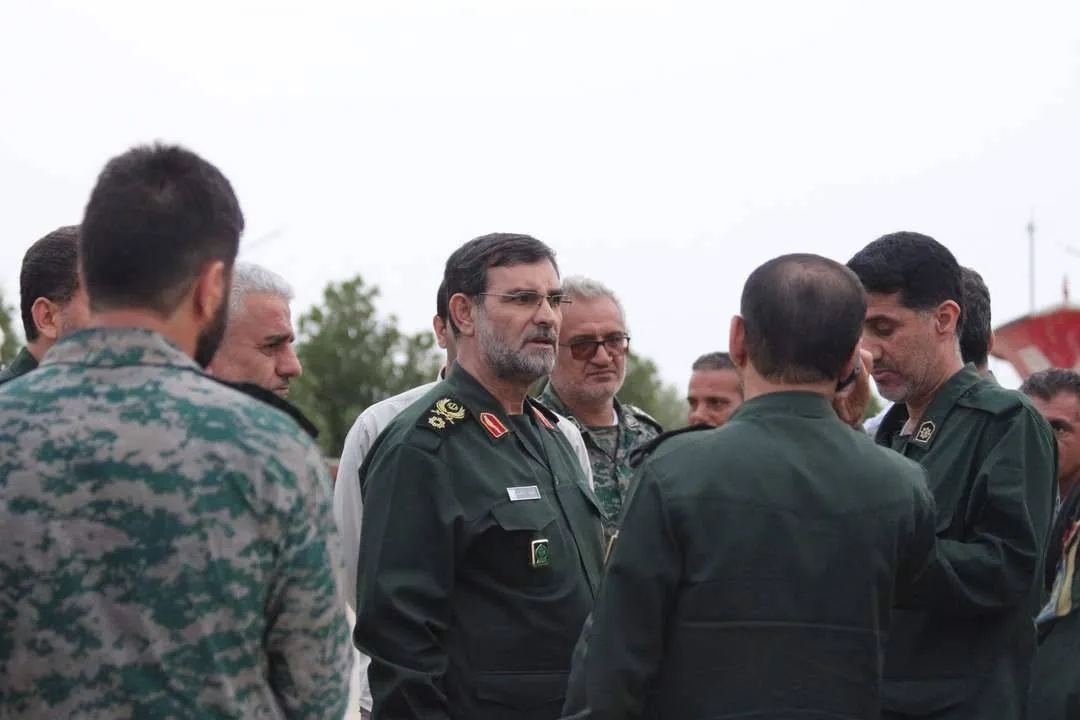
The Iranian Revolutionary Guard confirmed in an official statement today, Monday, the death of Ali Reza Tangsiri, its naval commander, due to severe injuries. Iranian media reported the news, highlighting the increasing security dimensions in the region.
In a related context, Israel Katz, the Israeli Defense Minister, stated on March 26 that the Israeli Defense Forces carried out a precise operation that led to the death of Tangsiri and several naval command officials. This operation is considered part of the escalating conflict between Iran and Israel, reflected in the increasing military operations in the region.
Details of the Incident
Tangsiri is regarded as one of the prominent military leaders in the Revolutionary Guard, having played a significant role in implementing the Guard's strategies in the Strait of Hormuz. He is known to have been an architect of a military doctrine based on using maritime passages as tools of pressure and sovereignty. His name has been associated with numerous military operations targeting commercial ships and oil tankers, making him a notable figure in the regional conflict.
Historically, Tangsiri joined the Revolutionary Guard during the years of the Iran-Iraq War, where he gained extensive experience in naval operations. He was not from the traditional academic generation but from the generation shaped in the field, making him closer to the Iranian military reality. He was known for his hardline stances towards the United States, viewing the Gulf as a domain of Iranian sovereignty rather than just an international passage.
Context and Background
These developments come at a sensitive time when the region is witnessing an escalation in military tensions, as the International Atomic Energy Agency announced significant damage to the Khandab heavy water complex in Iran due to Israeli airstrikes. The agency confirmed that the site is no longer operational, complicating the security situation in the region further.
The Israeli military also announced strikes on Iranian military infrastructure in the capital Tehran, reflecting the ongoing escalation in the conflict between Iran and Israel. These events indicate that the region may enter a new phase of military conflict, raising concerns about regional and international security.
Impact and Consequences
The death of Tangsiri could have significant implications for Iranian military strategy, as his loss is considered a severe blow to the Revolutionary Guard. This incident may lead to a reassessment of Iranian military plans in the region, especially in light of the increasing threats posed by Israel.
Moreover, the escalation of military operations could affect navigation in the Strait of Hormuz, a vital passage for global oil trade. Any escalation in this context could lead to rising oil prices and impact the global economy.
Impact on the Arab Region
Arab countries are directly affected by the escalating tensions between Iran and Israel, as any military escalation could destabilize the region. Gulf states, which heavily rely on the stability of navigation in the Strait of Hormuz, may face new challenges under these circumstances.
In conclusion, the death of Tangsiri marks a turning point in the regional conflict and reflects the increasing tensions between major powers in the area. It is crucial to closely monitor upcoming developments, as any escalation could lead to widespread implications for security and stability in the Middle East.