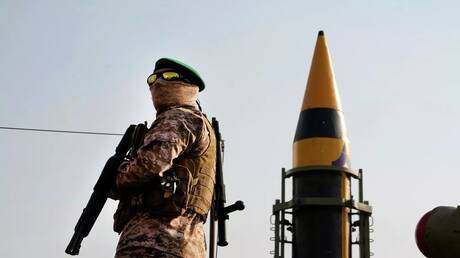
The Iranian Revolutionary Guard declared in an official statement that any aggression against Iranian territory will be met with a decisive response that exceeds expectations, emphasizing its readiness to defend the country against any threats. In this context, the Revolutionary Guard described the recent U.S. operation targeting sites in Isfahan as a reflection of the United States' historical failure in dealing with Iran, further complicating relations between the two countries.
These statements come at a sensitive time when the region is experiencing increasing tensions, with fears of a military escalation that could impact regional security. The Revolutionary Guard, considered one of the main military arms of Iran, confirmed that it will maintain control over the Strait of Hormuz, a vital artery for global oil trade.
Details of the Recent Incident
Earlier, the United States conducted a military operation in Isfahan, which the Revolutionary Guard regarded as a crossing of red lines. The spokesperson for the Revolutionary Guard indicated that this operation reflects the inability of the United States to achieve its objectives in the region and represents a significant failure in its strategies.
The Revolutionary Guard also affirmed that it will continue to enhance its defensive capabilities, stating that any attempt to attack Iran will be met with a strong and unexpected reaction. These statements come at a time when tensions between Iran and the United States are escalating, particularly following the latter's withdrawal from the nuclear agreement in 2018.
Background & Context
Historically, relations between Iran and the United States have been marked by ongoing tensions since the Islamic Revolution in 1979. Since then, the United States has imposed severe economic sanctions on Iran, exacerbating the country's economic situation. In response, Iran seeks to bolster its military and defensive capabilities, further heightening tensions in the region.
The Strait of Hormuz is a strategic point through which approximately 20% of the world's oil passes. Control over this strait means controlling global oil movement, making any threats related to it critically important for regional and international security.
Impact & Consequences
The recent statements from the Revolutionary Guard could lead to an escalation of tensions in the region, with potential military movements from both sides in the coming days. Additionally, these statements may impact global oil markets, as prices are expected to rise in the event of any military escalation.
Moreover, these tensions could increase divisions among Arab states and Iran, as some countries seek to strengthen their alliances with the United States in the face of Iranian threats. This situation may complicate the political landscape in the region and affect regional stability.
Regional Significance
The tensions between Iran and the United States have a direct impact on Arab countries, especially those located in the Arabian Gulf. Many Arab nations are concerned about the rising Iranian influence in the region, prompting them to strengthen their alliances with Western powers.
At the same time, these tensions may lead to increased divisions among Arab countries themselves, as their positions towards Iran vary. Some countries advocate for dialogue and negotiation, while others prefer a more hardline stance against Iran.
In conclusion, amid these tense conditions, the question remains open regarding how relations between Iran and the United States will evolve, and whether they will lead to military escalation or move towards dialogue. What is certain is that the region is experiencing a state of instability, requiring all parties to exercise wisdom and restraint.