The General Director of Basra Oil Company, Bassam Abdul Karim, confirmed that Iraq has the ability to restore crude oil export levels to around 3.4 million barrels per day within one week, provided that the ongoing conflict is resolved and the Strait of Hormuz is reopened to international navigation.
According to reports from Reuters, Iraq, which is considered the second-largest oil producer in the OPEC organization, is facing a sharp decline in oil revenues due to the effective closure of the strait, as Baghdad lacks alternative export routes capable of accommodating the increased production from its southern fields.
Details of the Situation
In an interview with Reuters, Abdul Karim explained that the Iranian side has only provided verbal guarantees to allow Iraqi tankers to pass through the strait, noting that the company has not received any official documents ensuring safe passage. He confirmed that production from the southern fields has dropped to low levels of about 900,000 barrels per day, down from nearly 4.3 million barrels per day before the conflict.
These statements come at a time when the world is awaiting the end of the deadline set by U.S. President Donald Trump for Tehran to reach an agreement that would end the paralysis in navigation, under direct military threat. The filling of storage tanks and the halt in exports have led to a sharp decline in production from the giant fields, with output from the Rumaila field dropping from 1.35 million barrels per day to just 400,000 barrels, while production from the Zubair field has decreased to 300,000 barrels per day.
Background & Context
Under these circumstances, Basra Oil Company has utilized the forced downtime to conduct maintenance operations at some sites, while smaller fields continue to operate at minimal levels to ensure the flow of associated gas necessary for local power stations. Gas production in Basra has decreased from 1.1 billion cubic feet to only 700 million cubic feet due to the reduction in oil production.
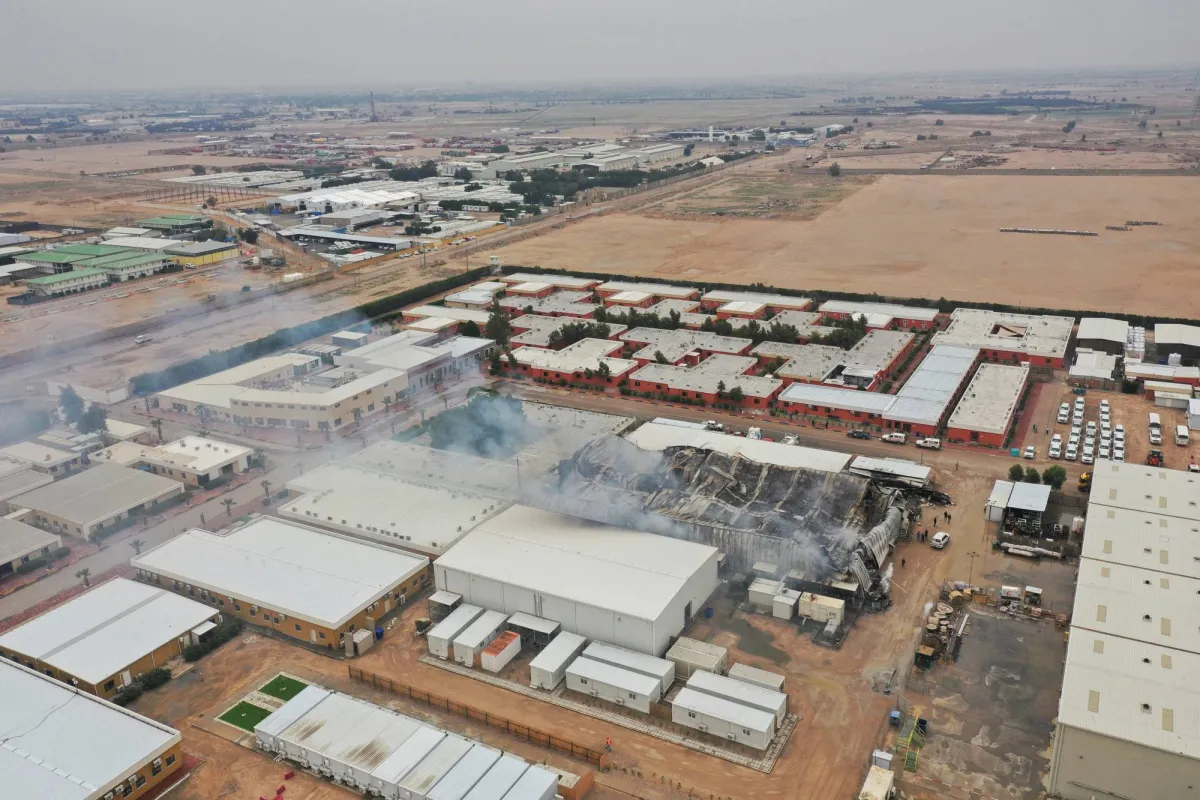
Abdul Karim also pointed out that drone attacks have caused significant losses to the continuity of oil operations, as an attack involving two drones targeted the northern Rumaila field, resulting in injuries to three workers and a fire that was later controlled.
Impact & Consequences
In an effort to meet local demand, the company is transferring about 400,000 barrels per day of crude to northern Iraq via trucks and local pipelines to supply refineries that require around 500,000 barrels per day. Meanwhile, production from the northern Kirkuk fields currently stands at about 380,000 barrels per day.
Concerns are growing about the impact of these conditions on the Iraqi economy, which heavily relies on oil revenues. Any further decline in production could exacerbate economic and social crises in the country.
Regional Significance
These developments are of great importance to the Arab region, as the stability of Iraqi oil exports affects global oil prices and reflects the state of stability in the Gulf region. Additionally, any escalation in the situation could have negative repercussions on neighboring economies, which also depend on oil as a primary source of revenue.
In conclusion, the situation in Iraq remains under observation, as everyone looks forward to a resolution of the crisis in the Strait of Hormuz, which could open the doors for the restoration of previous production and export levels.