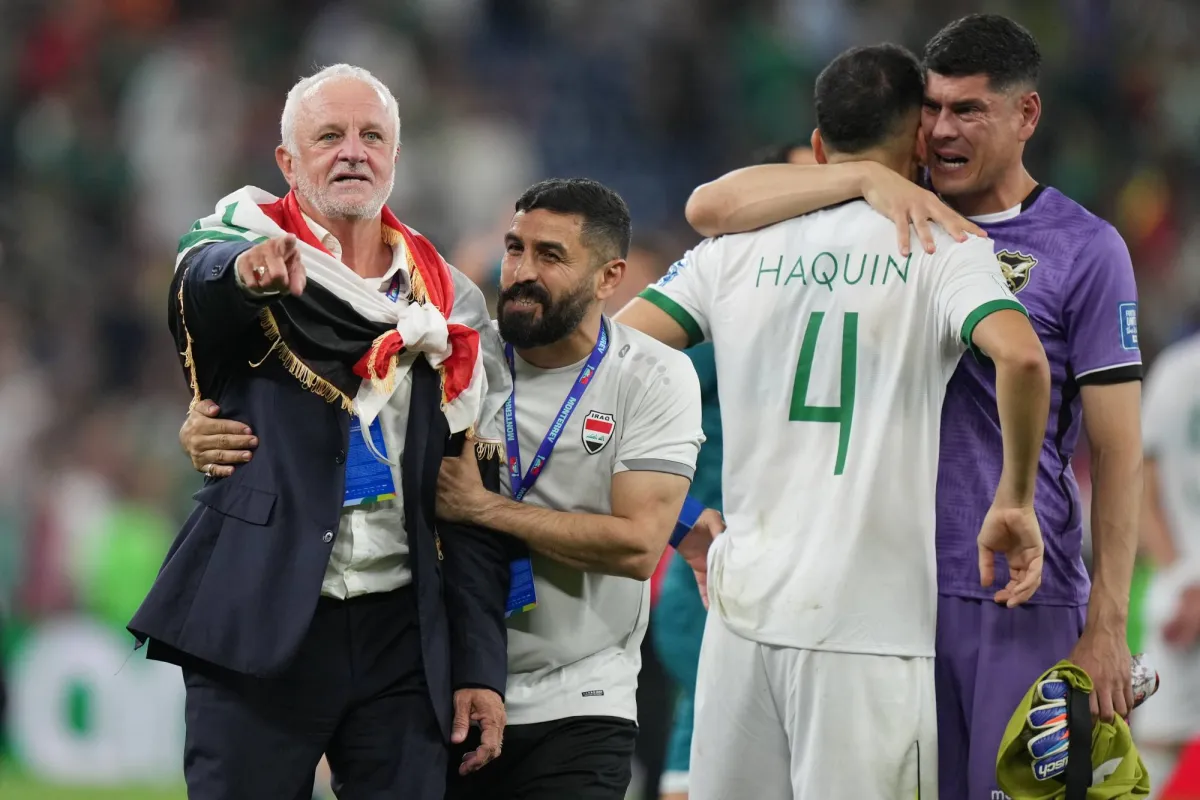
Graham Arnold, the coach of the Iraqi national team, has announced that the team will do everything possible during their participation in the 2026 FIFA World Cup. He pointed out that the anticipated matches against teams like France, Norway, and Senegal represent a great opportunity to try to surprise the world with exceptional performance and results.
Iraq qualified for the World Cup after defeating Bolivia 2-1 in the global playoff final held in Mexico, marking their return to the tournament after a 40-year absence. Ayman Hussein scored the winning goal in the second half, making Iraq the 48th team to qualify for the tournament, which will take place in the United States, Canada, and Mexico.
Event Details
Ali Al-Hamadi opened the scoring for Iraq in the tenth minute, before Bolivia equalized through Moses Paniagua just before the end of the first half. In the second half, Ayman Hussein managed to score the winning goal, securing Iraq's ticket to the World Cup.
This qualification is considered a historic achievement for Iraqi football, as the national team returns to the global stage after a long absence. Arnold led his country to the Round of 16 in the 2022 World Cup in Qatar, becoming the second Australian coach to lead two different teams to the finals.
Background & Context
Historically, Iraq has not achieved significant success in global tournaments, but qualifying for the World Cup reflects the development of football in the country. In recent years, there have been substantial investments in sports infrastructure, contributing to the improvement of player standards.
This qualification is a source of pride for the Iraqi people, as it reflects the team's ability to compete at the highest levels. Additionally, Iraq has a large fan base, which increases the pressure on players to achieve positive results in the tournament.
Impact & Consequences
Iraq hopes that this qualification will mark the beginning of a new phase in Iraqi football, as the team aims to deliver performances worthy of its history. Facing strong teams like France and Norway will provide players with valuable experience and may contribute to their technical development.
Qualifying for the World Cup is not just a sporting achievement; it also represents an opportunity to enhance national identity and pride among fans. Furthermore, a good performance in the tournament could open doors for players to move to larger clubs in European leagues.
Regional Significance
Iraq's qualification for the World Cup reflects the development of football in the Arab region, where there is a growing interest in investing in sports. This achievement may also motivate other countries in the region to improve their football standards.
This qualification is also an opportunity to strengthen relations among Arab countries through sports, as competitions can help enhance cultural and social ties between peoples.
In conclusion, the Iraqi national team aims to deliver a remarkable performance at the 2026 World Cup, with hopes that the team will achieve positive results that reflect the development of football in the country.