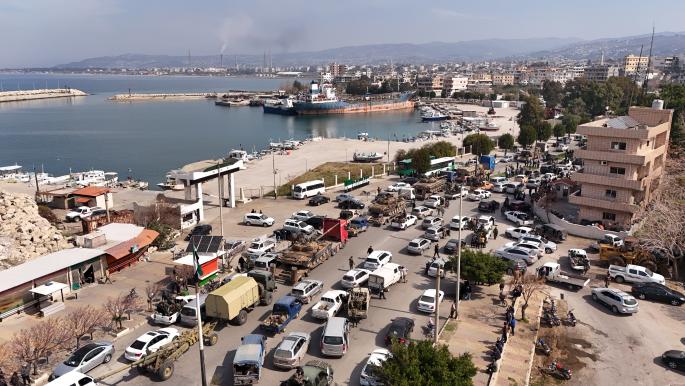
The Iraqi government has announced the commencement of fuel oil (heavy fuel) exports to the Syrian port of Baniyas, with quantities ranging between 10,000 and 15,000 barrels per day. This step is part of Iraq's efforts to find alternative outlets for exporting its oil products amid the challenges facing the country.
The Iraqi government aims to enhance its oil exports, especially given the difficult economic conditions it is experiencing. This measure is seen as a rapid response to changes in both global and local markets, as Iraq seeks to secure additional revenues by exporting fuel oil to neighboring markets.
Details of the Export Initiative
The export operations of fuel oil from Iraq to Syria have begun through the Al-Walid border crossing, one of the border points between the two countries. The initial quantities to be exported have been set, ranging between 10,000 and 15,000 barrels per day. It is expected that these quantities will increase in the near future, depending on demand in the Syrian market.
This initiative is part of Iraq's efforts to expand its oil export base, as fuel oil is one of the vital products needed in the Syrian market. It is believed that this step will contribute to strengthening economic relations between Iraq and Syria, especially given the current circumstances.
Background & Context
Historically, economic relations between Iraq and Syria have been characterized by cooperation and trade exchange. However, these relations have witnessed numerous fluctuations due to political and security events in the region. In recent years, Iraq has sought to enhance its oil exports as part of its economic strategy, especially following the decline in global oil prices.
Fuel oil exports are considered an important step for Iraq, as it seeks to achieve economic stability by increasing its revenues. The Syrian port of Baniyas is a strategic point for exporting oil products, which enhances the significance of this step for Iraq.
Impact & Consequences
This step is expected to have a positive impact on the Iraqi economy, as it will contribute to increasing revenues from the oil sector. Additionally, exporting fuel oil to Syria may help improve relations between the two countries, potentially opening new avenues for economic cooperation.
On the other hand, the Iraqi government may face challenges in securing the required quantities of fuel oil, especially given the logistical and economic challenges it faces. However, if the government can overcome these challenges, it could enhance Iraq's position as a major oil supplier in the region.
Regional Significance
This initiative is part of Iraq's efforts to strengthen its role in the Arab oil market. Amid ongoing changes in oil prices and global demand, Iraq aims to secure its position as a reliable source of oil and petroleum products.
Moreover, strengthening economic relations between Iraq and Syria may contribute to regional stability, especially in light of the political and security challenges faced by the region. Economic cooperation among Arab countries is vital for achieving sustainable development and stability in the area.
In conclusion, Iraq's initiation of fuel oil exports to the Syrian port of Baniyas represents a strategic step aimed at enhancing the Iraqi economy and expanding its oil export base. Given the current challenges, there remains hope that this initiative will successfully achieve the desired economic objectives.