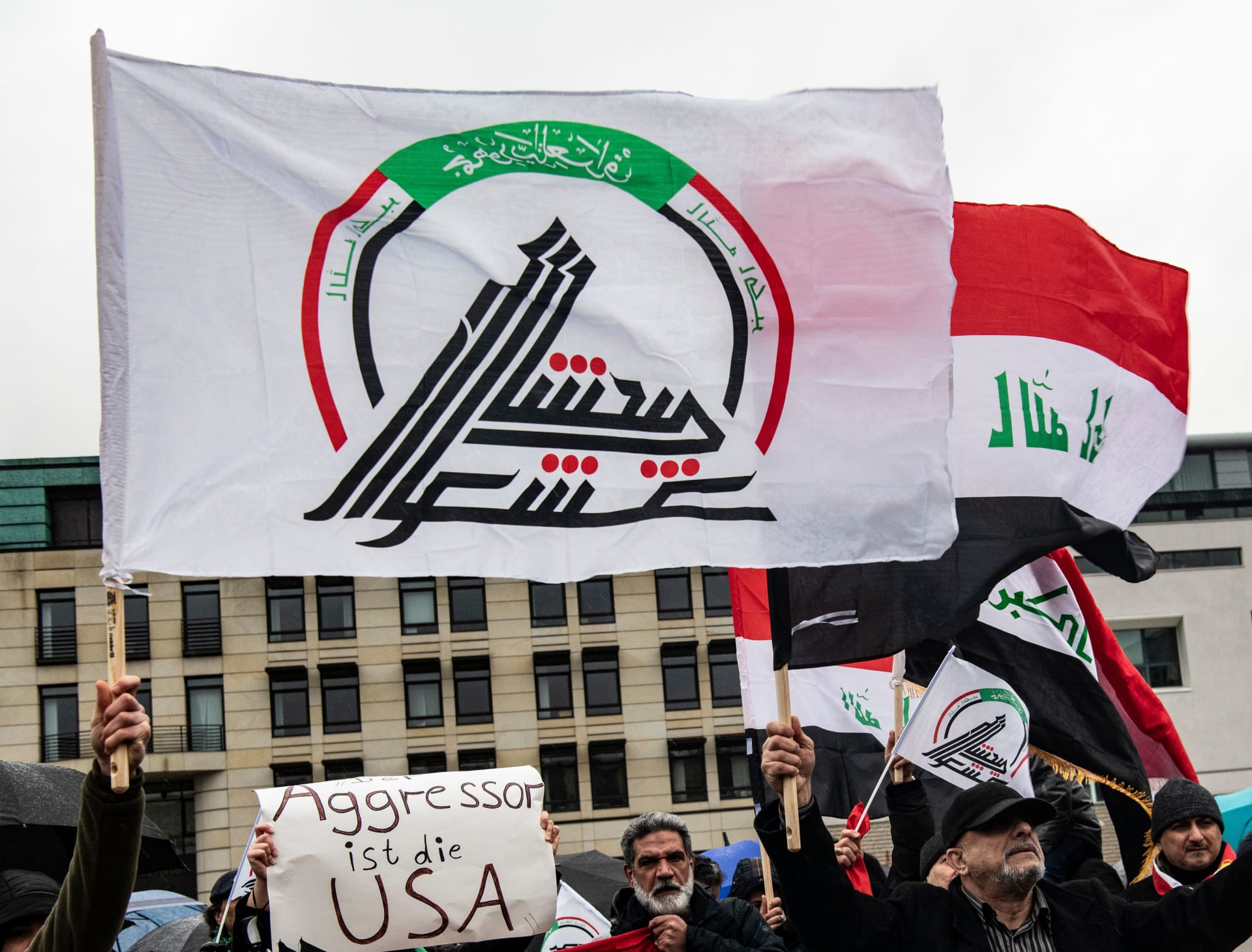
The Iraqi government has announced the granting of the right to respond to the Popular Mobilization Forces and the armed forces, raising fears of a potential military escalation in the country. This decision comes at a time when the Iraqi arena is witnessing an increase in reciprocal attacks between U.S. forces and armed factions, threatening to turn Iraq into an open conflict zone.
Concerns are growing over the implications of this decision, as Iraq is considered a secondary theater in the U.S.-Israeli-Iranian war. Military expert Brigadier General Hassan Jouni noted that military operations have doubled in the second half of March, due to escalating tensions among these parties.
Details of the Incident
On February 28, U.S. airstrikes began targeting the headquarters of Iraqi armed factions, including the Popular Mobilization Authority, which is considered part of the Iraqi security system. Reports have indicated an increase in attacks targeting U.S. forces, reflecting a rise in the pace of conflict.
The Iraqi Ministry of Defense reported that 7 soldiers were killed and 13 others injured as a result of an airstrike targeting the Al-Habbaniyah base in Anbar. This attack comes at a sensitive time, as the Iraqi government seeks to stabilize security conditions in the country.
Background & Context
The actors in the Iraqi scene are numerous, with armed factions playing a pivotal role in the conflict. Political analyst Ziad Arar pointed out that the government's decision came under pressure from ongoing bombardments targeting Popular Mobilization sites, reflecting the need to protect the government from political pressures.
High-ranking sources indicated that the National Security Council decided to authorize the Popular Mobilization Authority and other security agencies to operate under the principle of "the right to respond and self-defense." However, Arar notes that this decision does not equate to U.S. military superiority, which limits its effectiveness on the ground.
Impact & Consequences
Analysts expect continued reciprocal operations between armed factions and U.S. forces, with the likelihood that no ceasefire agreement will encompass the Iraqi arena. Arar indicates that this decision reflects a governmental attempt to escape internal embarrassment, especially amid U.S. accusations of Baghdad's inability to control these groups.
Moreover, the armed factions, which daily adopt attacks on U.S. bases, may continue their escalation, enhancing the likelihood of ongoing tensions in the region. These factions have attacked the U.S. embassy in Baghdad and other sites in the Kurdistan region of Iraq.
Regional Significance
Iraq is considered part of the regional conflict equation, as armed factions have engaged in confrontation driven by ideological motives and their alliance with Iran. This involvement could lead to greater escalation in the region, as the United States and Israel seek to neutralize these factions.
In conclusion, the situation in Iraq reflects intertwined security and political complexities, requiring effective diplomatic solutions to avoid escalation. The question remains open regarding how Baghdad will respond to U.S. pressures and how these developments will affect the future of Iraq and the region.