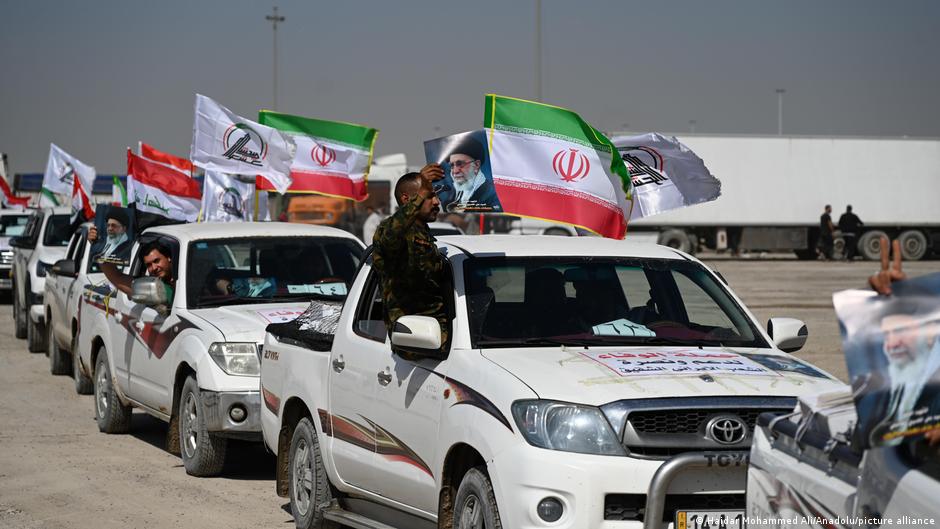
A large convoy of trucks carrying Iraqis crossed the southern border into Iran, raising questions about their true intentions. While the convoy was portrayed as a "humanitarian mission," suspicions linger that it may include fighters from an Iranian-backed Iraqi militia, which could draw Iraq into a larger conflict.
Experts suggest that the likelihood of these Iraqis engaging in Iran's war against the United States and Israel is low. Haider Al-Shukri, a researcher at the British Chatham House, noted that even if the convoy included fighters, it would not significantly impact a war reliant on airstrikes and missiles.
Details of the Event
The convoy that crossed the border consists of fighters from the Popular Mobilization Forces, a group formed in 2014 to combat the Islamic State. These forces have been officially integrated into the Iraqi armed forces, with members receiving salaries from the government. However, some factions within the Popular Mobilization Forces are considered more loyal to Iran, raising concerns about their influence on Iraqi security.
Following attacks by the U.S. and Israel on Iran last February, militias linked to the resistance axis in Iraq retaliated with strikes on targets believed to be associated with the U.S. or Israel, including diplomatic and military facilities.
Background & Context
The Popular Mobilization Forces were established in the context of the war against the Islamic State but have become a significant political and military force in Iraq. This group comprises approximately 238,000 fighters and holds substantial political representation in the Iraqi parliament. Some factions within the Popular Mobilization Forces are part of the resistance axis, which also includes Hezbollah in Lebanon, Hamas in Gaza, and Ansaar Allah in Yemen.
Tensions have escalated between these militias and the Iraqi state, with state institutions, such as the Iraqi National Intelligence Service, facing attacks from the militias. These assaults indicate an internal struggle between the militias and the state, complicating the security situation in Iraq.
Impact & Consequences
Concerns are growing that these factions could expose Iraq to the consequences of regional conflict, as attacks from Iraqi territory could provoke military responses from the United States. This has led to U.S. airstrikes on Popular Mobilization Forces sites, which the U.S. had previously sought to avoid.
In an emergency session, the Iraqi government decided to arrest anyone attacking Iraqi security institutions. However, at the same time, all military units, including the Popular Mobilization Forces, were granted broader powers to respond to any attacks against them, raising questions about Iraq's responsibility in the regional conflict.
Regional Significance
The Arab region is significantly affected by the rising tensions in Iraq, as any escalation in conflict may impact neighboring countries like Kuwait and Syria. The presence of Iranian-backed militias in Iraq enhances Tehran's influence in the region, complicating relations between Arab states and Iran.
In conclusion, the situation in Iraq remains complex, with overlapping security and political challenges. Significant efforts are required to rebuild trust among various parties and achieve stability in the country.