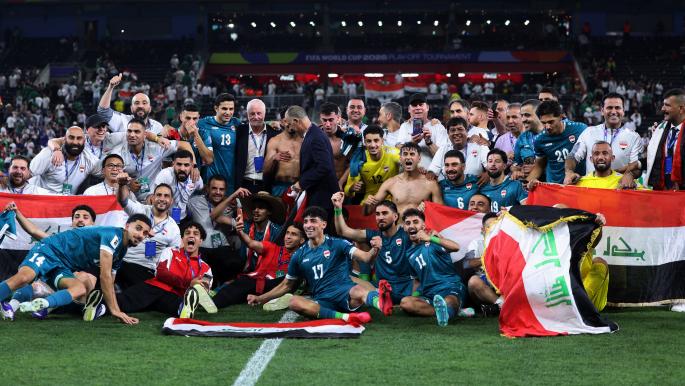
The Iraqi national team achieved an important victory over their Bolivian counterparts, allowing them to qualify for the World Cup finals. Former Iraqi national team star, Ali Wahib, confirmed that the coaching staff led by Australian Graham Arnold played a significant role in this success, guiding the team to deliver an outstanding tactical performance during the match.
This victory was not merely a sports result; it embodied the continuous efforts of both the players and the coaching staff. The Iraqi team displayed a high level of tactical discipline and the ability to execute the planned strategies, which helped them overcome Bolivia.
Match Details
In the match held on neutral ground, the Iraqi team managed to control the flow of the game from the outset. Arnold relied on a balanced offensive strategy, allowing the players to effectively capitalize on opportunities. Additionally, the defense was solid, preventing Bolivia from reaching the Iraqi goalkeeper's net.
Iraq scored two goals in the first half, which provided the team with a significant morale boost. At the start of the second half, Bolivia attempted to make a comeback, but the Iraqi defense was fully prepared, contributing to maintaining the score.
Background & Context
Qualifying for the World Cup is a historic achievement for Iraq, as the national team has not reached this stage in many years. Recent years have witnessed notable developments in Iraqi football, thanks to investments in infrastructure and the development of young talents.
Historically, Iraq has achieved successes in regional tournaments, but qualifying for the World Cup represents the pinnacle of accomplishments. Political and social conditions in the country have influenced the national team's journey, but current efforts indicate a new beginning.
Impact & Consequences
This qualification could open new horizons for Iraqi football, as increased fan support and media attention are expected. Success in the World Cup could also enhance national spirit and unite the Iraqi people around a common goal.
Economically, qualifying may attract investments into Iraqi sports, aiding in the development of more talents and improving sports infrastructure.
Regional Significance
Iraq's qualification for the World Cup reflects the strength of football in the Arab region, where Arab successes have increased in recent years. This achievement could serve as an incentive for other Arab countries to achieve similar accomplishments, enhancing the status of football in the region.
Moreover, this achievement reflects the ability of Arab teams to compete on the global stage, potentially contributing to strengthening ties between Arab countries through sports.
In conclusion, Iraq's qualification for the World Cup is an important step towards rebuilding Iraqi football, reflecting the ongoing efforts of both players and the coaching staff. This success is not just a sports victory; it symbolizes hope and optimism for a better future for sports in Iraq.