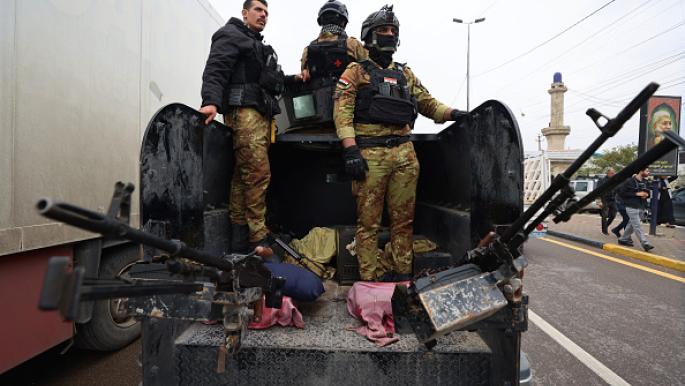
Several Iranian-allied armed factions in Iraq have rejected military and security directives issued by the Iraqi government, as confirmed by three Iraqi officials in the capital, Baghdad.
The government directives aimed to redeploy these factions away from the Iraqi borders, reflecting the ongoing tensions between the government and the armed factions that hold significant influence in the country.
Details of the Incident
This development comes at a sensitive time for Iraq, as the government seeks to strengthen its control over Iraqi territory and reduce Iranian influence. The armed factions, which are part of the Popular Mobilization Forces, reject these directives, stating that they operate according to their own interests and agenda.
Officials who spoke to "Al-Araby Al-Jadeed" confirmed that these factions sometimes do not recognize government authority, raising concerns about the stability of security in the country. It appears that these factions are striving to maintain their positions and influence, despite government pressures.
Background & Context
The armed factions in Iraq were established following the emergence of the Islamic State (ISIS) in 2014, formed to counter security threats. Since then, these factions have become a significant force in the political and military landscape of Iraq.
Although the Iraqi government has repeatedly announced its intention to reduce the influence of these factions, the reality on the ground shows that they still retain substantial power, reflecting the challenges faced by the government in asserting its authority.
Impact & Consequences
The armed factions' rejection of government directives could lead to escalating tensions between the government and the factions, potentially negatively impacting security conditions in Iraq. If these factions continue to challenge the government, it may open the door to new conflicts within the country.
Additionally, this situation could affect relations between Iraq and Iran, as the Iraqi government seeks to diminish Iranian influence, while the armed factions aim to maintain their ties with Tehran.
Regional Significance
These developments are part of a broader regional landscape, reflecting internal conflicts in Iraq and tensions between regional powers. The struggle for influence between Iran and the United States, along with tensions between the armed factions and the government, may lead to instability in the region.
Furthermore, the continuation of these conditions could impact neighboring countries, as fears of escalating violence and unrest in Iraq may adversely affect regional security.
In conclusion, the situation in Iraq remains complex, with armed factions clashing with the government, presenting significant challenges for the country in achieving stability and security.