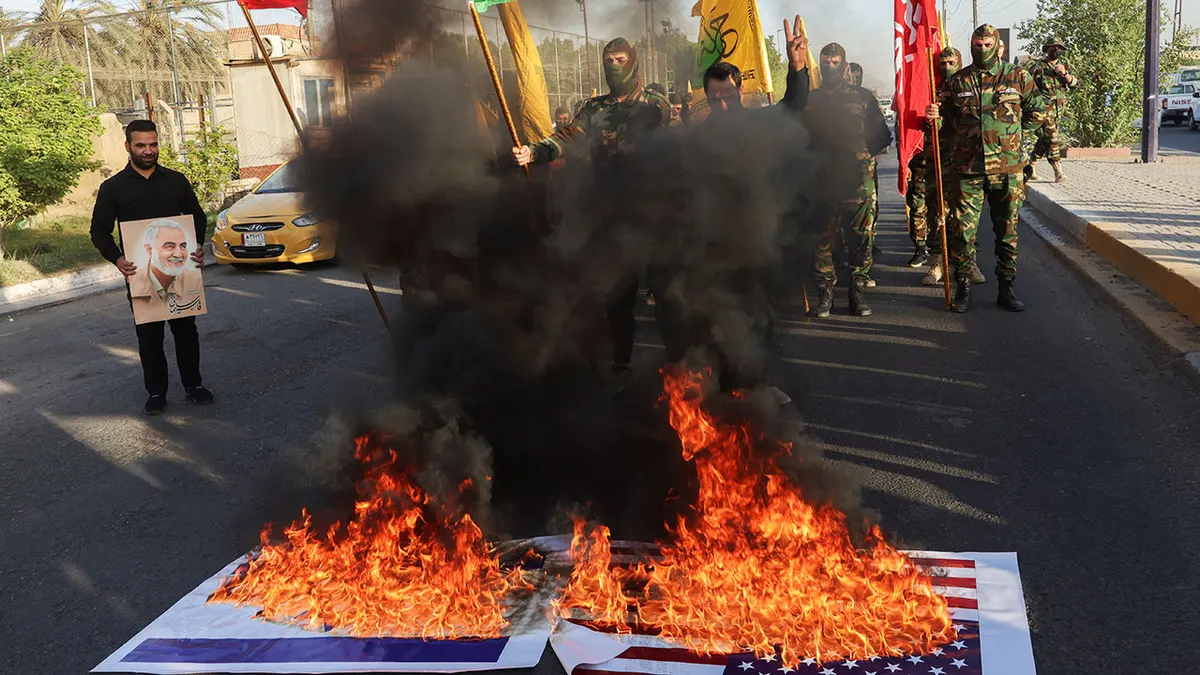
Iraqi armed factions, known as the "Islamic Resistance in Iraq," have declared a halt to their attacks within the country and the region for a period of two weeks. This announcement follows a joint statement from the United States and Iran regarding a ceasefire for the same duration.
In their statement, the Iran-aligned factions confirmed that they would cease operations in Iraq and the surrounding area, without providing further details about the nature or scope of these operations. This decision comes at a sensitive time, as tensions in the region escalate due to the ongoing conflict between the United States and Iran.
Details of the Announcement
The Iraqi armed factions have joined Iran on the front lines in its war against the United States and Israel, executing numerous attacks targeting American interests and bases both inside and outside Iraq. Over the past few days, these factions have carried out hundreds of strikes using drones and missiles, targeting strategic objectives.
These targets included the logistical support base for U.S. forces at Victoria Base in Baghdad International Airport, as well as American barracks at Erbil Airport and Harir Base. The factions also targeted the U.S. Embassy building in Baghdad and the offices of Iranian opposition parties in Erbil and Sulaymaniyah, in addition to oil facilities in Iraq and the region.
Background & Context
Earlier, the United States and Iran announced a two-week truce, paving the way for an agreement to end the war that began on February 28. This conflict, which has resulted in thousands of casualties, represents a significant escalation in regional strife, with Iran responding by launching missiles and drones towards Israel and conducting attacks on what it describes as American bases and interests in Arab countries.
This war against Iran is considered the second after the June 2025 conflict and followed progress in negotiations between Tehran and Washington regarding the nuclear program, mediated by Oman. These developments reflect the complexities of the conflict in the region and its implications for regional security.
Impact & Consequences
The cessation of operations by the Iraqi factions is seen as an important step in the context of current tensions, as it may contribute to de-escalating the conflict between the United States and Iran. However, questions remain about the sustainability of this ceasefire, especially given the ongoing tensions between the involved parties.
The potential consequences of this decision may include an improvement in the security situation in Iraq, but it could also lead to renewed escalation if a comprehensive agreement to end the conflict is not reached. Additionally, this ceasefire may provide an opportunity for diplomatic efforts aimed at achieving stability in the region.
Regional Significance
These developments directly impact security and stability in the Arab region, where Iraq is considered a pivotal point in the regional conflict. Any escalation in tensions could negatively affect neighboring countries, prompting Arab governments to take precautionary measures to protect their interests.
In conclusion, there is hope that this ceasefire will help open channels for dialogue between the conflicting parties, potentially leading to long-term stability in the region.