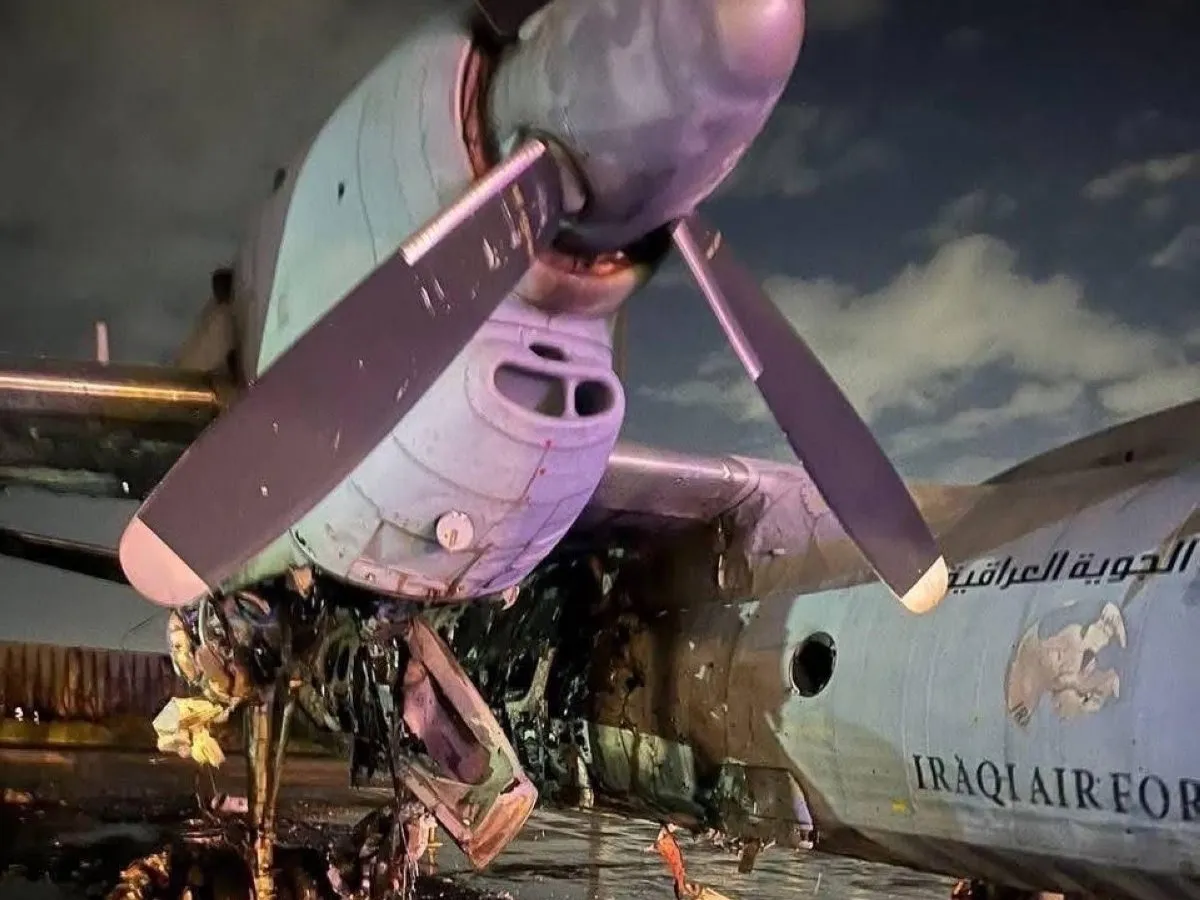
Iraqi Interior Minister Abdul Amir al-Shammari issued a decision yesterday (Monday) to dismiss and detain several security leaders after an Iraqi military aircraft was destroyed at Baghdad Airport due to a missile attack carried out by Iran-affiliated factions. This decision comes as part of a broader investigation into the shortcomings of security leaders in fulfilling their duties.
The dismissed leaders include the director of the Al-Mada'in police department, the director of intelligence, and the commander of the second battalion in the fourth brigade of the federal police. They have been placed in detention pending investigation, reflecting the seriousness of the Iraqi government in holding accountable those responsible for any security lapses.
Details of the Incident
The attack that targeted Baghdad Airport, which houses a military base and a diplomatic support center affiliated with the U.S. Embassy, resulted in the destruction of an Iraqi Air Force aircraft. The Iraqi Ministry of Defense confirmed that the attack was carried out using missiles, highlighting the escalating tensions in the region.
These events occur in a tense context between Iraq and Iran, where missile attacks on Iraqi military sites by Iran-linked armed factions have increased. This escalation raises concerns about the stability and security of Iraq, especially given the current political circumstances.
Background & Context
In recent years, Iraq has witnessed a rise in military activities by armed factions, which often receive support from Iran. These factions continue to carry out cross-border operations, complicating the security situation in Iraq. These activities have led to tensions with the American forces present in the region, which seek to maintain security stability.
Historically, relations between Iraq and Iran have been strained, especially after the U.S. invasion of Iraq in 2003. With the increasing Iranian influence in Iraq, armed factions have become part of the security and political equation, complicating the Iraqi government's efforts to control the situation.
Impact & Consequences
The dismissal and detention of security leaders could have significant implications for the security situation in Iraq. This decision may reflect the government's desire to regain control over the security situation, but it could also lead to heightened tensions between armed factions and the government.
Additionally, these events may affect relations between Iraq and the United States, as Washington seeks to maintain its military presence in the region. Any escalation in attacks could provoke American responses, further complicating the security situation in Iraq.
Regional Significance
These events are part of the larger picture of regional conflict in the Middle East, where Iranian and American interests intersect. The escalation in Iraq could impact neighboring countries, especially amid ongoing tensions in Lebanon and Syria.
The security situation in Iraq may also affect reconstruction and development efforts in the country, increasing the challenges faced by the Iraqi government in achieving stability. Under these circumstances, the question remains about how the Iraqi government will address these challenges and restore trust in security institutions.