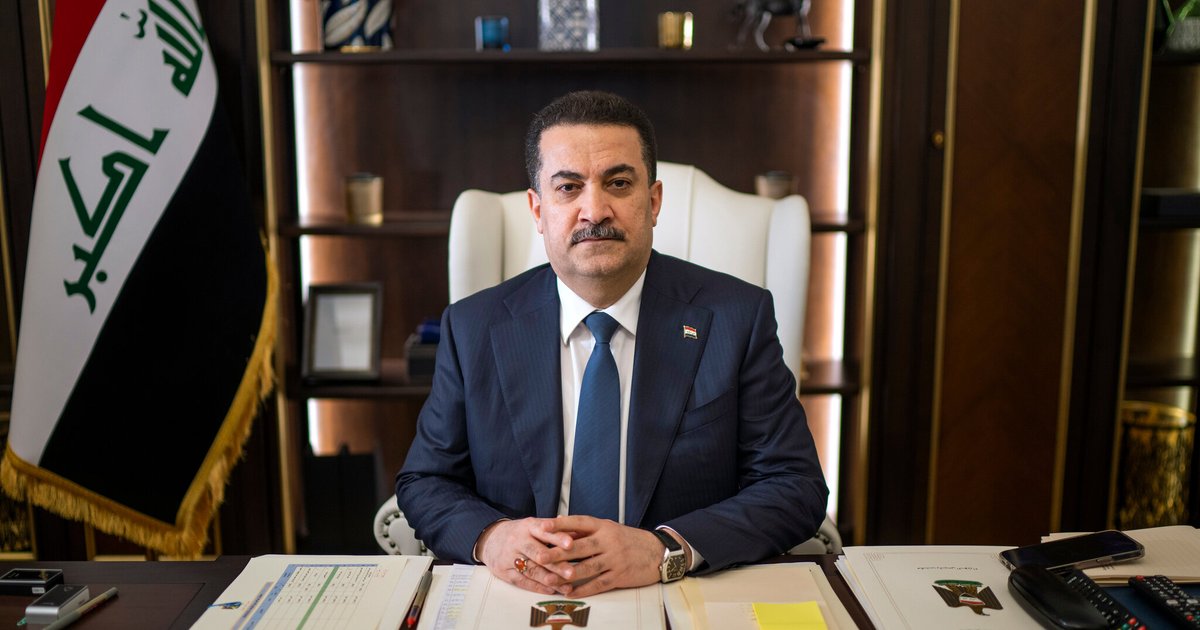
Iraqi Prime Minister Mohammed Shia' al-Sudani affirmed his government's commitment to pursuing those involved in attacks on diplomatic missions, emphasizing that there are no red lines when it comes to enforcing the law. This statement came during his visit to the headquarters of the Federal Intelligence and Investigations Agency in the Ministry of Interior, where he chaired a meeting with several security officials.
During the meeting, al-Sudani listened to a comprehensive briefing on the measures taken to address challenges related to assaults on vital institutions and diplomatic missions, as well as cases of foreign citizens' abduction. He stressed the necessity of taking the utmost measures to pursue those involved in these hostile acts that harm Iraq's reputation and affect the interests of its citizens.
Details of the Event
A statement issued by al-Sudani's office indicated that during the meeting, the importance of being fully prepared to face security threats was emphasized, especially given the tense conditions in the region. Al-Sudani pointed out that the government will not hesitate to enforce the law, regardless of the parties involved.
He also expressed the importance of enhancing intelligence efforts to continue maintaining security stability, stressing that Iraq will not be a battleground for regional conflicts. This statement followed the Iraqi Foreign Ministry's confirmation of the country's commitment to remaining outside the circle of regional conflict, despite its negative impacts on security and economic conditions.
Context and Background
Al-Sudani's statements coincide with rising tensions in the region, where Iraq has recently witnessed a series of attacks targeting diplomatic missions and military bases. The U.S. Embassy's call for its citizens to leave Iraq immediately raised questions about the security situation in the country.
In this context, the Iraqi Foreign Ministry confirmed that some individuals or entities might attempt to exploit their positions to carry out actions that contradict the official policy of the state, emphasizing that these actions do not reflect the role of the government or its institutions.
Impact and Consequences
These developments come at a sensitive time for Iraq, as it seeks to enhance its internal stability amid regional tensions. These statements may affect Iraq's relations with foreign countries, especially amid fears of escalating violence.
Moreover, pursuing those involved in the assaults could enhance international confidence in Iraq's ability to protect diplomatic missions, which may contribute to improving the country's economic and political conditions.
Significance for the Arab Region
These statements are significant in the context of security conditions in the Middle East, where many countries are suffering from escalating violence and attacks on diplomatic missions. Iraq could play a pivotal role in regional stability if it manages to strengthen its internal security.
Ultimately, the greatest challenge facing the Iraqi government remains achieving security and stability, which requires continuous efforts to confront both internal and external threats.