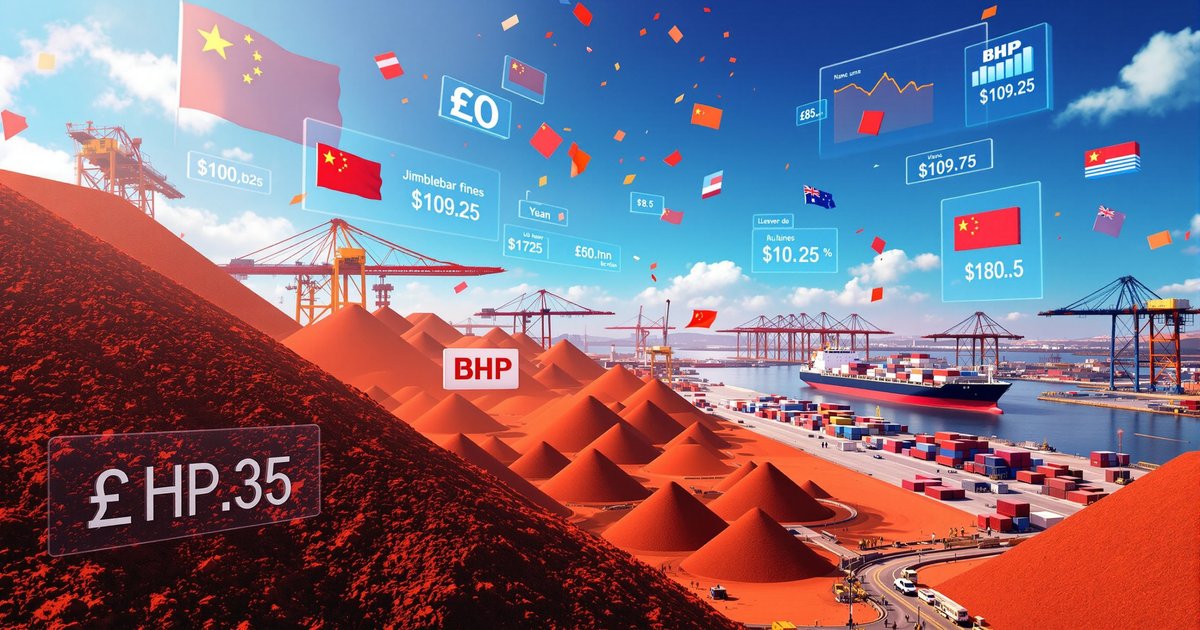
Iron ore prices have seen a significant increase following their largest monthly gain since September 2024, as tropical storms in Australia have bolstered prices, alongside the ongoing price dispute between the Chinese government buyer and BHP Group, one of the largest mining companies in the world.
This rise comes at a critical time for global markets, where iron ore prices are an important indicator of global economic health, especially given China's heavy reliance on this resource for its heavy industry.
Details of the Event
Iron ore recorded strong gains over the past month, with prices rising significantly, reflecting increased demand from the Chinese market. The tropical storms in Australia have contributed to reduced production, leading to a supply shortage in global markets.
The ongoing dispute between the Chinese government buyer and BHP Group over prices has intensified market tensions, as China seeks lower prices amid current economic conditions, while BHP attempts to maintain its profit margins.
Background & Context
Historically, iron ore is one of the most important raw materials in steel production, heavily relied upon for infrastructure building and heavy industries. In recent years, iron ore prices have experienced significant fluctuations, influenced by various factors including Chinese demand and Australian supply.
In September 2024, iron ore prices had seen a notable decline, raising concerns among investors about the future of the market. However, recent gains indicate the possibility of a market recovery, especially with continued demand from China.
Impact & Consequences
These developments could impact the global economy in multiple ways. Rising iron ore prices may lead to increased production costs in heavy industries, which could negatively affect the final prices of products. Conversely, major mining companies may benefit from this price increase, boosting their profits.
Furthermore, the dispute between China and BHP may create additional tensions in trade relations between the two nations, potentially affecting global market stability. Under these circumstances, investors need to closely monitor market developments.
Regional Significance
The Arab region is one that heavily relies on oil and gas exports, but it also stands to benefit from rising prices of minerals such as iron ore. Many Arab countries are striving to diversify their economies, and the increase in iron ore prices may lead to increased investments in the mining sector.
Moreover, rising iron ore prices could open new avenues for cooperation between Arab countries and Australia in mining and energy sectors, enhancing economic relations between both sides.
In conclusion, the rise in iron ore prices reflects the complex dynamics of global markets and underscores the importance of closely following economic developments. With the ongoing dispute between China and BHP, the future of the market remains uncertain, requiring investors and companies to prepare to adapt to potential changes.