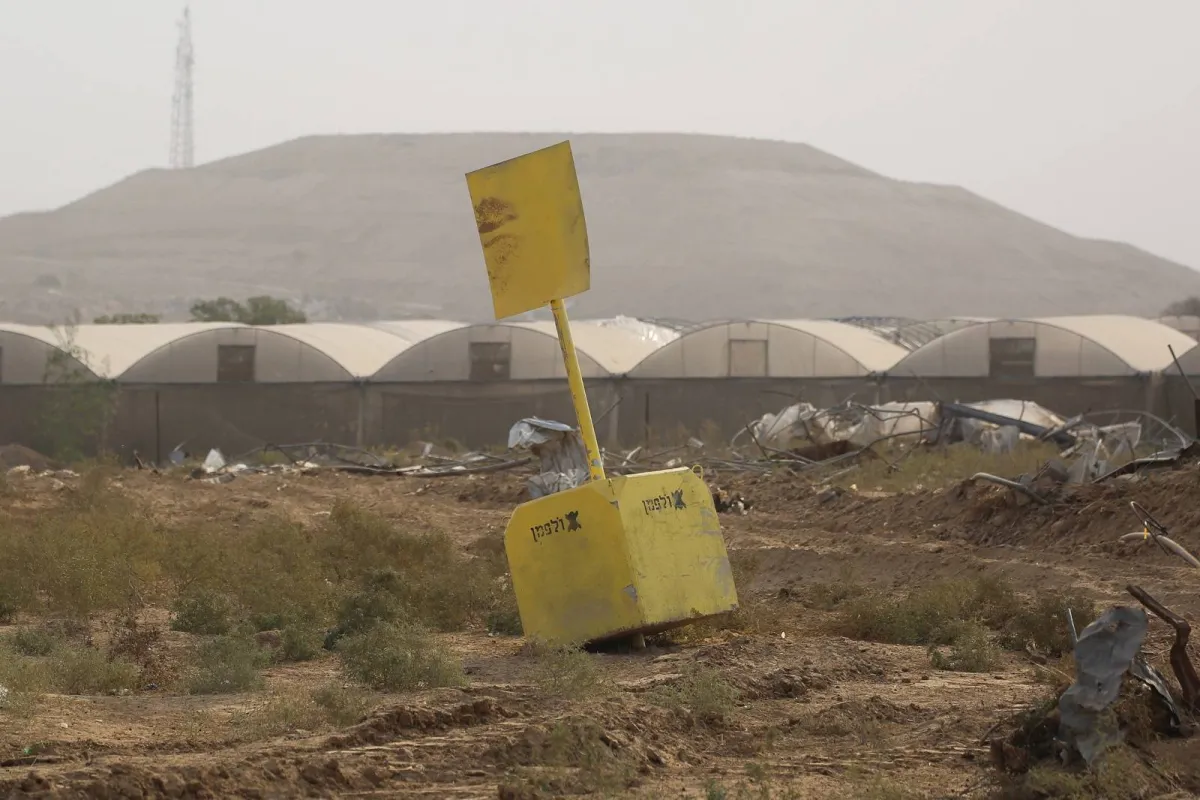
Israel continues to solidify its presence along the boundary known as the 'Yellow Line' in the Gaza Strip, despite international calls for a gradual withdrawal and disarmament of Palestinian factions, as outlined in the plan by the UN Special Coordinator Nikolai Maladinoff. These Israeli actions are raising alarms among international mediators, as estimates suggest that these measures hinder efforts to reach understandings with Hamas regarding disarmament and the implementation of a ceasefire agreement.
The Yellow Line is a virtual boundary within the Gaza Strip, established under a ceasefire agreement, separating areas controlled by the Israeli military from those permitted for Palestinian presence. However, current Israeli movements indicate an intention to establish this line as a permanent border, raising fears that it may become a lasting reality.
Details of the Situation
In a statement, the "International Commission to Support the Rights of the Palestinian People" (Haq) confirmed that the Israeli occupation authorities are hastening to institutionalize what is known as the 'Yellow Line' as a permanent border, encompassing nearly half of the Strip's area. The occupation forces are working to convert this line into a permanent boundary by establishing 32 military sites and positions, in addition to creating earthen barriers and military engineering structures.
The Israeli newspaper "Haaretz" noted that Tel Aviv is seeking to transform the Yellow Line into a fixed field separation line, reflecting a clear trend towards establishing long-term control over the Strip. These actions come at a time when the international community is ignoring the repercussions of the US-Israeli war on Iran, allowing Israel to impose new realities on the ground.
Context and Background
These developments coincide with rising tensions in the region, where the ceasefire agreement in Gaza is currently considered "frozen," amid Israeli actions aimed at making the Yellow Line a permanent border. Palestinian political analyst Nizar Nazzal pointed out that Washington's push towards a Gaza agreement was to improve Tel Aviv's image, without regard for Palestinian rights or any commitments towards them.
Moreover, the disarmament of Hamas, one of the provisions of Maladinoff's plan, has been met with widespread Palestinian rejection, as Palestinians view this proposal as a distortion of the ceasefire agreement's contents. Palestinian officials indicate that the plan does not provide guarantees for Israel to fulfill its commitments, increasing the likelihood of a return to conflict.
Consequences and Impact
Israeli movements in Gaza could escalate tensions in the region, as the continuation of these policies may obstruct any peace efforts. Analyst Hussein Haridi, a former assistant foreign minister of Egypt, warned that the situation in Gaza and the West Bank may witness blatant violations of Palestinian rights, especially following the end of the Iranian war.
These developments may also affect relations among Palestinian factions, as Hamas and other factions are expected to demand guarantees for Israeli withdrawal, which may not be achievable under current circumstances. These conditions reflect instability in the region, complicating the humanitarian situation in Gaza.
Impact on the Arab Region
The situation in Gaza is part of the larger picture of the Israeli-Palestinian conflict, which affects stability across the entire region. Current Israeli movements could exacerbate humanitarian crises, necessitating urgent international intervention. Furthermore, the continuation of these policies may enhance feelings of frustration and despair among Palestinians, increasing the likelihood of new waves of violence.
In conclusion, the situation in Gaza remains under scrutiny, as current Israeli actions threaten peace efforts and complicate humanitarian conditions, calling for urgent international action to protect Palestinian rights and achieve a just peace.