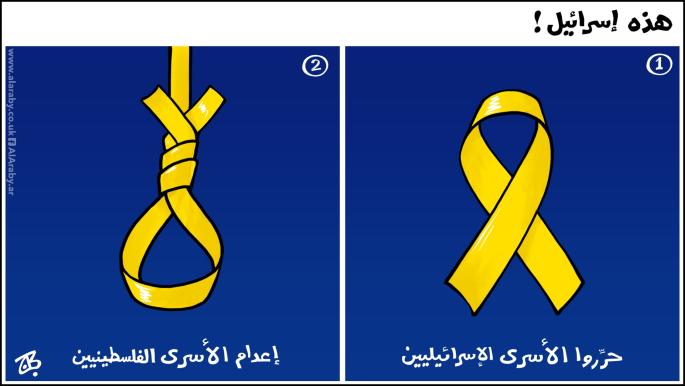
Israel has announced a new law that permits the execution of Palestinian prisoners, reflecting an increasing trend towards violence and extermination. This law, described by some as "discriminatory," raises significant concerns about the escalation of occupation practices against Palestinians and reflects a policy aimed at eradicating Palestinian identity.
This move comes amid rising tensions in the Palestinian territories, where the Israeli government seeks to reinforce its control over the occupied areas. This law does not only involve the expulsion or forced displacement of Palestinians but extends to murder and extermination, raising alarm among the international community and human rights organizations.
Details of the Law
The new law, approved by the Israeli Knesset, allows for the execution of prisoners convicted of murder. This law was passed at a time when the Palestinian territories are experiencing military and security escalations, with increasing arrests and Israeli military operations in the West Bank and Gaza Strip.
This law is considered part of the current Israeli government's policy, which adopts a more hardline approach towards Palestinians. It has sparked outrage among Palestinians and their supporters, who view this step as a blatant violation of human rights.
Background & Context
Historically, Israel has relied on a series of laws targeting Palestinians, but this law represents a dangerous shift in Israeli policy. Instead of focusing on peaceful solutions, the Israeli government appears to be moving towards increased violence and repression.
In recent years, the Palestinian territories have witnessed an escalation in Israeli military operations, including mass arrests and combat operations. This has exacerbated the humanitarian situation in the occupied areas, complicating the Israeli-Palestinian conflict further.
Impact & Consequences
The enactment of this law could lead to an escalation of violence in the region, potentially provoking strong reactions from Palestinians and Arab nations. It may also increase tensions between Israel and the international community, especially given the growing pressure on the Israeli government to comply with international laws.
This law is likely to contribute to Israel's international isolation, as it may face diplomatic and economic pressures from countries that support human rights. Furthermore, this law could bolster Palestinian resistance and intensify the conflict in the region.
Regional Significance
This law poses a threat to security and stability in the Arab region, as it could escalate conflicts and heighten tensions between Arab countries and Israel. Additionally, this law may impact relations between Arab nations and Israel, particularly amid attempts by some countries to normalize relations with Tel Aviv.
The continuation of Israeli occupation practices may prompt Arab countries to reassess their relations with Israel, potentially leading to changes in regional policies. Moreover, this law could affect Arab nations' stance on the Palestinian issue and increase their support for Palestinian rights.
In conclusion, the law permitting the execution of prisoners marks a dangerous step in the trajectory of the Israeli-Palestinian conflict, reflecting an increasing trend towards violence and extermination. The international community is called to take immediate action to halt these practices and protect Palestinian rights.