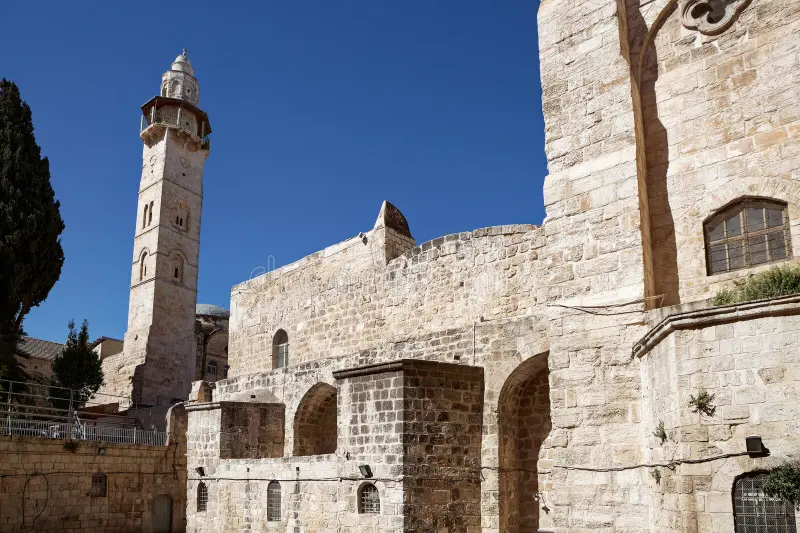
On Monday, Israeli police announced the allowance of 'limited prayer' at the Church of the Holy Sepulchre in occupied East Jerusalem, while continuing to close Al-Aqsa Mosque. This decision follows widespread international criticism of Israel for preventing Latin Patriarch of Jerusalem Cardinal Pierbattista Pizzaballa and Custodian of the Holy Land Father Francesco Patton from accessing the church to celebrate Christmas.
The Church of the Holy Sepulchre is considered one of the holiest Christian sites, believed to be the location of Christ's crucifixion and burial. Meanwhile, Al-Aqsa Mosque is one of the holiest Islamic sites and represents a constant point of tension in the Israeli-Palestinian conflict. The ongoing closure of Al-Aqsa raises significant concerns among Muslims, especially during religious holidays.
Details of the Event
In a controversial move, the occupying police announced that they would allow limited prayer at the Church of the Holy Sepulchre, reflecting an attempt to alleviate international pressure. However, the closure of Al-Aqsa Mosque remains in effect, raising questions about the occupying forces' intentions regarding sacred sites.
The international criticism directed at Israel came from several countries, including Italy, France, and Spain, as well as the European Union. This criticism reflects the growing concern over freedom of worship in Jerusalem, a city of significant religious importance to both Muslims and Christians.
Background & Context
Historically, Jerusalem has witnessed increasing religious and political tensions, especially in recent years. The closure of Al-Aqsa Mosque during religious holidays is considered a provocative step, leading to heightened tensions between Palestinians and Israelis. In the past, there have been numerous attempts by the occupying forces to tighten control over sacred sites, resulting in outbreaks of clashes.
The Church of the Holy Sepulchre and Al-Aqsa Mosque are symbols of the religious and cultural identity of the Palestinian people, and any change in their status can lead to strong reactions from both the international and local communities.
Impact & Consequences
Allowing limited prayer at the Church of the Holy Sepulchre may be seen as a positive step, but it does not address the underlying issues related to the situation at Al-Aqsa Mosque. The continued closure of Al-Aqsa could exacerbate conditions in Jerusalem, increasing the likelihood of new clashes.
These events may also affect relations between Israel and European countries, as pressures mount on the Israeli government to reverse its policies in Jerusalem. International movements may increase in an attempt to pressure Israel to ensure freedom of worship for all.
Regional Significance
The events in Jerusalem are part of the broader conflict between Palestinians and Israelis, which directly impacts stability in the Arab region. Any escalation in Jerusalem can lead to reactions in Arab countries, increasing regional tensions.
The situation in Jerusalem remains a focal point of interest for many Arab countries, as all seek to support the rights of Palestinians in the holy city. The continued Israeli violations may lead to heightened feelings of anger and resentment among Arab populations.
In conclusion, Jerusalem remains a center of religious and political conflict, and any action by the Israeli occupation must be considered by the international community to ensure peace and stability in the region.