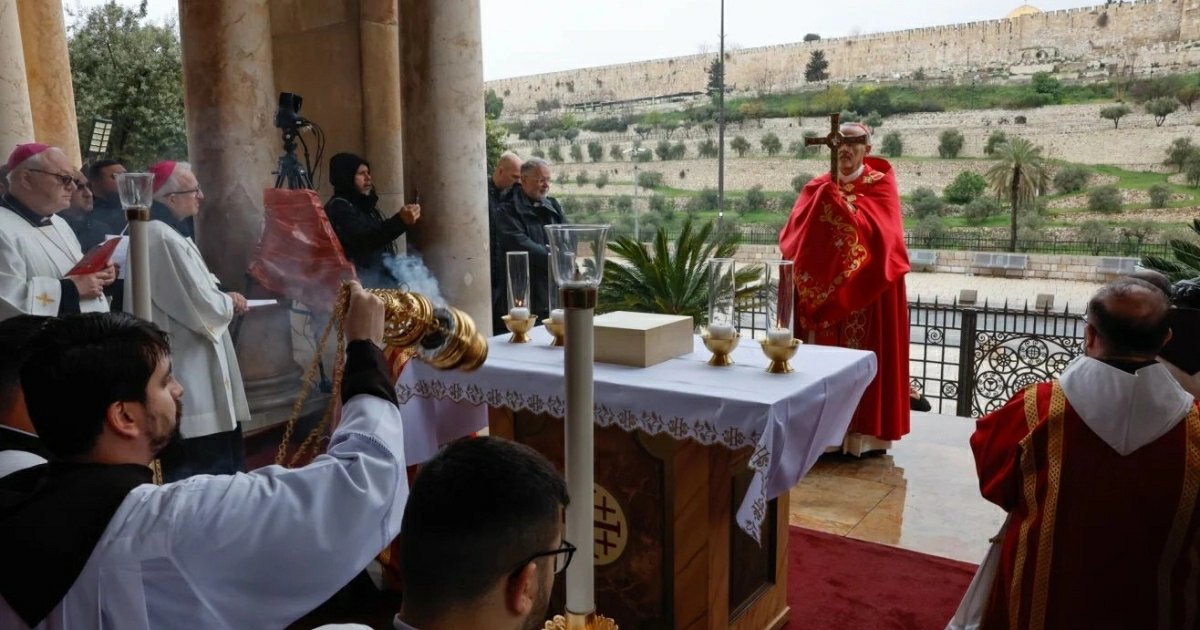
In an unprecedented move, Israeli police last Sunday prevented senior church leaders from entering the Church of the Holy Sepulchre in Jerusalem to celebrate Palm Sunday Mass, provoking angry reactions from the international community. In response to this criticism, Israeli Prime Minister Benjamin Netanyahu announced that he had requested the "relevant authorities" to allow the Latin Patriarch of Jerusalem to access the sacred site and hold services as desired.
The Church of the Holy Sepulchre is considered one of the holiest sites in Christianity, and Palm Sunday marks the beginning of Holy Week, the most sacred period in the Christian calendar, commemorating Jesus' entry into Jerusalem. The Latin Patriarchate described this incident as a dangerous precedent that disregards the feelings of billions of people around the world who look to Jerusalem during this time.
Details of the Incident
In an official statement, the Latin Patriarchate confirmed that the barring of church leaders from celebrating Palm Sunday Mass is unprecedented in centuries. It noted that this incident reflects a hasty and flawed decision by Israeli authorities, as they were prevented from entering the church while approaching privately and without any celebratory displays.
At the same time, Netanyahu indicated that this decision was made due to security concerns amid the ongoing war with Iran, as sacred sites in Jerusalem have faced threats from Iranian missiles. He confirmed that one of the missiles fell near the Church of the Holy Sepulchre, heightening security fears.
Background & Context
Historically, Jerusalem has witnessed numerous conflicts over control of sacred sites, especially after Israel occupied East Jerusalem from Jordan in the 1967 war. Nevertheless, comprehensive restrictions on access to sacred sites have been rare, particularly during major religious periods. As tensions in the region have escalated, these restrictions have become more common, raising concerns within the international community.
In recent years, Jerusalem has seen a rise in tensions between religions, with restrictions imposed on access to both the Al-Aqsa Mosque and the Church of the Holy Sepulchre, leading to criticism from various countries and international organizations. Many religious and political leaders have pointed out that these restrictions represent a violation of freedom of worship.
Impact & Consequences
This incident serves as a wake-up call regarding how Israeli authorities handle religious issues in Jerusalem. Many international leaders, including French President Emmanuel Macron and Italian Prime Minister Giorgia Meloni, condemned the Israeli police's decision, emphasizing the importance of maintaining freedom of worship for all religions.
The U.S. ambassador to Israel also noted that this decision represents an unjustified overreach, which could lead to negative repercussions for Israel's international relations. Meanwhile, several Arab countries, including Saudi Arabia and Jordan, expressed concern over the continued restrictions on sacred sites.
Regional Significance
These events directly impact relations between Israel and Arab countries, stirring feelings of anger and resentment among both Muslims and Christians. Arab nations, including Egypt and Turkey, condemned the ongoing restrictions on access to sacred sites, considering them a blatant violation of international laws.
Under these circumstances, pressure is mounting on Israel to ease restrictions on sacred sites, which could contribute to calming the tense situation in the region. Upholding freedom of worship is a fundamental right that all countries must respect.