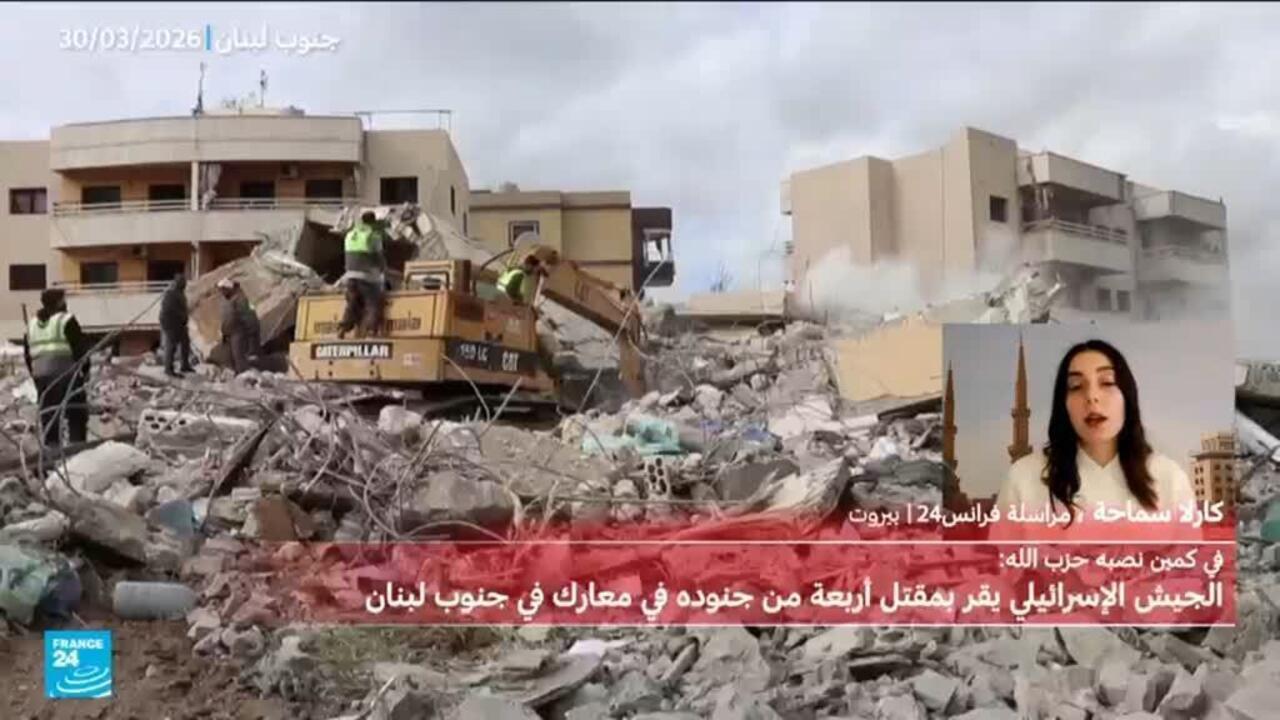
The Israeli Ministry of Defense announced on Tuesday plans to establish a buffer zone in southern Lebanon, where Israel will maintain control over the entire area up to the Litani River. The minister confirmed that all homes in villages near the border will be destroyed, reflecting an escalation in tensions between Israel and Hezbollah.
In a related context, the Israeli army reported the deaths of four of its soldiers in ongoing battles in southern Lebanon, raising the total number of Israeli soldier fatalities to ten since hostilities resumed with Hezbollah on March 2. This announcement follows one day after the death of a UNIFIL personnel, with the peacekeeping force reporting the deaths of two more of its soldiers in an explosion of undetermined origin.
Details of the Incident
These developments come at a highly sensitive time, as the border between Israel and Lebanon witnesses a notable escalation in military activities. The Israeli Defense Minister indicated that the measures being taken aim to enhance Israeli security in the face of potential threats from Hezbollah. These actions may represent an escalation in the ongoing conflict, increasing tensions in the region.
On the other hand, media reports confirmed that the explosions leading to the deaths of UNIFIL soldiers were the result of increasing military operations, raising concerns about the safety of international forces deployed in the area. The United Nations has called for a comprehensive investigation into the recent incidents, emphasizing the importance of protecting civilians and international troops.
Background & Context
Historically, the Lebanese-Israeli border has witnessed numerous armed conflicts, with Hezbollah being one of the prominent actors in this context. Since the Second Lebanon War in 2006, tensions between the two sides have persisted, with hostilities escalating in recent years. These conflicts have resulted in significant human and material losses, impacting the overall stability of the region.
The UNIFIL force, deployed in Lebanon since 1978, is part of international efforts to maintain peace in the area. However, the recent surge in violence raises questions about the effectiveness of this force and its ability to protect civilians and international troops.
Impact & Consequences
The repercussions of this escalation extend beyond the Lebanese borders, potentially affecting regional stability as a whole. The continuation of hostilities could lead to further escalation, threatening security in neighboring countries and complicating humanitarian conditions in the region.
These events may also impact international relations, especially with the presence of United Nations forces in the area. Such developments could prompt the international community to reassess its strategies towards the Israeli-Lebanese conflict, potentially leading to new diplomatic interventions.
Regional Significance
Considering the situation in the Arab region, the escalation in southern Lebanon may negatively affect conditions in countries like Syria and Palestine. Deteriorating security situations could increase tensions among various factions, threatening peace and stability efforts in the region.
In conclusion, the situation in southern Lebanon remains tense, with growing fears of a larger escalation in the conflict. It requires intensive international efforts to ensure regional stability and protect civilians amid the current complex circumstances.