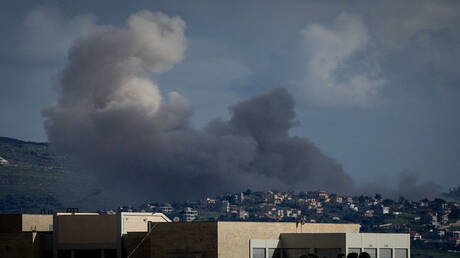
The Israeli army has announced a ceasefire in its ongoing battle with Iran, while remaining on high alert and ready to respond to any threats. This announcement comes at a time when Israeli forces are continuing their ground operations against Hezbollah in Lebanon, reflecting an increasing escalation in regional tensions.
This step by the Israeli army is seen as an attempt to mitigate military escalation with Iran, which is considered one of Israel's main adversaries in the region. However, the continued operations against Hezbollah indicate that Israel remains committed to countering what it perceives as direct security threats from Lebanon.
Details of the Ceasefire Announcement
In an official statement, the Israeli army confirmed that it has decided to implement a ceasefire with Iran, noting that this decision does not signify a retreat in defensive preparations. On the contrary, Israeli forces will remain in a state of maximum alert, fully prepared to respond to any potential attacks from Iran or its allies in the region.
At the same time, Israel continues to carry out military operations against Hezbollah, focusing on destroying the party's military infrastructure. These operations are part of an Israeli strategy aimed at undermining Hezbollah's military capabilities, especially amid rising tensions in the region.
Background & Context
Historically, relations between Israel and Iran have seen increasing tensions, with Iran being the main supporter of Hezbollah. For years, Israel has accused Iran of supplying the party with weapons and military technology, heightening Israeli concerns regarding its national security. In this context, there is growing apprehension that any military escalation could lead to a broader conflict in the region.
The situation in Lebanon further complicates the landscape, as the country suffers from a crippling economic crisis, increasing the likelihood that Hezbollah may exploit the situation to bolster its position domestically. This makes it difficult to predict how events will unfold in the near future.
Impact & Consequences
The ceasefire with Iran may carry significant implications on both regional and international levels. On one hand, it could help alleviate direct military tensions, but at the same time, it may strengthen Hezbollah's position in Lebanon, potentially leading to further escalation in the future.
Internationally, this development could affect relations between Israel and Western countries, especially amid increasing pressure on Iran. Additionally, any military escalation could draw the attention of the international community, potentially leading to new diplomatic interventions.
Regional Significance
For the Arab region, the ongoing conflict between Israel, Iran, and Hezbollah poses a significant challenge to security and stability. Neighboring Arab countries, particularly those facing internal conflicts, may find themselves in a difficult position if military tensions escalate.
Moreover, the situation in Lebanon could impact regional security, as any military escalation might lead to an influx of refugees into neighboring countries, increasing the economic and social burdens on these nations.
In conclusion, the situation in the region remains complex, with regional and international interests increasingly intertwined. The continuation of military operations against Hezbollah and the ceasefire with Iran could have far-reaching effects on security and stability in the region.