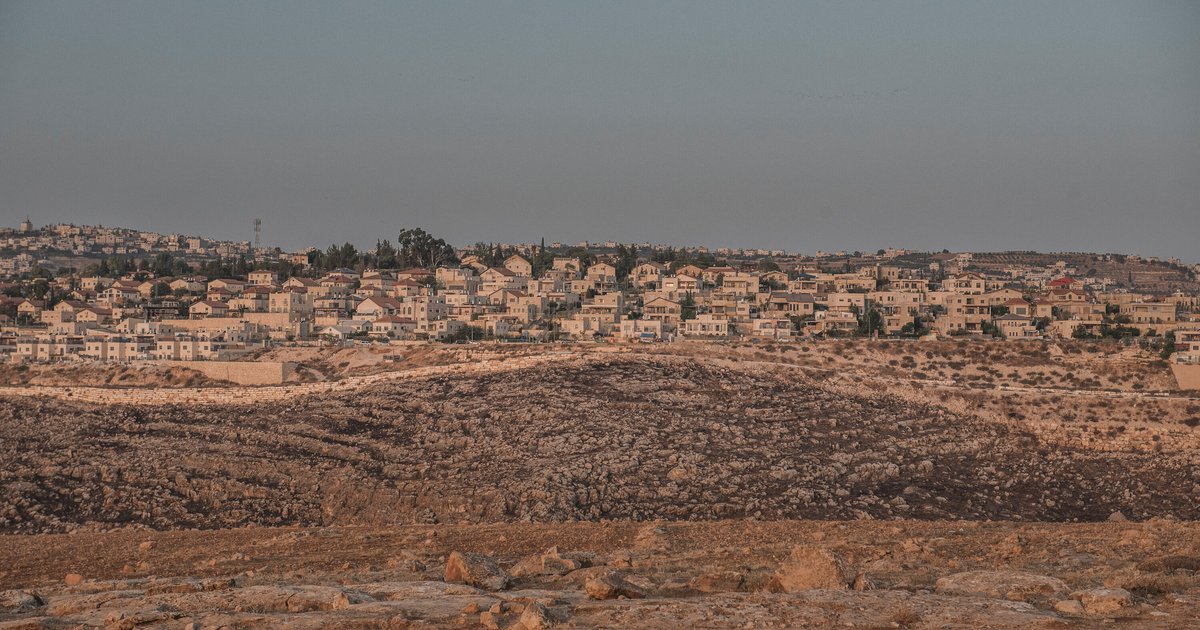
The President of the Palestinian National Council, Rouhi Fattouh, stated that Israel's approval of new settlement units in the northern West Bank represents a serious escalation within systematic colonial policies aimed at imposing new realities on the ground.
In a controversial move, the Israeli Higher Planning Council approved on Wednesday the establishment of 126 settlement units in the 'Sanour' settlement, located on lands in the Jenin Governorate in the northern occupied West Bank. This step comes at a time when tensions between Palestinians and Israelis are escalating, complicating peace efforts in the region.
Details of the Event
The 'Sanour' settlement is one of the settlements created as part of the continuously expanding Israeli settlement policy, despite international criticism. These new settlement units pose an additional challenge to efforts aimed at achieving a two-state solution, as they reinforce the presence of settlements in the occupied Palestinian territories.
This approval comes at a sensitive time, as Palestinians face numerous political and social challenges. Fattouh indicated that these colonial policies aim to change the facts on the ground, obstructing any efforts to reach a lasting peace.
Background & Context
Historically, Israeli settlement policy has been a contentious issue in the Palestinian-Israeli conflict. Since the occupation of the West Bank in 1967, the region has witnessed a significant increase in the number of settlements, exacerbating the humanitarian situation for Palestinians. Many countries and international organizations have condemned these policies, deeming them illegal under international law.
This step is part of a broader Israeli strategy aimed at strengthening its presence in areas it considers strategically important. These policies have sparked angry reactions from Palestinians, who view them as violations of their rights and a confirmation of the ongoing occupation.
Impact & Consequences
The implications of this approval extend beyond local dimensions, as it could significantly affect Israeli-Palestinian relations. Should Israel continue to expand settlements, this may lead to heightened tensions, increasing the likelihood of new confrontations.
Moreover, this step could influence the international community's stance toward Israel, as international pressure on the Israeli government to comply with international laws and halt settlement expansion may increase. Such pressures could lead to changes in Israeli policy, especially with elections approaching.
Regional Significance
These developments are of great importance to the Arab region as a whole, reflecting the ongoing Palestinian-Israeli conflict and its impact on regional stability. The escalation of settlement activities may worsen the humanitarian situation in the Palestinian territories, negatively affecting relations between Arab countries and Israel.
Furthermore, the continuation of these policies could hinder peace efforts in the region, increasing divisions between Palestinians and Israelis, which affects security and stability in neighboring countries.
In conclusion, this Israeli step remains a focal point of significant interest, raising questions about the future of peace in the region and emphasizing the urgent need for radical solutions to the Palestinian-Israeli conflict.