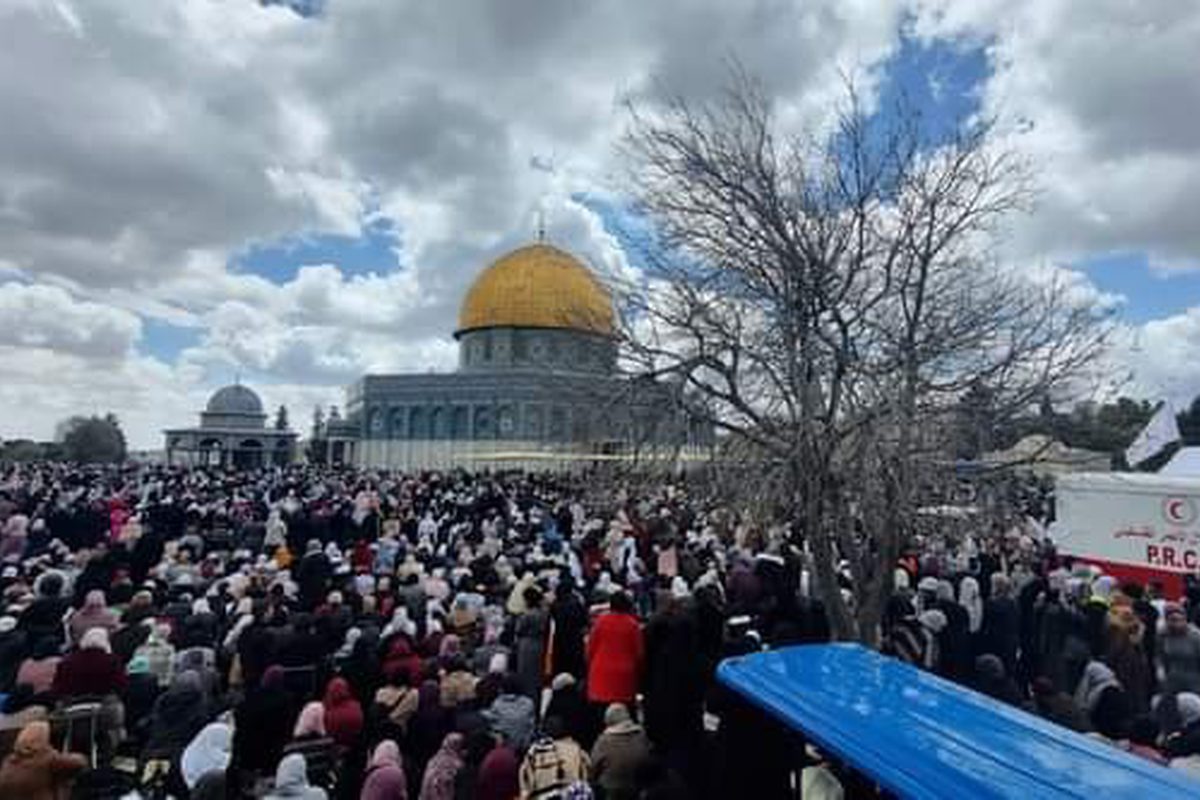
Israeli authorities are maintaining strict restrictions on Friday prayers at Al-Aqsa Mosque, preventing worshippers from accessing it for the fourth consecutive week. Since February 28, Israel has completely closed the doors of Al-Aqsa Mosque, citing what it describes as a state of emergency due to escalating regional tensions, particularly in light of the joint aggression with the United States against Iran.
This measure comes at a sensitive time, reflecting the ongoing closure policy adopted by Israeli authorities towards sacred sites in Jerusalem, which exacerbates tensions between Palestinians and Israelis. In recent days, there has been a heavy deployment of Israeli police at the entrances to the Old City, where worshippers have been barred from reaching Al-Aqsa Mosque, provoking widespread discontent among Palestinians.
Details of the Incident
The Israeli authorities continue to close Al-Aqsa Mosque, one of the holiest sites in Islam, hindering Muslims' right to practice their religious rituals. Eyewitnesses reported that Israeli police used force to disperse worshippers attempting to reach the mosque, leading to limited clashes.
These actions come at a time when tensions in the region are escalating, with attention focused on Al-Aqsa as a symbol of the Palestinian-Israeli conflict. Many observers have confirmed that these policies could worsen the situation in Jerusalem and increase divisions between Palestinians and Israelis.
Background & Context
Historically, Al-Aqsa Mosque has been a center of conflict in Jerusalem, where the city has witnessed numerous violent events associated with it. Since the occupation of East Jerusalem in 1967, Israel has pursued policies aimed at changing the status quo in the city, resulting in ongoing tensions with Palestinians.
In recent years, attacks on Al-Aqsa Mosque have increased, with periods of closure and restrictions on worshippers, provoking angry reactions from Palestinians and the Arab world. These events reflect the deeper conflict over identity and sovereignty in the holy city.
Impact & Consequences
The continued closure of Al-Aqsa Mosque exacerbates the humanitarian and political situation in Jerusalem. Palestinian worshippers feel excluded and discriminated against, increasing feelings of frustration and anger. Additionally, these policies may lead to an escalation of violence in the region, as tensions rise between Palestinians and Israeli forces.
Moreover, these measures could negatively affect relations between Israel and Arab countries, as Jerusalem is one of the central issues in the Palestinian-Israeli conflict. These events may provoke international reactions, increasing pressure on the Israeli government to reconsider these policies.
Regional Significance
The issue of Al-Aqsa Mosque is a sensitive topic in the Arab world, stirring strong emotions among Arab and Muslim populations. The continued closure of Al-Aqsa Mosque may lead to increased Arab solidarity with Palestinians, and we may witness political or popular movements to support Palestinian rights in the face of these policies.
Furthermore, these events could impact regional stability, as fears of escalating violence in the area grow. Any escalation in the situation in Jerusalem could negatively affect relations between Arab states and Israel, complicating the political landscape in the region.
In conclusion, the situation at Al-Aqsa Mosque remains under close observation, with expectations that tensions will continue under current Israeli policies. The right of Palestinians to practice their religious rituals should be a concern for the international community to ensure peace and stability in the region.