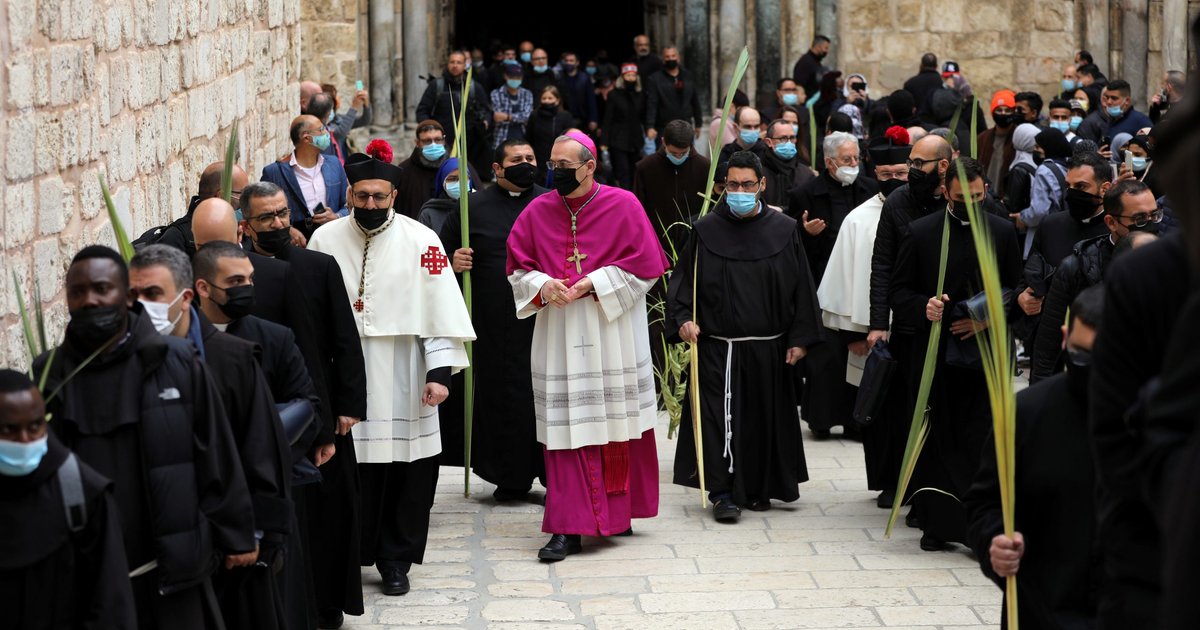
Israeli authorities have barred Latin Patriarch Pier Battista Pizzaballa from conducting the Palm Sunday Mass at the Holy Sepulchre, a significant religious event in the Christian calendar. This action has provoked widespread condemnation from the Christian community in Jerusalem, with many viewing it as a violation of their religious rights.
The Holy Sepulchre is considered one of the holiest Christian sites, where worshippers from various denominations gather to celebrate Palm Sunday, symbolizing Christ's entry into Jerusalem. The Latin Patriarch noted that this ban reflects an escalation in Israeli policies towards Christians in the city.
Details of the Incident
In an official statement, the Latin Patriarch reported that Israeli authorities informed him of the ban just hours before the scheduled Mass. He explained that this decision comes at a sensitive time, as the number of visitors and tourists to the holy city increases in anticipation of Easter. Many Christian clergy expressed their discontent with this decision, considering it a threat to religious freedom and a source of heightened tensions among different denominations.
The Latin Patriarch emphasized the importance of preserving religious freedom in Jerusalem, stating that this ban is not merely an administrative measure but part of a broader policy aimed at diminishing the Christian presence in the city. He has called on the international community to intervene to protect the rights of Christians in Jerusalem.
Background & Context
Historically, Jerusalem has witnessed ongoing religious and political tensions, as the city is sacred to three religions: Islam, Christianity, and Judaism. With the escalation of the Israeli-Palestinian conflict, pressures on Christian communities have increased, leading to a growing sense of being targeted.
In recent years, numerous incidents have been recorded that reflect the deteriorating situation for Christians in Jerusalem, including assaults on churches and religious symbols. Additionally, restrictions on the freedom of movement for Christian worshippers have complicated the situation further.
Impact & Consequences
This ban could have serious repercussions on relations among different denominations in Jerusalem. Christians, who represent a minority in the city, are concerned that such policies may lead to further division and tension. Moreover, this decision could adversely affect religious tourism, which is a significant source of income for the city.
Furthermore, this ban may escalate protests from the Christian community, potentially provoking reactions from Israeli authorities. Under these circumstances, it becomes crucial for international entities to intervene to safeguard the rights of Christians and ensure freedom of worship in Jerusalem.
Regional Significance
This event reflects the challenges facing religious communities in the Arab region, where pressures on religious minorities are increasing. The prohibition of the Latin Patriarch from conducting the Mass highlights a state of religious and political instability that could affect relations between Arab countries and Israel.
Ultimately, there remains hope that the international community can pressure Israel to ensure the rights of Christians in Jerusalem, allowing the Latin Patriarch to fulfill his religious duties freely. Maintaining religious and cultural diversity in Jerusalem is vital for the stability of the region as a whole.