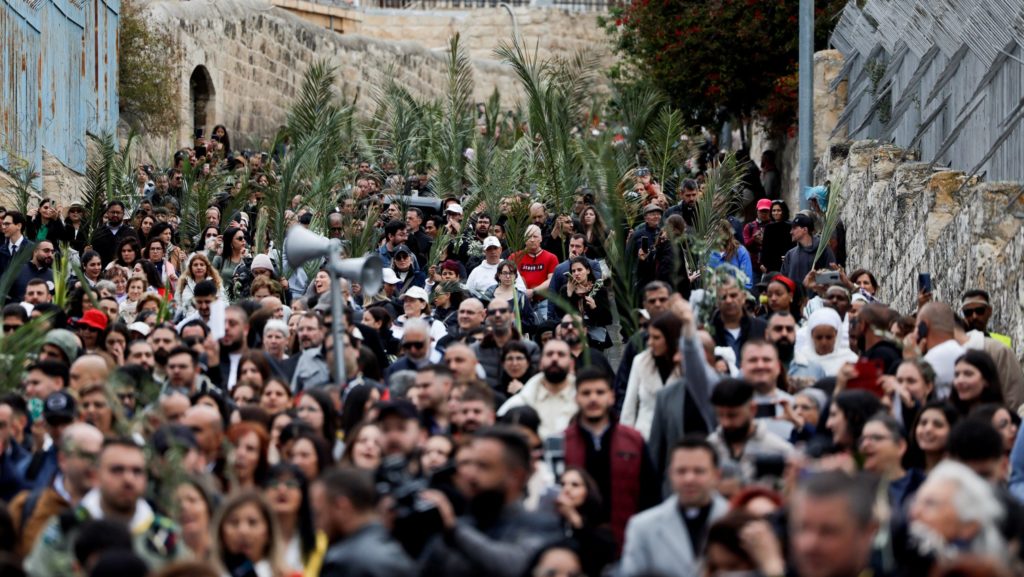
Israeli authorities have barred Cardinal Peter, the Archbishop of Jerusalem, from entering the Church of the Holy Sepulchre in Jerusalem during the Palm Sunday celebrations, provoking angry reactions from religious figures and the international community. This incident took place at a sensitive time as tensions in the holy city are escalating, and Palm Sunday is one of the most significant religious occasions for Christians.
Cardinal Peter intended to participate in the mass held at the Church of the Holy Sepulchre, a sacred site where Christians commemorate Christ's entry into Jerusalem. However, he was denied entry without an official explanation from Israeli authorities, leading to widespread condemnation among religious and political circles.
Details of the Incident
On the morning of Sunday, coinciding with Palm Sunday, a large number of Christian believers gathered outside the Church of the Holy Sepulchre in Jerusalem, where it was expected that the Cardinal would participate in the mass. However, everyone was surprised when he was informed that he was not allowed to enter. This action angered many religious leaders who viewed it as a violation of the freedom of worship.
Reactions to this incident were swift, with numerous religious and political figures condemning the action, considering it a violation of the rights of Christians in the holy city. They also noted that such measures could exacerbate tensions among the various communities in Jerusalem.
Background & Context
Historically, Jerusalem is considered a holy city for the three Abrahamic religions: Islam, Christianity, and Judaism. However, tensions between these communities have escalated in recent years, particularly with the rise of Israeli settlement activities in the city. Cardinal Peter, who serves as the Archbishop of Jerusalem, has long been a voice advocating for peace and coexistence among religions.
It is important to note that the Church of the Holy Sepulchre is one of the holiest sites in Christianity, believed to be the place where Christ was buried and resurrected. Therefore, any prohibition against clergy or believers entering this site is regarded as a violation of the freedom of worship.
Impact & Consequences
This incident could have serious repercussions on relations between the different communities in Jerusalem. With growing discontent among Christians, there may be increased pressure on Israeli authorities to provide clarifications regarding this decision. Additionally, this matter could negatively affect religious tourism, as many Christians visit Jerusalem during this time of year.
Moreover, this incident may escalate tensions between the Israeli government and Christian clergy, which could adversely impact peace efforts in the region. Cardinal Peter is considered an influential figure in the Christian community, and his barring from the Church of the Holy Sepulchre may be seen as a negative message to the faithful.
Regional Significance
This incident not only reflects the tensions in Jerusalem but also highlights the challenges faced by Christian communities in the Arab world. With increasing political and social pressures, Christians find themselves in a difficult position, which may lead to a decline in their numbers in the region.
In conclusion, the barring of the Cardinal from entering the Church of the Holy Sepulchre raises questions about the freedom of worship in Jerusalem and reflects the challenges faced by different religious communities in the city. This event necessitates further dialogue and understanding among religions to ensure everyone's rights to practice their religious rituals freely.