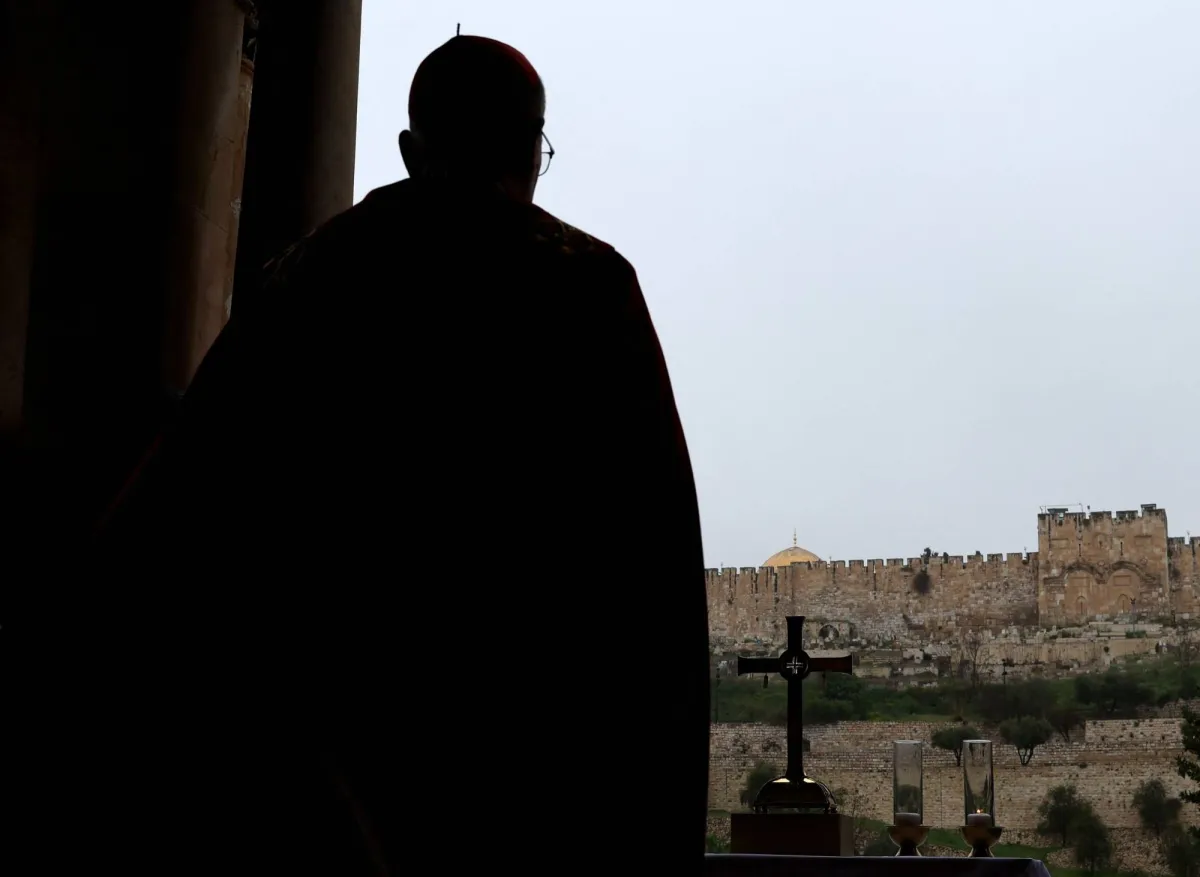
In an unprecedented action in centuries, Israeli police barred the Latin Patriarch of Jerusalem, Cardinal Pierbattista Pizzaballa, from entering the Church of the Holy Sepulchre to celebrate Palm Sunday Mass, provoking widespread condemnation from the Vatican and leaders of European countries.
This prohibition comes at a sensitive time, as Christians around the world celebrate Easter, one of the most significant holidays in the Christian calendar. The Latin Patriarchate in Jerusalem expressed deep regret for the faithful due to this action, which it described as a "dangerous precedent."
Details of the Incident
In an official statement, the Latin Patriarchate confirmed that Cardinal Pizzaballa and the Custodian of the Holy Land, Francesco Patton, were prevented from entering the church while on their way to celebrate Palm Sunday Mass. The Patriarchate noted that this prohibition is the first of its kind in centuries, reflecting an escalation in Israeli measures towards sacred sites.
In response to this ban, Israeli Prime Minister Benjamin Netanyahu stated that there was "no ill intent" behind the decision, indicating that security agencies are working on a plan to ensure the entry of church leaders to perform their rituals. However, Netanyahu's remarks did not alleviate the intensity of international criticism.
Background & Context
These events occur amid rising tensions in Jerusalem, where Christians are facing increasing restrictions on their freedom of worship. In recent years, there has been a surge in attacks against Christian clergy and churches, raising concerns for the Vatican and European nations.
Previously, there have been attempts by the Israeli government to restrict Christian access to the Church of the Holy Sepulchre, especially during holidays. These measures have led to growing anger among the Christian community, which feels targeted by Israeli policies.
Impact & Consequences
This ban could exacerbate tensions between the Christian community and Israeli authorities and may negatively impact relations between Israel and European countries. Additionally, the Vatican may take diplomatic steps against Israel if these policies continue.
On the other hand, this incident also reflects the challenges faced by religious minorities in Jerusalem, where pressures on Christians are increasing amid escalating regional conflicts.
Regional Significance
This prohibition is part of a broader policy aimed at altering the status quo in Jerusalem, raising fears that it could lead to greater escalation in the Israeli-Palestinian conflict. Furthermore, these events may affect relations between Arab countries and Israel, as calls increase for pressure on the Israeli government to halt its violations against sacred sites.
In conclusion, this incident underscores the significant importance that Christian communities worldwide place on Jerusalem and highlights the need to protect the freedom of worship for all religions in the holy city.