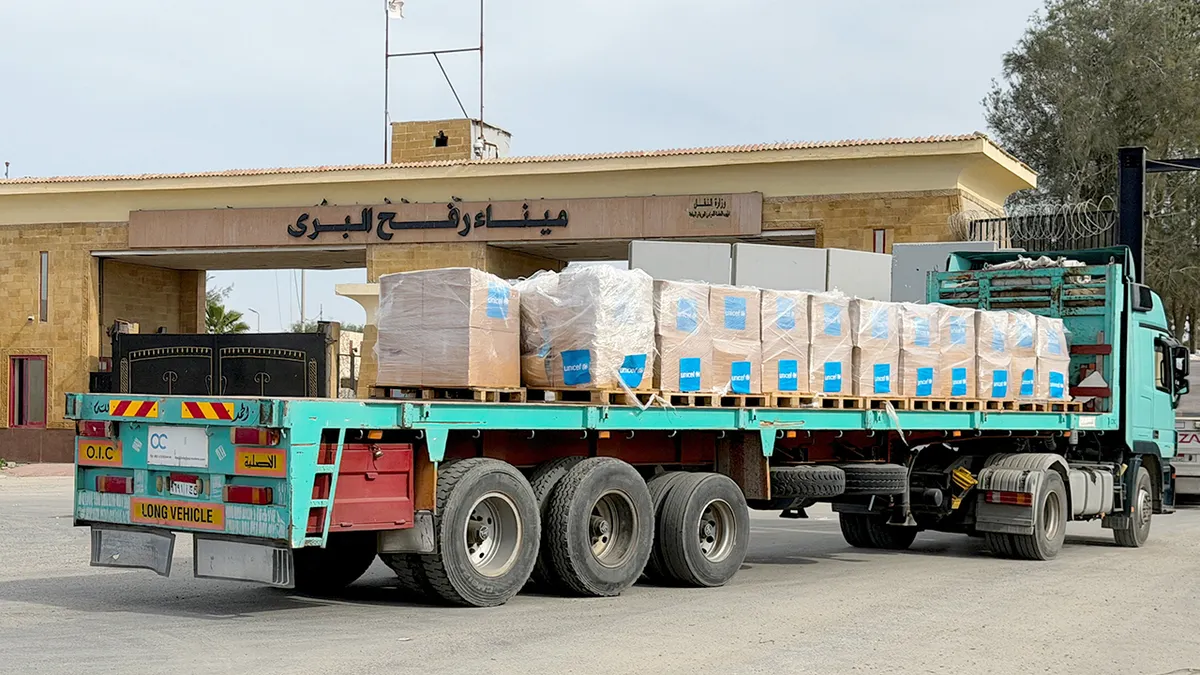
Israeli authorities have declared their decision to prevent the passage of humanitarian cases or their return from abroad through the Rafah crossing, increasing the pressure on Palestinians living in the Gaza Strip. This decision comes at a time when the region is suffering from a severe humanitarian crisis, with a growing need for humanitarian aid.
The Rafah crossing is the main gateway for Palestinians in Gaza to connect with the outside world, used by many patients, students, and families. However, the restrictions imposed by the Israeli side hinder the movement of these individuals, exacerbating their suffering.
Details of the Decision
In an official statement, Israeli authorities confirmed that the decision is part of security measures, noting that the security situation in the area necessitates strict measures. This decision has sparked angry reactions from human rights activists who consider this action a violation of basic human rights.
Concerns are growing that this decision will worsen the humanitarian situation in Gaza, where over two million Palestinians live under a suffocating blockade. Many humanitarian organizations have pointed out that the health situation in the region has significantly deteriorated, necessitating urgent humanitarian assistance.
Background & Context
Historically, the Rafah crossing has witnessed numerous tensions between Israeli authorities and Palestinians, having been closed on many occasions. As the Israeli-Palestinian conflict escalates, the movement of individuals and goods through the crossing has become increasingly complicated. These restrictions have significantly impacted the lives of Palestinians, many of whom suffer from shortages of medicines and healthcare.
This step is part of a broader policy adopted by Israel towards the Gaza Strip, imposing strict restrictions on movement and trade. These policies have exacerbated humanitarian and social crises in the region, increasing tensions between the two sides.
Impact & Consequences
This decision is expected to have negative effects on the humanitarian situation in Gaza, leading to worsening health and social crises. Additionally, preventing humanitarian cases from returning to Gaza may increase the suffering of families separated by borders.
Calls are increasing from humanitarian organizations and the international community to pressure Israel to ease the restrictions imposed on the crossing, as this is deemed essential to alleviate the suffering of Palestinians. The continuation of these policies may escalate tensions in the region, potentially affecting regional stability.
Regional Significance
The situation in Gaza is a sensitive issue that affects relations between Arab countries and Israel. Many Arab nations are closely monitoring the humanitarian situation in the region, urging the need for peaceful solutions to the Israeli-Palestinian conflict.
The ongoing deteriorating humanitarian conditions in Gaza could impact security and stability in the region as a whole, necessitating urgent action from the international community to alleviate humanitarian suffering.