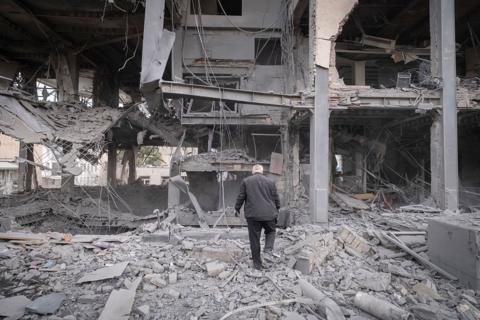
Israeli Prime Minister Benjamin Netanyahu declared that the war with Iran has achieved more than half of its objectives, a statement reflecting a new escalation in tensions between the two countries. Netanyahu confirmed that Israeli military operations against Iran are ongoing, with new airstrikes executed on Tehran, highlighting Israel's aggressive stance in the region.
These remarks come at a sensitive time, as fears of escalating conflict in the Middle East grow. Netanyahu indicated that Israel will continue to work towards its strategic goals in the face of what he described as the Iranian threat, without providing details on a timeline for concluding military operations.
Details of the Incident
Reports indicate that the recent Israeli airstrikes targeted military sites in Tehran, provoking angry reactions from the Iranian government. Tehran has deemed these airstrikes a violation of its sovereignty and announced that it will respond appropriately to any aggressions. In this context, Israel continues to bolster its military capabilities in the region, relying on support from the United States and its allies.
This escalation occurs amid increasing tensions in the region, as Iran seeks to enhance its influence in Iraq, Syria, and Lebanon, raising concerns for Israel and neighboring Arab countries. Observers have noted that these military operations could lead to a greater escalation in the conflict, threatening regional security.
Background & Context
Historically, relations between Israel and Iran have been strained since the Islamic Revolution in Iran in 1979. Since then, Israel has viewed Iran as an existential threat, particularly with the development of its nuclear program. In recent years, there has been an increase in Israeli military operations against Iranian targets in Syria, reflecting an Israeli strategy aimed at preventing Iran from strengthening its military presence near Israeli borders.
In recent years, Israel has signed normalization agreements with several Arab countries, further isolating Iran in the region. Nevertheless, Tehran continues to seek to enhance its influence by supporting armed groups in Iraq and Lebanon, complicating the security landscape in the Middle East.
Impact & Consequences
Israeli statements suggest that the war against Iran may continue for an extended period, potentially leading to further escalation of the conflict. If military operations persist, this could negatively impact regional security and increase the likelihood of new conflicts erupting.
The continuation of this war may also affect relations between Israel and Arab countries, as some nations may find themselves compelled to intervene or take clear stances regarding the conflict. This could lead to divisions in Arab positions, complicating the situation in the region.
Regional Significance
The current developments in the Israeli-Iranian conflict are of significant importance to Arab countries, as they may impact the stability of the entire region. Should the conflict escalate, it could lead to substantial economic and security repercussions, especially given the economic crises many Arab nations are experiencing.
Moreover, these developments could heighten tensions among various factions in the region, reflecting a state of instability that could affect the national security of Arab states. It is crucial for Arab countries to closely monitor these developments and work to enhance cooperation among themselves to address shared challenges.
In conclusion, the situation in the Middle East remains complex, with regional and international interests intertwining, making it difficult to predict the course of events in the future. As military operations continue, the most pressing question remains: how will this war impact security and stability in the region?