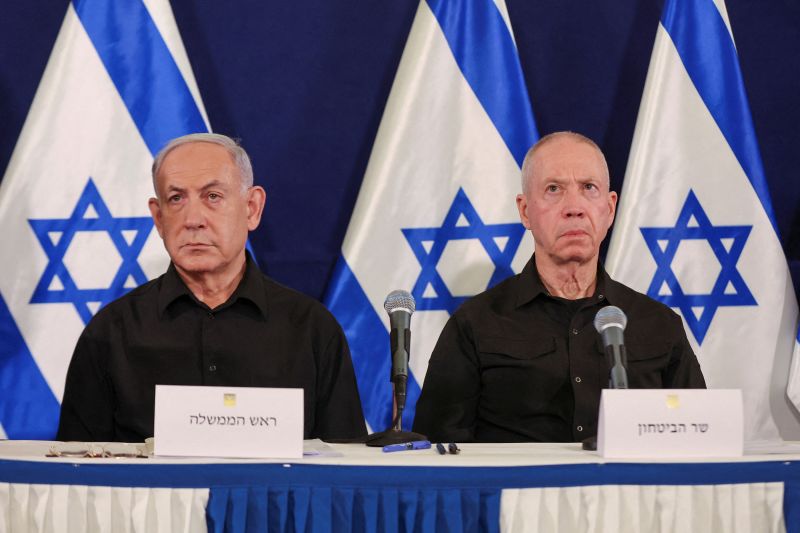
Israel's Defense Minister, Yoav Gallant, has declared that his country will take strict measures against Mojtaba Khamenei, the son of Iranian leader Ali Khamenei, should military conflict reignite. Gallant emphasized that targeting Khamenei would be the initial step in any potential military escalation, reflecting the increasing hostility in the rhetoric of Israeli officials towards Iran.
These remarks come at a sensitive time when the region is experiencing heightened tensions, with fears of escalating conflict between Israel and Iran. Gallant pointed out that Iran poses a threat to Israeli national security and that his country will do everything possible to protect its citizens.
Details of the Statement
During a press conference, Gallant affirmed that Israel would not hesitate to take decisive action against any threats emanating from Iran, indicating that Mojtaba Khamenei is part of the Iranian leadership that seeks to destabilize the region. He also added that Israel is closely monitoring Iranian activities and preparing for any developments that may arise.
These statements are part of a broader Israeli strategy aimed at countering Iranian expansion in the Middle East, as Tel Aviv seeks to enhance its military and intelligence capabilities to address potential threats.
Background & Context
Historically, relations between Israel and Iran have been tense, with Israel viewing Iran as an existential threat. In recent years, there has been an escalation in mutual attacks between the two sides, including cyberattacks and military operations. Additionally, the Iranian nuclear program remains a significant concern for Israel, which fears it could lead to Iran developing nuclear weapons.
In recent years, Iran has increased its support for armed groups in the region, such as Hezbollah in Lebanon and Hamas in Gaza, exacerbating tensions with Israel. Israel considers these groups a direct threat to its security, justifying its offensive strategy.
Impact & Consequences
The recent statements by Israel's Defense Minister could escalate tensions in the region, as Iran may respond to any potential targeting of Mojtaba Khamenei with military operations or attacks on Israeli interests. Furthermore, these remarks could affect relations between Iran and Western countries, especially amidst ongoing discussions regarding the Iranian nuclear program.
Moreover, these statements could lead to increased polarization in the region, with other countries potentially joining the conflict, complicating the security situation in the Middle East.
Regional Significance
Israeli statements serve as a warning to Arab countries, as they may lead to heightened tensions between Arab nations and Iran. Any military escalation could impact stability across the entire region, threatening the national security of Arab states.
In light of these circumstances, Arab countries must remain vigilant and work to strengthen security cooperation among themselves to face shared challenges. They should also seek diplomatic solutions to regional crises to avoid military escalation.