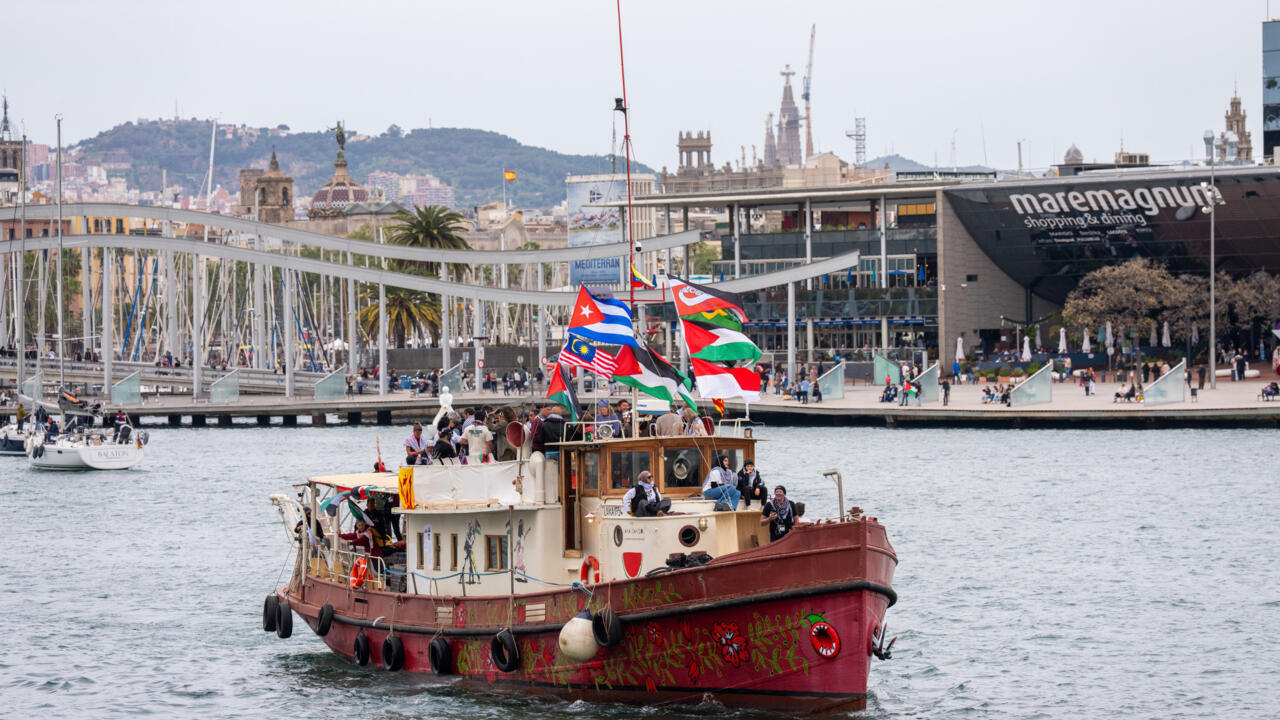
Israeli Foreign Ministry announced on Sunday the deportation of two activists, one Spanish and the other Brazilian, after their arrest during their participation in the 'Freedom Fleet' heading towards the Gaza Strip. The activists, Saif Aboukashk and Thiago Avila, were detained after the Israeli navy intercepted their boat in international waters off the Greek coast on April 30.
A statement from the Israeli Foreign Ministry confirmed that investigations with the activists had been completed, and authorities would not allow any breach of the blockade imposed on Gaza. Although their destination after deportation was not specified, this move aligns with Israel's strict policy against any attempts to break the blockade on the Palestinian territory.
Details of the Incident
Saif Aboukashk and Thiago Avila were arrested while attempting to join the 'Freedom Fleet', which aims to deliver humanitarian aid to Gaza. They were taken to Israel for questioning, while approximately 175 other activists of various nationalities who were part of the 'Global Resilience Fleet' in Greece were released swiftly.
These events occur at a sensitive time, as relations between Israel and several European countries, including Spain, are experiencing increased tension. The governments of Madrid and Brasília, along with the United Nations, have called for the immediate release of the activists, reflecting growing international concern regarding human rights in the region.
Background & Context
Historically, attempts to break the blockade on Gaza have seen many similar events, with the 'Freedom Fleet' being one of the most prominent initiatives aimed at highlighting the humanitarian conditions in the region. The blockade imposed on Gaza since 2007 has led to a deterioration of economic and humanitarian conditions, prompting many activists to take bold steps to try to change this reality.
These events are part of a broader conflict between Israel and the Palestinians, where international calls to end the blockade and improve humanitarian conditions in Gaza are escalating. This issue has sparked widespread debate in international circles, with increasing pressure on Israel to ease restrictions imposed on the territory.
Impact & Consequences
The deportation of the activists may have repercussions on relations between Israel and the countries they belong to, especially amid the deteriorating relations between Tel Aviv and Madrid. This move is expected to provoke strong reactions from governments and human rights organizations, potentially leading to further pressure on Israel.
Moreover, these events could impact the international solidarity movement with Gaza, as activists seek to highlight the difficult humanitarian conditions faced by the residents of the territory. This may lead to increased international support for efforts aimed at ending the blockade and improving living conditions in Gaza.
Regional Significance
These events are part of the larger picture of the Israeli-Palestinian conflict, where conditions in Gaza remain a focal point of interest in the Arab world. Attempts to break the blockade evoke feelings of solidarity among Arab nations and may lead to new diplomatic moves to support the Palestinian cause.
In light of these developments, there remains hope that international pressures will lead to positive changes in Israeli policies towards Gaza, which could contribute to improving humanitarian conditions in the region.