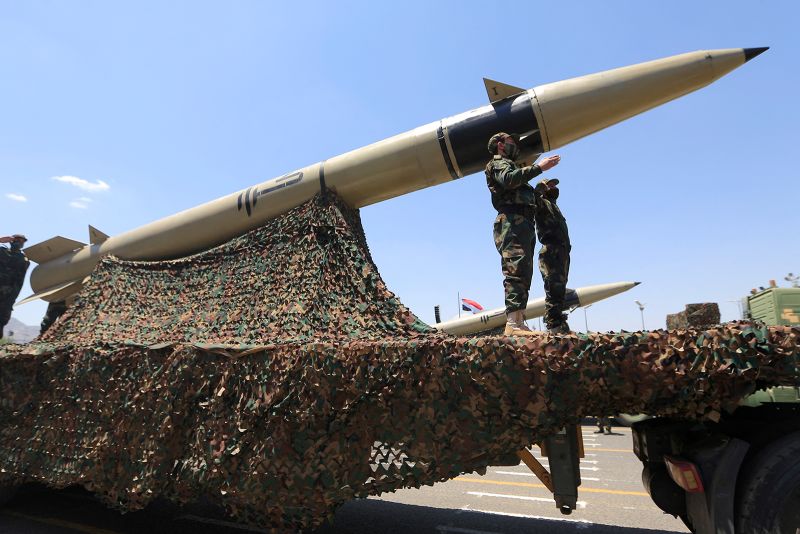
In a new and exciting development, the Israeli army announced today, Saturday, the detection of a missile launched from Yemen, marking the first such event since the outbreak of the U.S.-Israeli war on Iran a month ago. This launch comes at a sensitive time, as tensions in the region are escalating, raising questions about the Houthis' role in the regional conflict.
This launch is seen as a clear signal of the Houthis' potential escalation of their role in the conflict, especially given the Iranian support they receive. This situation has raised concerns among many countries in the region, which fear the impact of this escalation on regional security.
Details of the Incident
According to reports, the missile launched from Yemen has not been identified in terms of type or target, but the Israeli army confirmed that it was detected in the airspace. This launch occurs at a time when hostilities are escalating between Iran and its allies on one side, and the United States and Israel on the other, complicating the security landscape in the Middle East.
Although the Houthis have not officially claimed responsibility for this launch, experts believe that this action could be part of a larger strategy aimed at supporting Iran in the face of military and political pressures it is experiencing.
Background & Context
Since the beginning of the U.S.-Israeli war on Iran, the region has witnessed an escalation in military actions, with U.S. military pressures targeting numerous Iranian sites. The Houthis, who are considered allies of Iran, have not intervened directly in this conflict so far, raising questions about their future strategy.
Historically, the relationship between the Houthis and Iran has been strong, with the group receiving military and political support from Tehran. However, their direct involvement in the conflict could expose them to increased military pressures from the Arab coalition led by Saudi Arabia.
Impact & Consequences
This launch could have significant implications for regional security. If the Houthis decide to escalate, it could lead to an intensification of the conflict in Yemen, increasing civilian suffering and complicating peace efforts. Additionally, this escalation may prompt other countries in the region to take countermeasures, heightening tensions further.
Moreover, this launch could affect the relationships between Iran and its allies, as it may require greater coordination among the involved parties to address the increasing security challenges.
Regional Significance
As tensions rise in the region, this event highlights the necessity of enhancing Arab cooperation to confront security challenges. The Houthis' escalation may increase pressures on Arab countries, especially those sharing borders with Yemen.
This launch may also alarm major powers, which might feel the need to intervene to protect their interests in the region. Under these circumstances, the question remains as to how Arab countries will respond to this escalation and whether they will take effective steps to mitigate the Houthis' influence.
In conclusion, the missile launch from Yemen represents a turning point that could lead to greater escalation in the regional conflict. The current situation requires strategic thinking from all parties involved to ensure that conditions do not deteriorate further in the region.