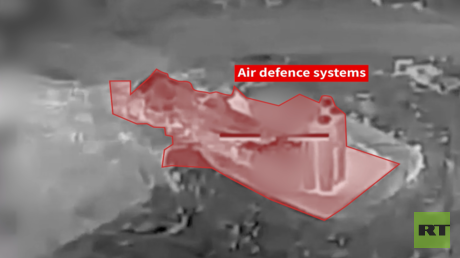
Israel announced on Tuesday its success in dismantling Iranian air defense systems through precision strikes aimed at strategic sites. Tel Aviv revealed exclusive footage documenting these attacks, marking a new escalation in the ongoing conflict between the two parties.
These military operations occur during a sensitive time, as tensions between Israel and Iran are escalating, particularly in light of mutual threats from both sides. Israeli military sources confirmed that these strikes aim to undermine Iran's ability to conduct any offensive operations against Israel.
Details of the Event
According to reports, the Israeli strikes targeted locations in Syria, which are considered key launch points for Iranian operations. The released footage demonstrated the accuracy of the attacks, as several defense systems were destroyed without any civilian casualties reported.
These strikes are part of a long-term Israeli strategy aimed at preventing Iran from bolstering its military presence in the region, especially in neighboring countries like Syria and Lebanon. Reports indicated the presence of Israeli warplanes in Syrian airspace prior to the execution of the strikes.
Background & Context
Historically, the relationship between Israel and Iran has been tense, with Iran viewed as Israel's arch-enemy in the region. Since the Islamic Revolution in 1979, tensions between the two countries have escalated, with Israel accusing Iran of supporting armed groups that threaten its security.
In recent years, Iran has increased its military presence in Syria, prompting Israel to take preventive measures. These strikes are part of an Israeli policy aimed at maintaining its military superiority in the region.
Impact & Consequences
These strikes could lead to further escalation in the conflict between Israel and Iran, as Iran may respond to these attacks in various ways, either through supporting armed groups or executing direct retaliatory operations.
Moreover, these developments may affect regional relations, as other countries in the area may feel concerned about the rising tensions. This situation could open the door for more foreign interventions, particularly from major powers with interests in the region.
Regional Significance
These events are of significant importance to the Arab region, as they may impact the stability of neighboring countries such as Iraq and Syria. The escalating tensions between Iran and Israel could also lead to increased sectarian divisions in the region.
Although many Arab countries are seeking to improve their relations with Iran, these strikes could reset the situation to square one, complicating the political landscape in the region.
In conclusion, the situation in the region remains tense, with ongoing escalation between Iran and Israel. These circumstances require close monitoring by the international community to ensure that conditions do not deteriorate into a full-scale conflict.