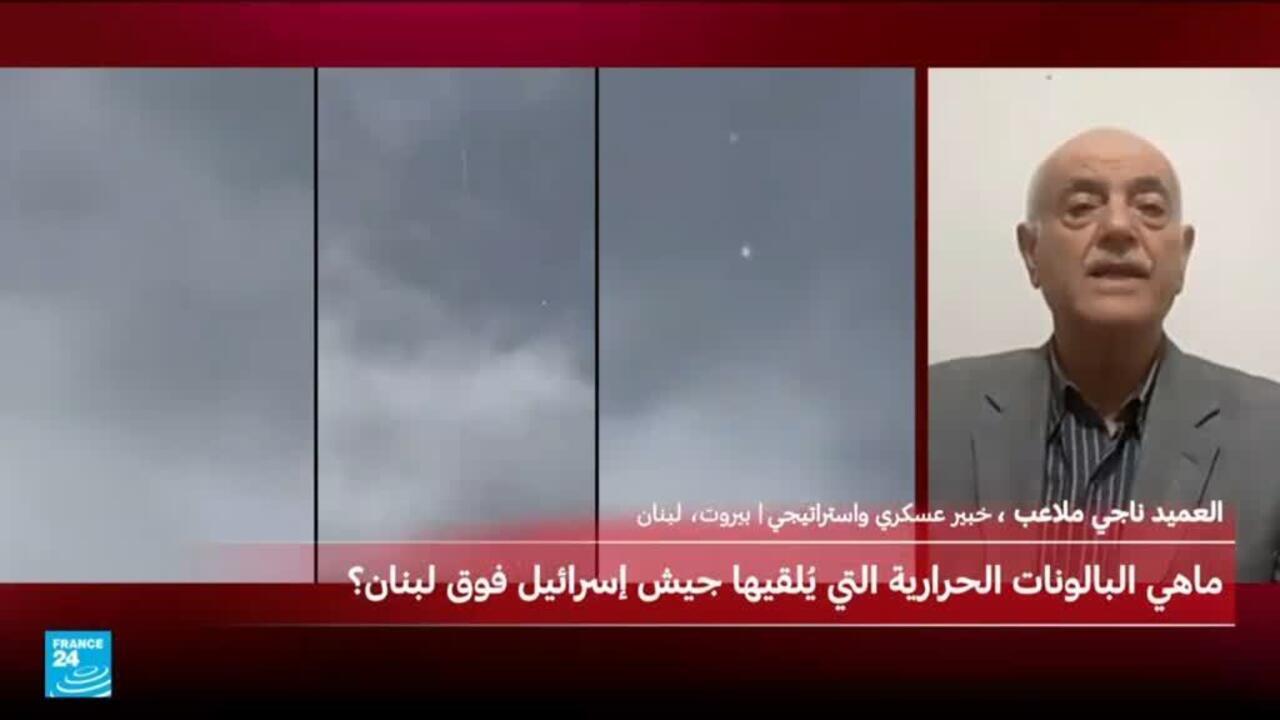
Israel has launched thermal balloons over Lebanese territory, raising questions about the objectives and potential consequences of this action. These balloons are used for various purposes, including surveillance and reconnaissance.
Thermal balloons are considered advanced technical tools, utilized in numerous military and intelligence operations. They are characterized by their ability to fly at high altitudes, allowing them to gather information with high precision. This move has raised concerns among Lebanese authorities, who view these actions as a violation of the country's sovereignty.
Details of the Incident
In recent days, Lebanese forces have detected several thermal balloons launched from the Israeli side, observed flying in Lebanese airspace. These balloons incorporate advanced technologies that enable them to capture images and videos, enhancing Israel's capability to monitor activities in border areas.
These balloons are part of a broader Israeli strategy to monitor military and security activities in Lebanon, particularly amid ongoing tensions between the two sides. This step has elicited mixed reactions within Lebanese political and media circles.
Background & Context
Historically, the Lebanese-Israeli border has been a stage for tensions and conflicts. Since the end of the Lebanese War in 2000, the region has witnessed numerous military incidents, including exchanges of fire and intelligence operations. These activities have increased in recent years, especially with the escalation of regional tensions.
Thermal balloons are part of technological advancements in the field of espionage, employed by various countries for multiple purposes. As reliance on technology in military operations grows, understanding how these tools impact regional conflicts becomes essential.
Impact & Consequences
This action could escalate tensions between Lebanon and Israel, as it may be perceived as a violation of Lebanese sovereignty. The Lebanese government might respond to these violations through diplomatic or even military measures, increasing the likelihood of escalation in the region.
Furthermore, these events may affect Lebanon's relations with other countries, particularly given the international support for Lebanon in facing security challenges. The international community may seek to intervene to mitigate escalation, adding a new dimension to the crisis.
Regional Significance
These events are part of the larger picture of conflicts in the region, contributing to heightened tensions among nations. Such developments could impact regional security, prompting Arab countries to take clear stances against these violations.
In a related context, these events may enhance cooperation among Arab nations to address common security challenges, potentially contributing to greater stability in the region.
In conclusion, the dropping of thermal balloons over Lebanon raises numerous questions about Israeli objectives and could lead to significant repercussions for regional security. The current situation requires Arab nations to take decisive stances to confront these violations.