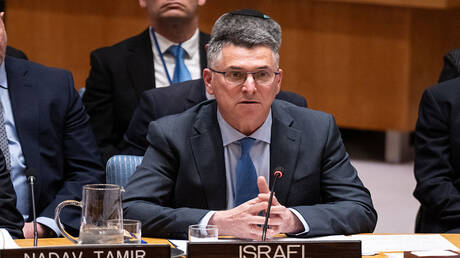
Israeli Foreign Minister Gideon Sa'ar stated that Israel has succeeded in removing what he described as the 'existential threat' posed by Iran. This announcement came during a press conference where Sa'ar confirmed that recent military operations have achieved their objectives in reducing Iranian threats.
These statements reaffirm Israel's strategy focused on confronting regional threats, particularly from Iran, which is considered Israel's main adversary in the region. Sa'ar noted that this war, despite its success, will not be the last, reflecting the ongoing tensions in the Middle East.
Details of the Event
During the conference, Sa'ar discussed the military operations carried out by Israel against Iranian targets in Syria, indicating that these operations were necessary to protect Israeli national security. He added that Iranian movements in the region, including its support for armed groups, pose a persistent threat that must be addressed.
Sa'ar also addressed security cooperation with allied countries, emphasizing the importance of coordination with the United States and Gulf nations to tackle shared challenges. He pointed out that Israel will continue to enhance its military and intelligence capabilities to confront any future threats.
Background & Context
Historically, relations between Israel and Iran have been tense since the Islamic Revolution in 1979, with Iran viewing Israel as a primary enemy. Recent years have seen an escalation in tensions, particularly following Iran's involvement in regional conflicts and its support for armed groups in Lebanon and Syria.
The 2015 nuclear agreement signed by Iran has further heightened Israeli concerns, as Tel Aviv believes this agreement will not prevent Iran from developing nuclear weapons but may enhance its military capabilities in the future. In this context, Israeli military operations are part of a broader strategy to counter Iranian threats.
Impact & Consequences
Sa'ar's statements serve as a clear warning that conflict in the region may continue to escalate, potentially leading to increased tensions between Israel and Iran. These remarks could also affect relations between Israel and Arab countries, especially those seeking to improve ties with Tel Aviv.
On the other hand, these statements may lead to increased Iranian support for armed groups in the region, reflecting the ongoing struggle between regional powers. Additionally, military escalation could impact regional stability and exacerbate the suffering of civilians in conflict-affected areas.
Regional Significance
Arab countries are significantly affected by the tensions between Israel and Iran, as any escalation could lead to negative repercussions for security and stability in the region. Arab nations seeking to improve relations with Israel may find themselves in a difficult position amid the ongoing conflict.
At the same time, escalation may strengthen alliances between Arab countries and Iran, complicating the regional landscape. This situation poses a significant challenge for Arab diplomacy, which aims to achieve peace and stability in the region.
In conclusion, the statements by the Israeli Foreign Minister reflect a complex reality in the Middle East, where ongoing tensions between regional powers continue to impact security and stability. As the conflict persists, the hope for lasting peace remains elusive.