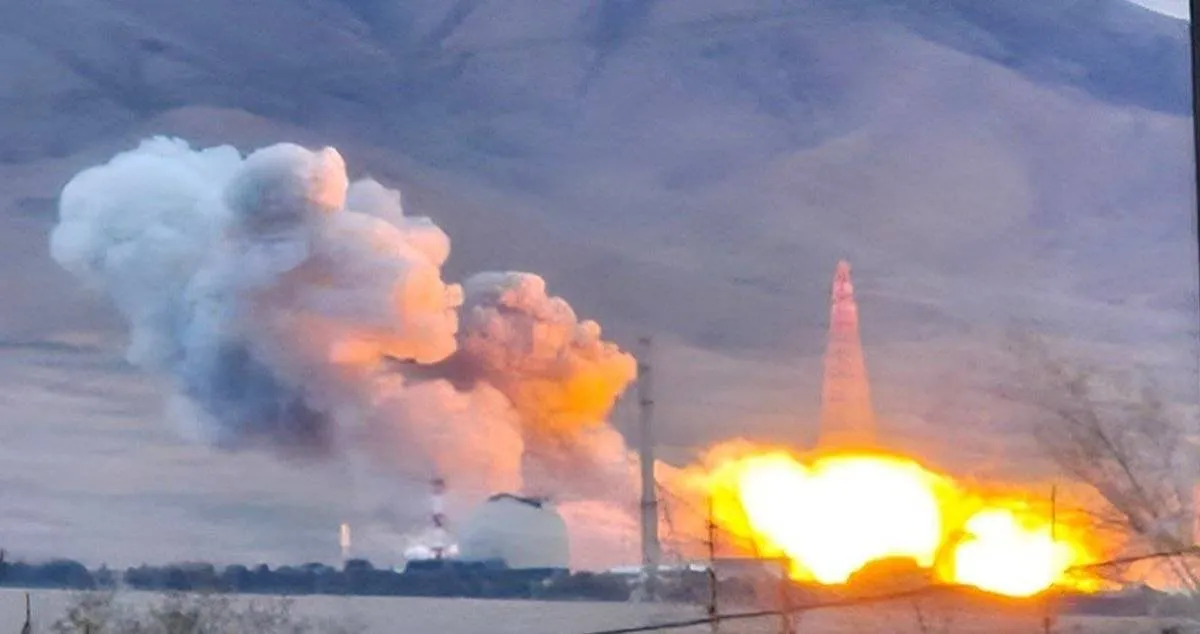
In a notable military escalation, Israel has expanded its target list within Iran, focusing on nuclear facilities and missile production sites as the war enters its second month. The attacks have also included vital industrial sites, signaling rising tensions in the region.
The Israeli army announced the execution of a wave of extensive strikes in the heart of Tehran, targeting facilities used in the manufacturing of ballistic missiles, in addition to launch platforms and storage sites in western Iran. The attacks targeted dozens of military facilities, including missile component production sites belonging to the Islamic Revolutionary Guard Corps, reflecting an Israeli strategy aimed at undermining Iranian military capabilities.
Details of the Attacks
Among the most significant strikes was the targeting of the Arak heavy water facility linked to plutonium production, alongside a facility in Yazd for processing yellowcake, the raw material necessary for uranium enrichment. Tehran has confirmed that there were no human casualties or radiation leaks, indicating that it has taken precautionary measures to protect vital facilities.
The strikes also extended to the heavy industries sector, targeting the Mobarakeh Steel Company in Isfahan and Khouzestan Steel Company in Ahvaz. Iranian Foreign Minister Abbas Araghchi vowed a "heavy price" for the attacks, indicating that these operations contradict the diplomatic path, complicating the regional situation further.
Background & Context
These developments come at a time when the region is witnessing unprecedented military escalation, as Iran continues to respond with missiles and drones. The United States, for its part, is considering sending reinforcements that could reach 10,000 troops, reflecting growing concerns over escalating tensions in the Middle East.
The United Nations has also intervened in this context, announcing the formation of a task force to ensure the continued flow of trade through the Strait of Hormuz, warning that disruptions caused by the war could exacerbate food shortages and humanitarian crises worldwide.
Impact & Consequences
The Israeli strikes on Iranian facilities could lead to greater military escalation, as the Islamic Revolutionary Guard Corps warned that any movement in the Strait of Hormuz would be met with a harsh response. Furthermore, the continuation of the war could threaten to close the strait, through which about 30% of global fertilizer trade passes, negatively impacting global food security.
UN experts have warned that disruptions to fertilizer shipments and rising energy prices could lead to new spikes in food prices in vulnerable countries, potentially resulting in a long-term setback at a time when many nations are beginning to recover from successive global shocks.
Regional Significance
Concerns are growing that the escalation of the conflict between Israel and Iran could extend to neighboring countries, threatening the stability of the entire region. Warnings of Iranian retaliatory actions may include targeting American interests and allies in the region, further complicating the security situation.
Under these circumstances, Arab countries must be prepared to face the repercussions of this escalation, whether through enhancing security cooperation or supporting diplomatic efforts to resolve the conflict.