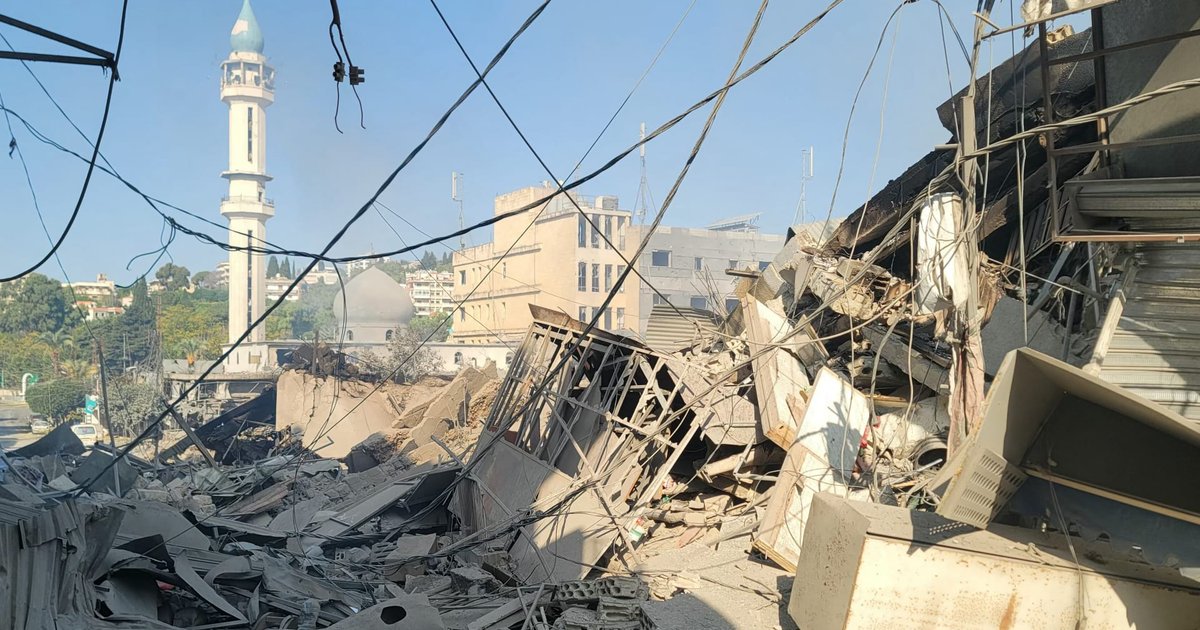
The increasing Israeli statements regarding southern Lebanon go beyond mere diplomatic pressure messages, revealing a solid strategic decision that intricately intertwines military, security, and political dimensions. These statements reflect a shift in Israeli policy towards the region, as Tel Aviv appears to be preparing for more decisive actions within its security strategy.
Recently, the Israeli-Lebanese border has witnessed a notable escalation, with Israeli forces firing artillery shells at positions in southern Lebanon, provoking angry reactions from the Lebanese government. This escalation comes at a sensitive time, as fears grow over rising tensions in the region, especially with regional and international powers competing for influence in the Middle East.
Details of the Incident
Recent Israeli statements, issued by military and political officials, indicate that Tel Aviv considers southern Lebanon a region of strategic importance and intends to take military actions to protect its interests. Some analysts have pointed out that these statements are part of a broader plan aimed at redrawing the geopolitical maps in the region, which could lead to significant changes in the balance of power.
The Israeli military escalation coincides with large-scale military maneuvers, as Israel seeks to enhance its defensive and offensive capabilities. This has raised concerns within the international community, which fears that this could lead to a larger escalation in the conflict between the two sides.
Background & Context
Historically, the southern Lebanon region has been a theater for armed conflicts, witnessing multiple confrontations between Israel and Hezbollah. Since Israel's withdrawal from Lebanon in 2000, the border between the two sides has remained tense, with exchanges of accusations and military operations. This historical backdrop complicates the current situation, as regional and international interests intertwine in this area.
Moreover, the internal situation in Lebanon, which is suffering from severe economic and political crises, adds to the complexity. Any military escalation could significantly impact Lebanon's stability, which is already under internal and external pressures.
Impact & Consequences
The Israeli escalation in southern Lebanon could lead to serious repercussions for regional security. Increased tensions may open the door to a comprehensive military escalation, threatening the stability of neighboring countries and exacerbating existing conflicts. Furthermore, any escalation could affect relations between major powers in the region, especially with rising pressures on Iran and its allies.
Additionally, the Israeli statements may bolster Hezbollah's position, which could use these events to assert its legitimacy as a defender of Lebanon against Israeli aggressions. This could further complicate the political landscape in Lebanon and affect internal stability.
Regional Significance
The events in southern Lebanon are part of a larger picture concerning regional security. Tensions in Lebanon could impact the situation in Syria and Iraq, where regional and international powers seek to achieve their interests. Any escalation could also affect peace efforts in the region and complicate relations between Arab countries and Israel.
Ultimately, the situation in southern Lebanon remains a key point of tension in the Middle East, where military and political dimensions intertwine in a complex manner. Continued escalation may lead to unforeseen outcomes, necessitating close monitoring by the international community.