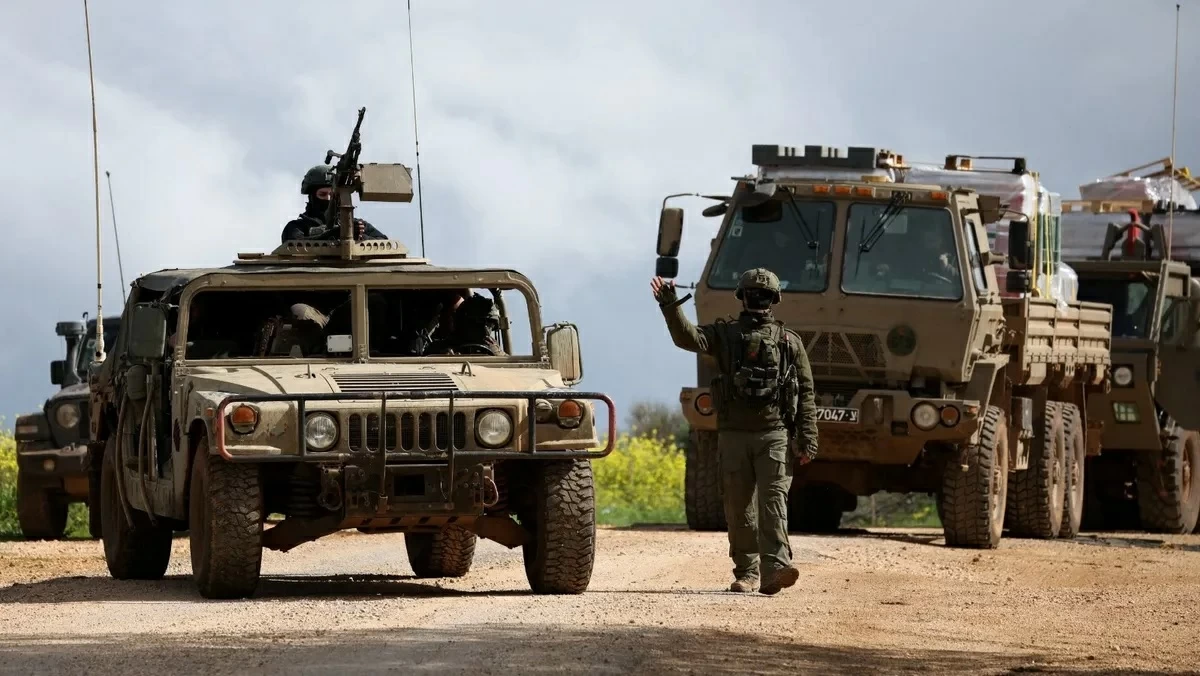
Israeli Defense Minister Israel Katz announced Israel's intention to establish a buffer zone in southern Lebanon, where it will maintain control over the entire area up to the Litani River. Katz confirmed that the return of displaced Lebanese will be completely prohibited until security in the north is guaranteed, indicating that Israel will demolish all homes in border villages, based on the demolition model used in the Gaza Strip.
In statements reported by Israeli media today (Tuesday), Katz said: "The Israeli army will be stationed in a security area within Lebanon and will control the entire region up to the Litani area." He explained that more than 600,000 Lebanese from the south who have fled to the north of the Litani will not be allowed to return, stressing that this ban will remain in effect until the safety of northern residents is ensured.
Details of the Announcement
Katz confirmed that all homes in villages near the border in Lebanon will be demolished according to the model used in Rafah and Beit Hanoun in Gaza, aiming to eliminate threats from the border. He noted that Israel is determined to separate Lebanon from the Iranian sphere and to remove Hezbollah's ability to threaten it, fundamentally changing the situation in Lebanon through the presence of the Israeli army.
The Israeli news site "Walla" quoted a senior Israeli security source stating that several teams are currently operating in southern Lebanon, at varying distances from the border, to clear the land of militants and armed infrastructure in phases. The source clarified that additional forces will enter more sites based on intelligence information, utilizing heavy engineering equipment and demolition means.
Background & Context
These statements come at a sensitive time, as Israel has issued evacuation orders for residents south of the Litani River, warning hundreds of thousands to move north of the river. The scope of these orders was later expanded, reflecting an escalation in tensions between Israel and Hezbollah. Instructions have also been issued to expedite the demolition of Lebanese homes in "frontline villages," claiming that this step aims to eliminate threats.
Historically, the region has witnessed ongoing tensions between Israel and Hezbollah, with the Israeli-Lebanese border being one of the most tense areas in the Middle East. Previous conflicts have led to the displacement of large numbers of residents, complicating the humanitarian situation in the region.
Impact & Consequences
These measures indicate a potential escalation in the conflict between Israel and Hezbollah, which could lead to negative repercussions for regional security. The continuation of demolition operations may exacerbate the humanitarian conditions in southern Lebanon, where many displaced individuals are living in difficult circumstances.
These steps are likely to provoke international reactions, as they may be seen as violations of human rights. Neighboring Arab countries may also feel concerned about the rising tensions, which could affect the overall stability of the region.
Regional Significance
This development represents a significant challenge to efforts aimed at achieving stability in the region. As tensions rise, relations between Arab countries and Israel may be affected, complicating any peace attempts. Additionally, the situation in Lebanon could impact security in neighboring countries, necessitating urgent action from the international community.
In conclusion, the situation in southern Lebanon remains under close observation, as Israeli actions are expected to escalate tensions, requiring a response from the concerned parties to ensure security and stability in the region.