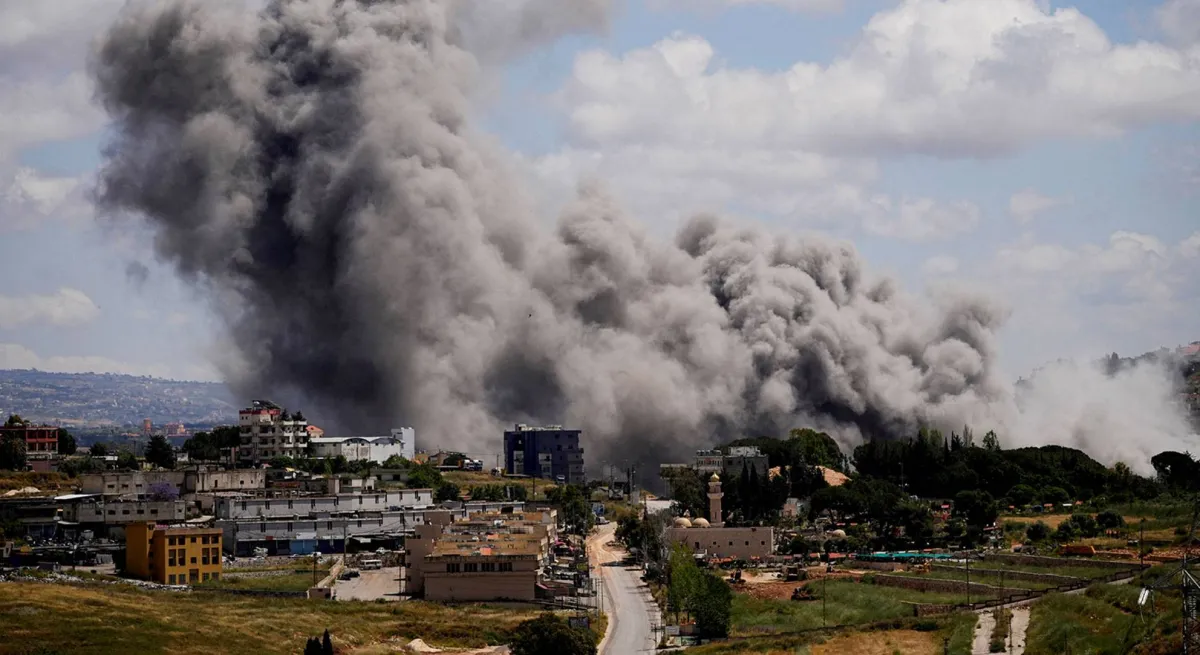
Israel has extended the scope of its airstrikes in Lebanon, targeting new areas from the south to the vicinity of the southern suburbs of Beirut. This military escalation occurs at a sensitive time as military negotiations with Lebanon in Washington approach.
The Israeli forces launched an airstrike on a residential apartment in the Shweifat area, marking the second targeting of the suburbs since the ceasefire took effect on April 17. These airstrikes were accompanied by widespread evacuation orders in southern regions, resulting in casualties in several towns.
Details of the Incident
According to sources familiar with Lebanese-American communications, Tel Aviv attempted through Washington to postpone the military meeting with Lebanon but received no response, being informed that the meeting would proceed as scheduled. Through this escalation, Israel aims to impose new realities and pressure Lebanon before negotiations begin, while Washington intensifies its communications to prevent the escalation of confrontation and stabilize the ceasefire.
In a related context, Israel announced late Wednesday the targeting of two key figures in the Izz ad-Din al-Qassam Brigades, the armed wing of Hamas. Sources from Hamas confirmed the assassination of one of the leaders, while the other was injured, reflecting an additional escalation in Israeli military operations.
Background & Context
Historically, relations between Israel and Lebanon have witnessed increasing tensions, especially amid ongoing conflicts in the region. Since 2006, when the July War erupted, the southern suburbs of Beirut have become a recurring target for Israeli airstrikes, leading to the destruction of much infrastructure.
These developments come at a critical time, as the international community, particularly the United States, seeks to calm the situation in the region. The Lebanese Foreign Ministry has expressed deep concern over the ongoing Israeli strikes, warning of their threat to the historical neighborhoods and cultural landmarks in the city of Tyre.
Impact & Consequences
Analyses indicate that the Israeli escalation could exacerbate the humanitarian situation in Lebanon, where residents are suffering from the effects of the ongoing conflict. Additionally, military pressures may impact the course of negotiations, complicating the security situation further.
On the other hand, Israel seeks to achieve political and military gains through this escalation, which could negatively affect regional stability. Any escalation in Lebanon may provoke reactions from armed factions, increasing the likelihood of new confrontations.
Regional Significance
The current developments in Lebanon are part of a broader landscape of tensions in the region. Events in Lebanon could affect relations between Arab countries, especially those with interests in Lebanon. Furthermore, military escalation may impact regional security and heighten tensions among various factions.
In conclusion, the situation in Lebanon remains complex, with military and political dimensions significantly intertwined. The continuation of Israeli airstrikes could worsen the humanitarian conditions, necessitating urgent international action to halt the escalation and protect civilians.