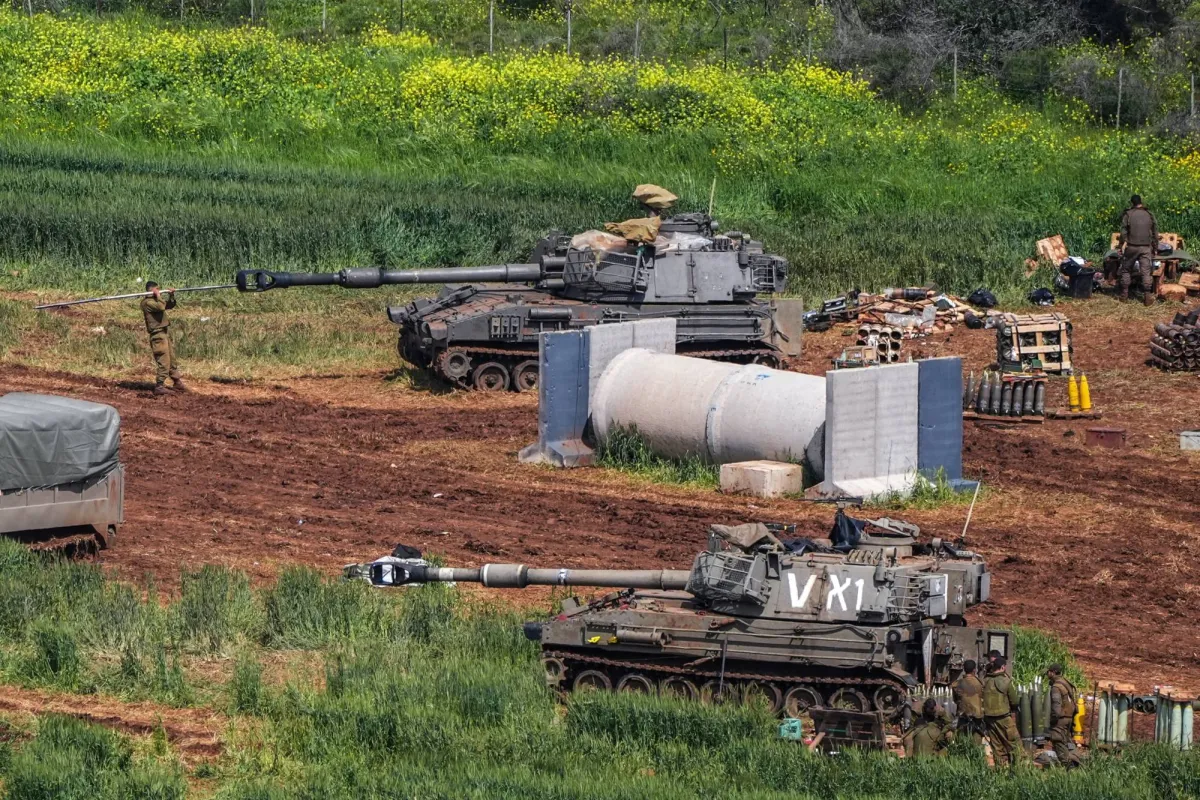
Israeli military operations in southern Lebanon are shifting towards a radical change in confrontation tactics, focusing on fire control instead of direct ground advances. Israel aims to redraw the engagement map by establishing fire oversight over key elevations and crossing points, reflecting a transformation in its military strategies.
According to military sources, the Israeli advance aims to cut Hezbollah's supply lines along the border, concentrating operations on controlling pivotal points. While battles continue in some areas, a decisive ground victory has yet to be achieved.
Details of the Event
The Israeli strategy is based on four main axes, starting from the Al-Bayada Hill, which controls the coastal supply line. Despite the Israeli forces advancing towards this hill, they have not yet been able to secure full control, especially in the Shama and Tyre Harfa hills, where ongoing clashes are taking place.
The second axis is represented by the town of Beit Leif, which is a strategic point for overseeing the Yater Valley, a vital corridor for Hezbollah fighters' movements. Despite the ongoing fighting, Israeli forces remain on the outskirts of the town.
The third axis is the Qantara - Wadi al-Hujair line, which represents a supply route towards Al-Taybeh. Meanwhile, the fourth axis includes the supply line from Bekaa to Al-Khayyam, which has been subjected to strikes in recent hours.
Background & Context
These movements come at a time when southern Lebanon is witnessing a notable military escalation, as Israel seeks to isolate operational areas and prevent repositioning or resupply. The focus on fire control over elevated hills, such as Shama and Tyre Harfa, appears to be part of a new strategy aimed at enhancing surveillance and fire control capabilities.
In this context, retired Brigadier General Saeed Qazah noted that operations are distributed across three main sectors, highlighting the importance of Al-Bayada Hill in controlling the coastal road. He also indicated that the Israeli advance in the areas surrounding Beit Leif reflects an attempt to impose new ground realities.
Impact & Consequences
Data indicates that the Israeli advance remains limited, with a clear focus on fire control rather than widespread deployment. This escalation could lead to a greater intensification of military operations, raising concerns about the possibility of a broader invasion that could affect new areas.
At the same time, the southern suburbs of Beirut have witnessed Israeli airstrikes targeting civilian buildings, resulting in the deaths of several Hezbollah members. Homes in Naqoura have been burned, and other areas have been shelled, further complicating the humanitarian situation in the region.
Regional Significance
The repercussions of these operations extend beyond Lebanese borders, raising concerns in Arab and international circles. The Israeli military escalation reflects increasing tensions in the region and heightens fears of new conflicts that could impact regional stability.
In light of these conditions, Lebanese President Joseph Aoun emphasized the importance of international communication to achieve negotiations and halt the war, stressing the need for decisive steps to prevent any security breaches among the Lebanese. These statements come at a sensitive time as Lebanon seeks to maintain its stability amid rising military tensions.