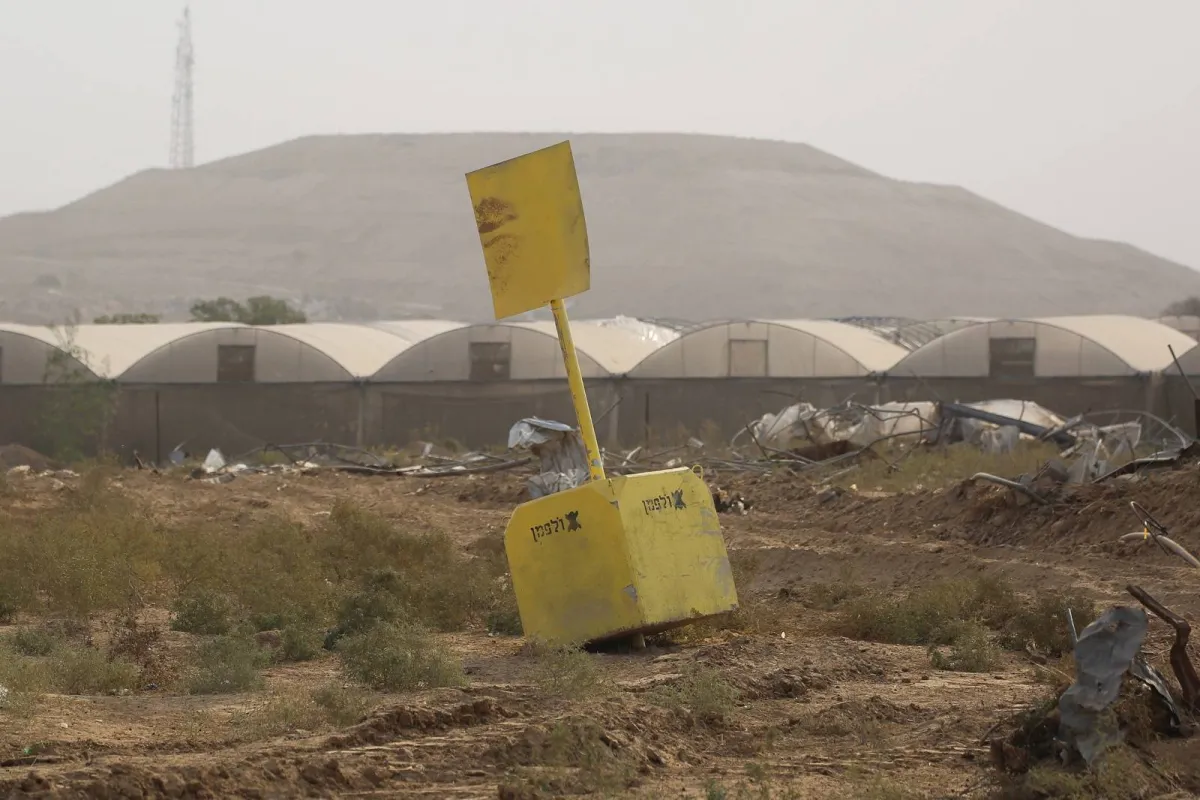
Israeli forces are enhancing their military presence in Gaza, establishing new sites within the yellow line since the ceasefire began on October 10, 2025. Reports indicate that the Israeli army has started to expand its control over the eastern areas of the strip, which represent more than 53% of the total area of Gaza.
After a period of inactivity, Israeli forces have begun constructing a large trench that extends over long distances in the past two months, alongside placing earthen barriers in front of it. New military sites have been established in the eastern regions, particularly east of Gaza City and in the towns of Jabalia and Tal al-Zaatar in the northern part of the strip.
Details of the Developments
Since the ceasefire came into effect, Israeli forces have deepened their control over new areas, advancing close to the main Salah al-Din street that runs through the strip. According to field sources, at least 4 new military sites have been established, equipped with communication and monitoring devices, in addition to observation towers and automated weapon lifts.
As part of enhancing their readiness, Israeli forces conducted field maneuvers east of Gaza City, where the sounds of sirens, gunfire, and artillery shelling were heard. These movements have raised concerns among Palestinian factions, which have clearly monitored Israel's intentions to solidify its military presence in those areas.
Background & Context
These developments come at a sensitive time, as Hamas has deemed these actions a clear violation of the ceasefire, asserting that it has communicated messages to mediators to halt these violations. A leadership source within the movement indicated that Israeli objectives extend beyond military control, as they seek to establish a buffer security zone that prevents the return of residents to their occupied lands.
Historically, Gaza has witnessed ongoing tensions due to the Israeli-Palestinian conflict, with multiple attempts made to reach agreements aimed at ending the dispute. However, the humanitarian situation in the strip remains deteriorating, as residents suffer from severe shortages of resources and essential services.
Impact & Consequences
Concerns are growing that these Israeli movements may be a precursor to a larger escalation in the conflict, potentially exacerbating the humanitarian situation in Gaza. According to the Gaza Ministry of Health, the number of casualties since the ceasefire began has reached 715, with approximately 2000 injuries reported, raising the total number of casualties since October 7, 2023, to 72291.
These conditions require an urgent response from the international community, as the continuation of Israeli military violations could worsen humanitarian crises and increase the suffering of civilians in the strip. Additionally, these movements may impact future peace efforts, as doubts grow regarding the possibility of achieving lasting stability in the region.
Regional Significance
The developments in Gaza are part of the larger picture of the Arab-Israeli conflict, affecting relations between Arab countries and Israel. The ongoing Israeli violations may lead to heightened tensions in the region and intensify criticisms directed at Israel from Arab nations.
In conclusion, the situation in Gaza remains complex, as military, humanitarian, and political dimensions intertwine, necessitating concerted efforts from all parties involved to achieve peace and stability in the region.