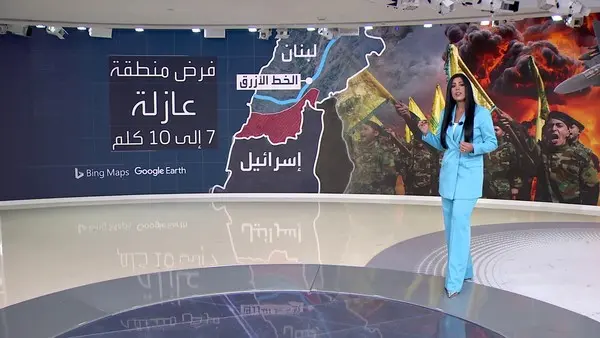
Israeli media reports indicate that the Israeli government has made a decision to expand its northern borders by up to 8 kilometers into Lebanese territory. This decision comes at a sensitive time, as tensions in the region are escalating, raising fears of negative repercussions for regional security and stability.
This expansion is part of an Israeli policy aimed at enhancing control over border areas, reflecting the military and political orientations of the current Israeli government. The decision has sparked varied reactions from Lebanese officials, who consider this step a violation of Lebanese sovereignty.
Details of the Event
According to sources, the Israeli decision aims to secure the northern borders and strengthen military presence in the area. This decision was made following security assessments indicating potential threats from armed groups in Lebanon, including Hezbollah. Israeli officials have confirmed that this expansion is necessary to protect national security.
In contrast, Lebanese officials have deemed this decision an unacceptable escalation, reflecting an Israeli intention to impose a new reality on the ground. Some have called for diplomatic measures to confront this challenge.
Background & Context
Historically, the Lebanese-Israeli border has been the scene of numerous conflicts and disputes. Since the Lebanese Civil War in the 1970s and 1980s, the region has witnessed ongoing tensions, especially with the emergence of Hezbollah as a military and political force in Lebanon. Repeated wars between Israel and Hezbollah have led to fundamental changes in the security situation in the area.
In recent years, tensions between the two sides have increased, particularly after mutual attacks and ongoing threats. The decision to expand the borders comes in this context, as Israel seeks to bolster its military position in the face of increasing security challenges.
Impact & Consequences
This decision is expected to have significant implications for regional security. The Israeli expansion may escalate military tensions, increasing the likelihood of a new conflict in the region. Additionally, this decision could affect Lebanese-Israeli relations, which have always been strained.
Moreover, this decision may impact the internal situation in Lebanon, potentially leading to increased political polarization among various factions. Public reactions may be strong, potentially resulting in protests against any violation of national sovereignty.
Regional Significance
This development comes at a sensitive time for the Arab region, where security and political challenges are on the rise. The escalation at the Lebanese-Israeli border may affect neighboring countries and increase instability in the region. Furthermore, this decision may raise concerns among other Arab nations that seek to achieve peace and stability in the area.
Ultimately, the question remains about how the international community will respond to this escalation and whether there will be diplomatic efforts to contain the situation before it worsens.