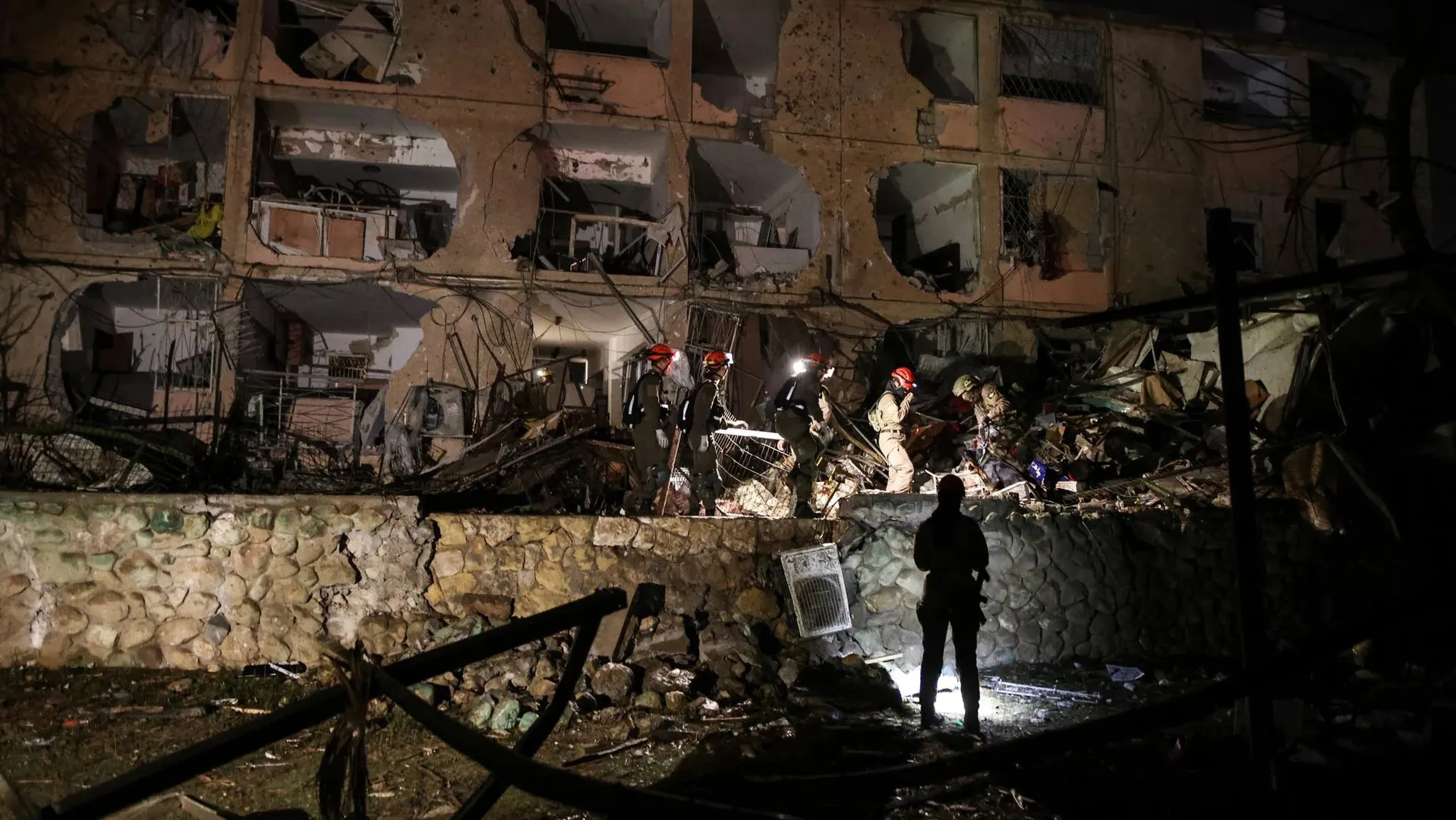
Despite Israeli assertions of significant successes in countering Iranian missiles, recent admissions indicate that 22 people have died since the onset of the war, with most casualties resulting from Iranian missiles that managed to breach air defenses. These figures raise serious questions about Israel's ability to withstand increasing threats.
One month into the American-Israeli war against Iran, Iranian missiles continue to fly towards Israel. Although a large portion of these missiles has been intercepted by Israeli air defenses, questions are emerging about Tel Aviv's long-term resilience.
Details of the Event
The Israeli military recently denied that its stockpiles of interceptors—crucial for countering the influx of Iranian missiles or Hezbollah projectiles—are running low. However, analysts believe that the war, now in its fifth week, is consuming munitions at a high rate, particularly long-range interceptors.
The Israeli air defense system relies on a "multi-layered" structure that allows it to respond to threats at various altitudes. Among its most notable systems are the "Iron Dome," "David's Sling," and "Arrow." Brigadier General Benny Youngman, head of the Israeli security systems group "TSG," stated: "There is no place in Israel that is not protected by multi-layered air defenses, but in defense, the ratio never reaches 100%. Israel's interception rate of 92% is indeed exceptional."
According to the Israeli military—which reveals little about its defensive systems—Iran has launched over 550 ballistic missiles since the war began on February 28, following American-Israeli strikes against the Islamic Republic. Despite Israeli claims of significant successes in countering Iranian missiles, Israel has acknowledged the deaths of 22 of its citizens since the war began, most of whom were killed by Iranian missiles that breached air defenses.
Context and Background
About two weeks into the war, the American news site "Semafor," citing American sources, estimated that Israel is experiencing a "serious shortage of interceptors for ballistic missiles." Although an Israeli military source denied any shortage "so far" and confirmed the army's readiness for a "long battle," other reports paint a different picture.
According to an analysis published by the Royal United Services Institute "RUSI" days ago, the United States, Israel, and their allies consumed vast amounts of offensive and defensive munitions during the first sixteen days of the war, totaling 11,294 munitions at a cost of $26 billion. The report indicates that long-range interceptors and precision munitions were "almost exhausted" after these initial two weeks.
Impact and Consequences
Colonel Jahara Matysik, a U.S. Army officer and one of the study's authors, told the French Press Agency: "This means that if the war continues, Israeli and American aircraft will have to penetrate deeper into Iranian airspace; defensively, this will mean receiving more Iranian missiles and drones." The situation becomes more challenging considering long production times and high costs, especially for missiles like "Arrow."
Colonel Matysik added: "The issue is not just material; it is an industrial reality: long lead times for providing components, limited testing capabilities, subcontractors prone to disruption, and production lines that do not operate with the flexibility of iPhone factories." According to the "RUSI" report, 81.33% of the stock of "Arrow" missiles that Israel had before the war has already been depleted, and it is likely to be "completely consumed by the end of March."
Impact on the Arab Region
Despite this, Israeli Brigadier General Youngman believes that Israel can produce interceptors faster than Iran can manufacture ballistic missiles. However, the Israeli system is not immune to failures; the military acknowledged that a malfunction in the "David's Sling" system allowed two Iranian missiles to strike the cities of Dimona and Arad in southern Israel last Saturday, which is concerning as Dimona houses a strategic nuclear research center.
According to the Israeli newspaper "Calcalist," the military opted to use "David's Sling" (shorter range) to conserve its stock of "Arrow" missiles. "David's Sling" represents the middle layer in the Israeli missile defense architecture, alongside the laser system "Iron Beam," tasked with intercepting a wide range of projectiles.
In light of these challenges, Jean-Louis Soman, a researcher at the Middle East Institute in Singapore, believes Israel has three options: "mixing different defensive systems to avoid shortages; not intercepting missiles or drones that will fall in uninhabited areas; or increasing military pressure to undermine Iran's capabilities before Israeli defense resources run out."