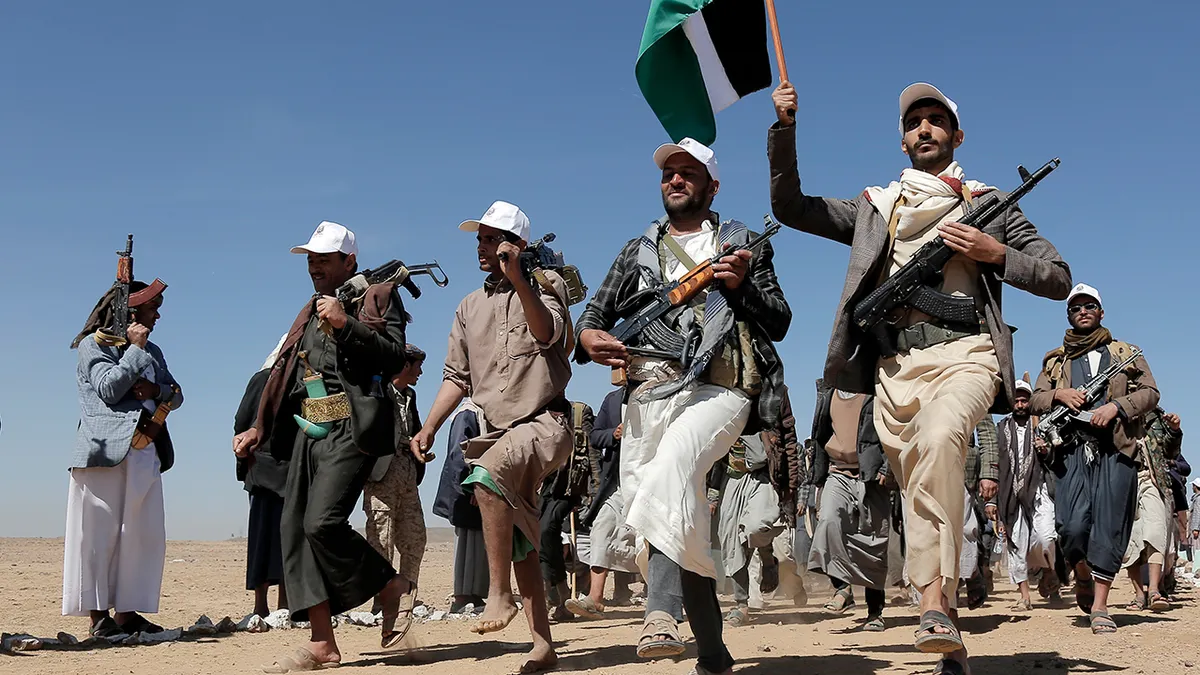
The Israeli newspaper 'Maariv' has reported that the Israeli army is facing new challenges in dealing with the Houthis in Yemen, who have joined the war alongside Iran and Hezbollah in Lebanon. Tehran aims to occupy Israeli occupation resources away from the main fronts, complicating the security situation in the region.
In light of these developments, the Israeli army is trying to avoid opening a new front, but it is aware that the continued challenges posed by the Houthis may force it to implement pre-prepared emergency plans to deal with the Yemeni arena, which is about two thousand kilometers from Israel's borders. These plans include military strategies aimed at countering any potential threats from the Houthis.
Details of the Incident
The Houthi group, known as Ansar Allah, recently announced its involvement in the war, adopting the strategy of launching attacks on targets in Israel. In this context, the Israeli army announced early Monday morning that it intercepted two drones launched from Yemen towards Eilat. These events come at a sensitive time, as the region is witnessing an escalation in military actions among various parties.
Although the Houthis have carried out limited activities so far, the Israeli army is closely monitoring developments and working to provide adequate protection for its territories. An Israeli military source confirmed that every drone directed to execute an attack in Yemen means one less drone attacking targets in Iran, highlighting the importance of the situation in Yemen for Israeli security.
Background & Context
Historically, relations between Israel and Iran have seen increasing tensions, especially with Iran's support for the Houthis in Yemen. This relationship reflects Tehran's strategy to expand its influence in the region, threatening Israeli interests. During the Israeli occupation's war on the Gaza Strip over the past two years, Israel launched a series of attacks on sites in Yemen in response to Houthi operations, resulting in hundreds of civilian casualties.
In August, an Israeli airstrike targeted a meeting of the internationally unrecognized Houthi government, resulting in the death of its head, Ahmed Ghaleb al-Rahwi, along with several ministers. The Houthis also announced last October the death of their Chief of Staff, Mohammed Abdul Karim al-Ghamari, following American-Israeli airstrikes on Yemen.
Impact & Consequences
Concerns are growing that the Houthis' involvement in the war could lead to greater escalation in the regional conflict, potentially affecting other fronts such as Lebanon and Syria. This escalation could negatively impact regional security and heighten tensions among major powers in the area.
Moreover, this situation may compel Israel to reassess its military strategies, requiring the allocation of additional resources to confront new threats. At the same time, this involvement could increase pressure on the Houthis, potentially affecting their capacity to carry out future military operations.
Regional Significance
The Houthis' engagement in the war represents a new challenge to Arab security, highlighting Iran's role in supporting armed groups in the region. This situation could exacerbate humanitarian crises in Yemen and complicate peace efforts in the country.
Additionally, the rising tensions between Israel and Iran may affect relations between Arab states and Israel, especially amid the normalization attempts occurring in the region. Ultimately, the situation in Yemen remains part of a larger conflict involving multiple parties, necessitating intensive diplomatic efforts to resolve the various crises.