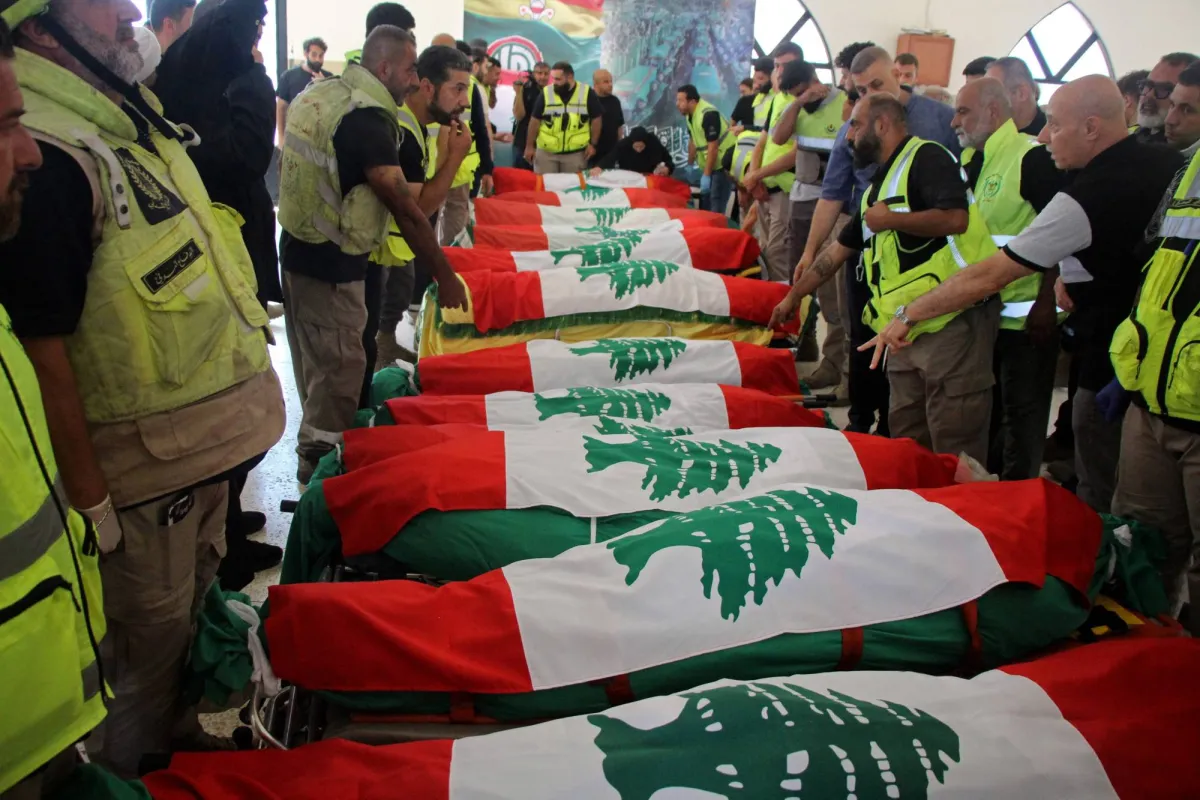
Israel continues its military escalation in Lebanon, expanding its targeting from the south to the vicinity of southern Beirut. The Israeli army has issued extensive evacuation orders, the largest since the ceasefire came into effect on April 17, covering areas extending north of the Zahrani River. This escalation has been accompanied by intense airstrikes targeting southern cities and towns, resulting in dozens of casualties and injuries, with entire families affected during attempts to flee or while inside their homes.
The Israeli escalation extended on Thursday to the vicinity of southern Beirut, where an Israeli airstrike targeted a residential apartment in the Shweifat area, located south of the capital. The Israeli army announced the execution of a "precise" attack in the Beirut area, indicating a new military escalation despite the ceasefire agreement. This marks the second time Israel has targeted the vicinity of southern Beirut since the ceasefire was declared on April 17.
Details of the Incident
Footage showed smoke rising from the targeted location, while Israeli media reported that the airstrike targeted Ali Al-Husseini, responsible for the missile system in the "Imam Hussein Brigade" affiliated with the Iranian Quds Force. There is conflicting information from Israeli sources regarding the success of the assassination attempt, with military sources indicating initial signs of failure.
Channel 13 in Israel revealed that the execution of the airstrike followed extensive consultations with the administration of U.S. President Donald Trump, indicating a decision to expand the target bank to once again include the vicinity of the Lebanese capital, despite the fragile ceasefire in place since April. Concurrently, the past hours have witnessed a broad escalation in the south, with the Israeli army declaring extensive areas as "combat zones," urging residents to move north of the Zahrani River and threatening to carry out strikes "with great force" against "Hezbollah."
Background & Context
These developments coincide with escalating Israeli positions, as Israeli Prime Minister Benjamin Netanyahu announced the expansion of ground operations in southern Lebanon following drone attacks executed by "Hezbollah" against Israeli forces and settlements in northern Israel. Israeli Finance Minister Bezalel Smotrich stated that "the only way to protect Israeli soldiers from drones is to demolish ten buildings in the southern suburbs of Beirut for every drone launched by Hezbollah."
In analyzing the escalation, retired Brigadier General and military expert Hassan Jouni believes that the situation transcends the immediate battlefield dimension and is also linked to preparations for the negotiation phase preceding the anticipated security meeting in Washington. According to Jouni, Netanyahu aims to push the Lebanese delegation into any upcoming negotiations under significant military and psychological pressure.
Impact & Consequences
Hezbollah's drones continue to assert themselves as one of the most prominent elements of the battlefield confrontation, amid Israeli acknowledgment of the difficulty in dealing with them. The Israeli army announced the death of an Israeli soldier following a drone attack launched by Hezbollah near the border, while Israeli media reported the launch of approximately 15 drones in the past 24 hours.
As Israeli airstrikes continue on populated areas, the toll of civilian casualties has risen, with the Lebanese Ministry of Health announcing at least 11 deaths, including two children and two women, due to airstrikes targeting Sidon and Aadloun. Additionally, there were fatalities and injuries in airstrikes targeting the city of Tyre, leading to significant destruction in the targeted neighborhoods.
Regional Significance
The Israeli strikes are at the forefront of the agenda for the first military meeting between Lebanon and Israel, scheduled to be held at the Pentagon, involving officers from U.S. Central Command. "The Middle East" learned from a close source that Washington has pressured Israel to cease its targeting of the Qaraoun Lake dam in western Bekaa.
Warnings continue regarding the worsening humanitarian situation as the circle of displacement and bombardment expands, with estimates indicating that Israeli airstrikes have resulted in the deaths of more than three thousand people since early March. Under these circumstances, the situation in Lebanon remains on the brink of explosion, necessitating international intervention to halt the escalation.