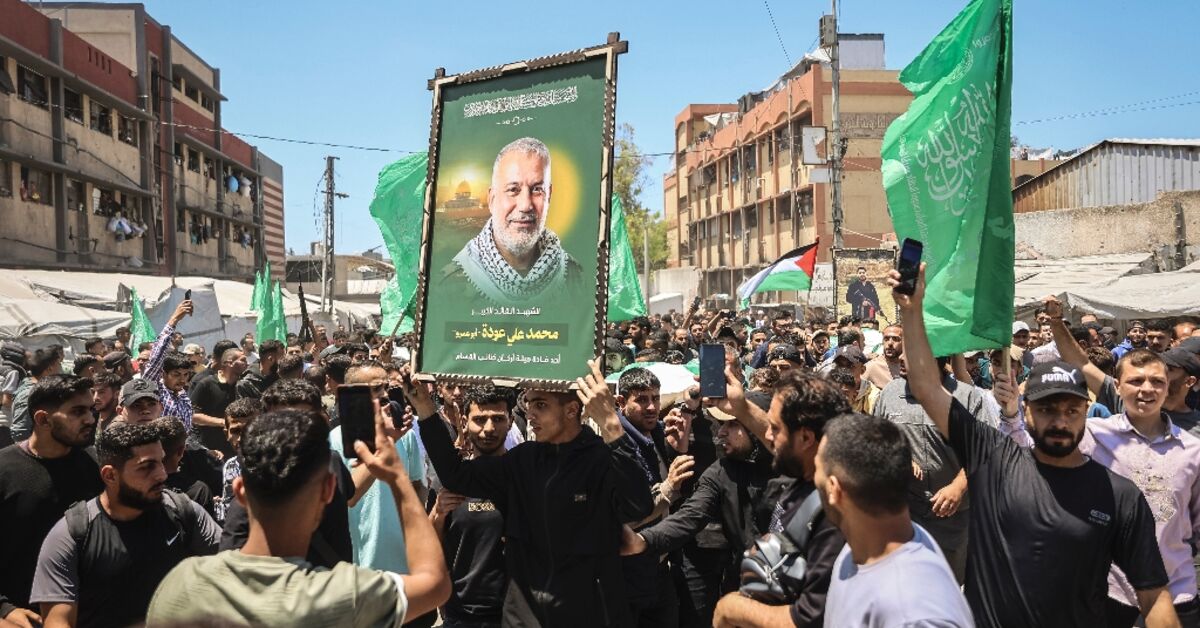
On Wednesday, Israel announced the killing of Mohammed Awda, the military leader of Hamas, in an airstrike on Gaza. This operation comes just days after the death of his predecessor, at a time when the ceasefire remains in effect. Reports indicate that these airstrikes are part of a systematic Israeli strategy targeting Hamas leaders since the group's attack in October 2023.
This incident marks the fourth of its kind, as Israel has confirmed the killing of four leaders of the Izz ad-Din al-Qassam Brigades since the onset of the war in Gaza. These operations reflect an escalation in the ongoing conflict between Israel and Hamas, with attacks continuing despite international calls for calm.
Details of the Incident
Mohammed Awda, who was recently appointed as the leader of Hamas's military wing, was considered a prominent figure within the movement. His death follows a series of military pressures faced by Hamas since the beginning of the conflict. Through these operations, Israel aims to weaken Hamas's ability to carry out any future attacks.
These airstrikes coincide with rising tensions in the region, as Israel continues to target Hamas leaders in an attempt to undermine the group's dominance in Gaza. These operations have elicited mixed reactions from the international community, which calls for the necessity of maintaining the ceasefire.
Background & Context
Historically, Gaza has witnessed repeated conflicts between Israel and Hamas, with tensions escalating since Hamas took control of the territory in 2007. Since then, the region has experienced several wars and conflicts, the latest being in 2023 following a Hamas attack that resulted in significant military escalation.
The Izz ad-Din al-Qassam Brigades, the military wing of Hamas, is one of the most prominent Palestinian factions resisting Israeli occupation. It has played a key role in previous conflicts, making it a primary target for Israeli military operations.
Impact & Consequences
The killing of Mohammed Awda may lead to a new escalation in the conflict, as Hamas is expected to respond to these operations in various ways. These responses may include an increase in rocket attacks on Israeli territory or the execution of new military operations.
Furthermore, these events could impact peace efforts in the region, as many countries seek to achieve a ceasefire between the two sides. The continuation of military operations may complicate the prospects for reaching a lasting agreement.
Regional Significance
The ramifications of this event extend beyond Gaza, affecting relations between Arab countries and Israel. The ongoing conflict could lead to increased tensions in the region, negatively impacting regional stability.
These events also raise concerns among Arab nations striving for peace and stability in the region, as Gaza represents a pivotal point in the Arab-Israeli conflict. These developments serve as a reminder that the Israeli-Palestinian conflict remains unresolved, and peaceful solutions are still elusive.