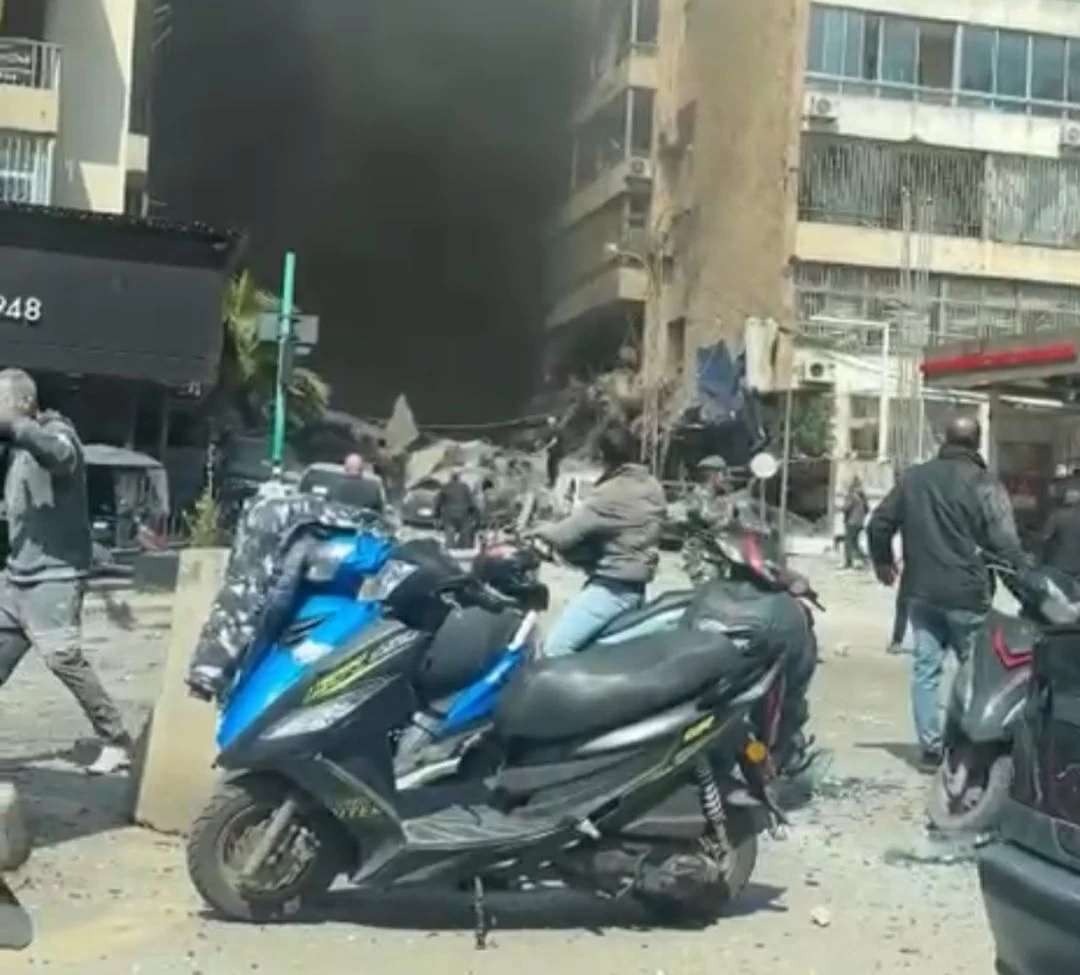
In an unprecedented military escalation, Israel has launched a series of intensive airstrikes on the Lebanese capital, Beirut, targeting vital neighborhoods such as Al-Basta, Al-Barbour, Al-Nuwairi, and Salim Salam. These areas are known for their high population density and commercial activity, leading to widespread panic among civilians.
The strikes were not limited to the capital; they extended to regions in Mount Lebanon, where towns like Bshamoun, Choueifat, Souk El-Gharb, Kfour, and Aramoun faced violent bombardments. This pattern of escalation appears to be an attempt to militarily and psychologically encircle Beirut, establishing a new ground reality that surpasses previous red lines.
Details of the Event
Field data indicated that the airstrikes were executed in very close timing, under heavy supervision from warplanes, resulting in a breakdown of communication between targeted areas due to panic and rapid internal displacement. This operation follows previous strikes that targeted Aramoun and Bshamoun, but today it has taken on a more comprehensive and bold character by repeatedly and intensively penetrating the inner neighborhoods of Beirut.
Simultaneously, Israeli airstrikes reached the vicinity of Karak, Shamsar, Hermel, and the outskirts of Ba'albek and Boudai in the Bekaa Valley. The Israeli army announced that this attack is the most intense since the commencement of the military operation, targeting over 100 sites in just 10 minutes.
Background & Context
These attacks come amid ongoing escalation between Israel and Hezbollah, with each side seeking to strengthen its military positions. The Israeli army claimed that the strikes targeted military headquarters and infrastructure belonging to Hezbollah in Beirut, the Bekaa Valley, and southern Lebanon, explaining that these strikes were meticulously planned over several weeks by the operations and intelligence bodies, the air force, and the northern command.
The Israeli army also emphasized that the Lebanese state and its citizens must confront Hezbollah's positioning in civilian areas and its attempts at military armament, stating that it will continue its operations vigorously against the party and will not allow any threats to Israeli citizens.
Impact & Consequences
These airstrikes raise significant concerns about a broader escalation in the region, as they may provoke reactions from Hezbollah or its allies. Furthermore, the continuation of these operations could heighten tensions between Lebanon and Israel, adversely affecting stability in the region.
These events serve as a reminder that the conflict in the region remains ongoing, and tensions between the various parties can escalate at any moment, threatening civilian lives and increasing their suffering.
Regional Significance
These developments underscore the importance of monitoring the situation in Lebanon and its impact on neighboring countries. The Lebanese-Israeli conflict has implications that extend beyond borders, potentially affecting regional security and increasing instability in the Middle East.
In conclusion, all eyes remain fixed on Lebanon and what the coming days will bring in terms of developments, especially amid the ongoing military escalation.