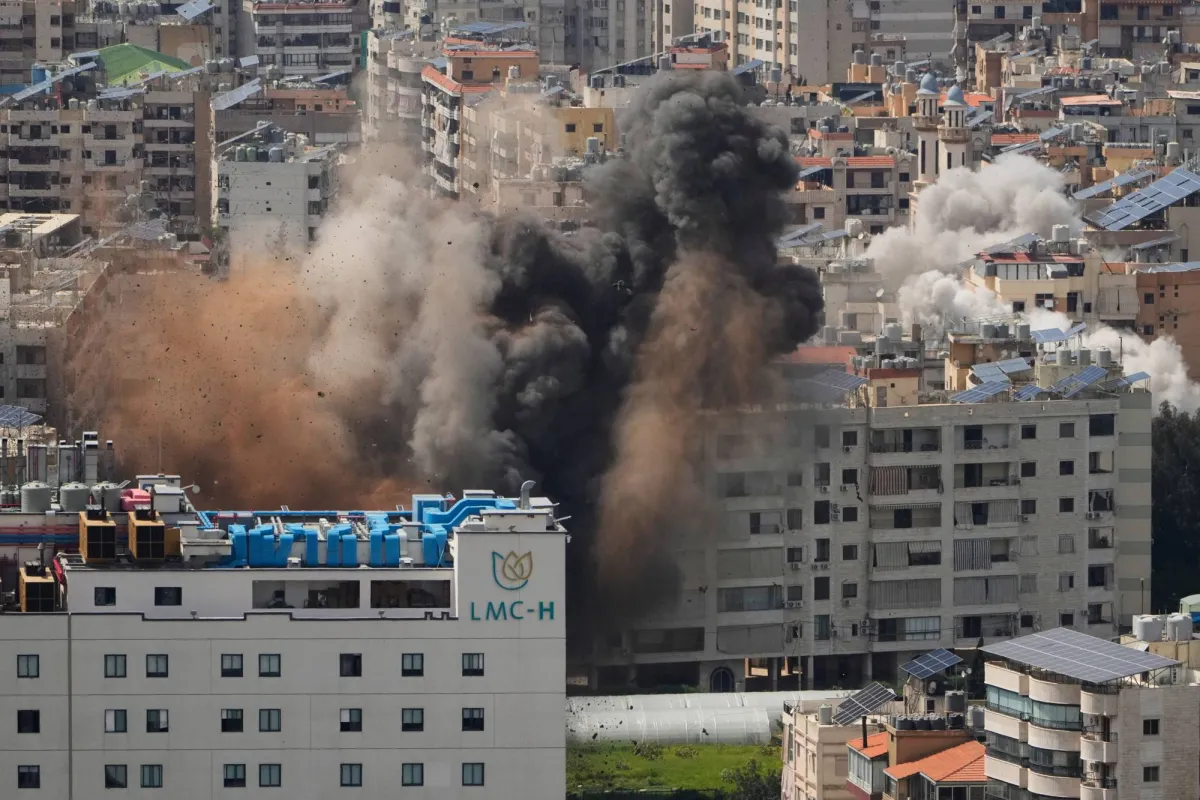
Israel has launched a fierce attack on Lebanon, targeting 100 sites within 10 minutes, reflecting the challenges faced by the Israeli government in promoting the idea of a ceasefire amidst internal opposition. This attack comes at a sensitive time as Pakistani mediators seek to broker a ceasefire agreement between the United States and Iran, which is supposed to include the Lebanese front.
Despite mediators confirming that the agreement includes Lebanon, Israel has not issued any official comment, citing the Passover holiday. However, conflicting information has leaked regarding Lebanon's inclusion in the agreement, raising questions about the Israeli government's stance. Some sources affirm that Israel cannot refuse a request from U.S. President Donald Trump, while others believe the agreement does not encompass Lebanon.
Details of the Incident
The Israeli attack, considered the largest since Hezbollah entered the war, was in response to the assassination of Iranian leader Ali Khamenei. The Israeli army announced that it carried out 100 airstrikes on Hezbollah positions in Beirut, the Beqaa Valley, and the south, in an operation that lasted only 10 minutes. Although the army confirmed that the attack was pre-planned, its timing raises questions about its relation to the potential ceasefire agreement.
In Tel Aviv, opposition voices to the ceasefire have intensified, with many local leaders arguing that the Israeli government is ignoring the interests of northern residents. David Azulai, head of the local council in Metula, criticized the government, stating, "If it is incapable of fulfilling its promises, it should hand over the keys and go home." Others believe that accepting a ceasefire would be tantamount to political and moral bankruptcy.
Background & Context
Historically, the Lebanese-Israeli border has been a theater of military tensions, witnessing several wars and conflicts. The Israeli occupation of southern Lebanon, which lasted until 2000, continues to affect relations between the two sides. In recent years, Israeli military activities against Hezbollah have increased, leading to heightened tensions in the region.
At the same time, the Lebanese government is striving for internal stability, but external pressures and tensions with Israel hinder its efforts. The complex regional situation, including the conflict between the United States and Iran, further complicates the landscape.
Impact & Consequences
The recent Israeli attack could lead to a greater escalation in the conflict, threatening peace efforts in the region. If military operations continue, the humanitarian situation in Lebanon may deteriorate, as the population suffers from the effects of ongoing conflict.
Moreover, the continuation of military pressures could impact relations between Lebanon and the international community, as the Lebanese government may be perceived as unable to protect its citizens. At the same time, this escalation could increase support for Hezbollah among certain segments of Lebanese society, complicating the government's efforts to achieve stability.
Regional Significance
The repercussions of the Israeli attack extend beyond Lebanon, potentially affecting relations between Arab countries and Israel. While some Arab nations seek to normalize relations with Israel, military escalation could undermine these efforts and increase hostility towards Israel in the region.
The situation in Lebanon may also impact the Palestinian cause, as Palestinian President Mahmoud Abbas has called for a ceasefire in the occupied Palestinian territories. This overlap of crises reflects the complexity of the situation in the Middle East and indicates the need for comprehensive solutions that address all outstanding issues.
In conclusion, the situation in Lebanon remains volatile, with increasing challenges for the Israeli government in promoting a ceasefire, while concerns among the population about their future and security continue to grow.