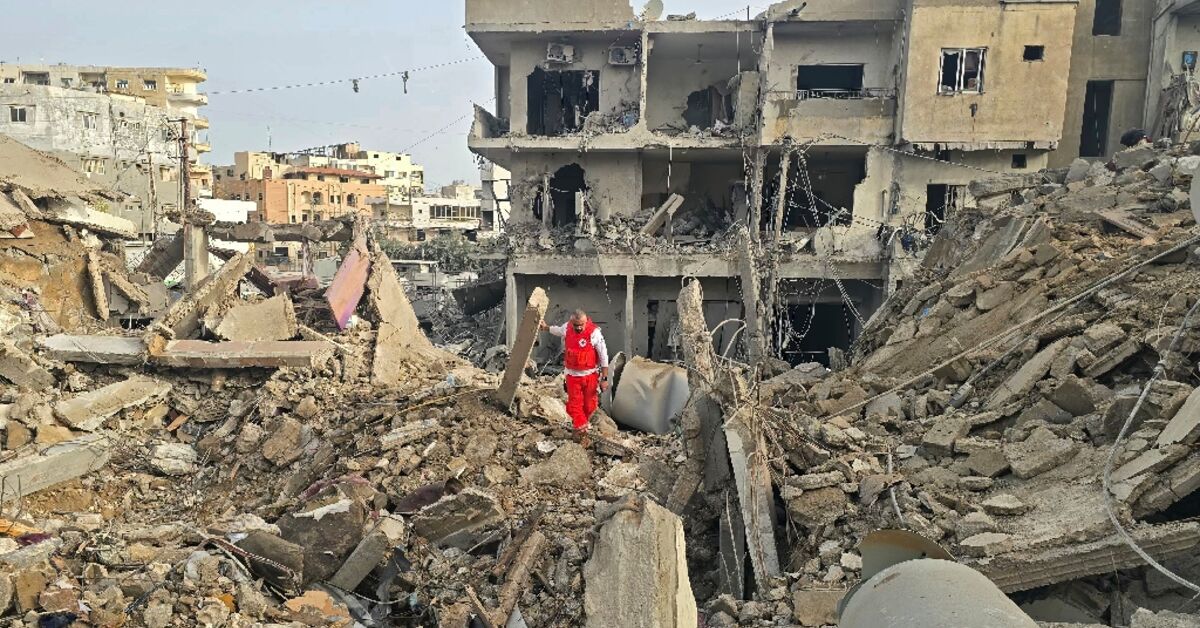
On Saturday, Israeli forces announced that they would carry out airstrikes in an area close to the main crossing between Lebanon and Syria, emphasizing the need for local residents to evacuate immediately. This move comes as part of an escalation of Israeli attacks that began on March 2, when the Lebanese Hezbollah entered the war alongside Iran, heightening tensions in the region.
Israeli forces continue to launch attacks on various Lebanese areas, having initiated a ground offensive in the south, which has significantly deteriorated the security situation. These events have raised fears of a larger escalation in the conflict that has plagued the Middle East for years.
Details of the Incident
The Israeli strikes coincide with rising tensions in the region, as Israel continues to target sites affiliated with Hezbollah, which is considered one of Iran's key allies in the area. Israeli forces have issued warnings to residents in areas near the Lebanese-Syrian border, reflecting concerns over the potential for greater military escalation.
These strikes are part of an Israeli strategy aimed at undermining Hezbollah's military capabilities, as Tel Aviv seeks to prevent any potential threats that may arise from this Iran-backed group. At the same time, Israel continues to bolster its military presence along the border, increasing the likelihood of direct confrontations.
Background & Context
The region has witnessed an escalation in conflict for several years, with Iran increasingly intervening to support its allies in Lebanon and Syria. This has led to heightened tensions between Israel and Hezbollah, which is regarded as one of the most prominent armed factions in Lebanon. Historically, the Lebanese-Syrian border has been the scene of numerous conflicts, with repeated military operations from both sides.
The roots of the conflict date back decades, as the region has experienced multiple wars and conflicts, making it an extremely sensitive area. With Hezbollah entering the war alongside Iran, fears of a larger escalation that could drag the region into a full-scale war have increased.
Impact & Consequences
These developments could lead to a significant escalation in the conflict, as Iran and its allies may respond to the Israeli strikes. Additionally, military escalation could impact regional security, complicating the security situation in the Middle East. These events are likely to result in an influx of more refugees into neighboring countries, exacerbating the humanitarian burdens in the region.
Furthermore, the rising tensions could affect the Lebanese economy, which is already suffering from multiple crises. Military pressures may worsen the economic and social conditions, placing additional strain on the Lebanese government.
Regional Significance
These events serve as a wake-up call for Arab countries, reflecting the ongoing tensions in the region and the need to enhance security and political cooperation among Arab states. Moreover, military escalation could affect relations between Arab countries and Iran, further complicating the regional landscape.
In conclusion, the situation in the region remains tense, with everyone awaiting the forthcoming developments. The military escalation between Israel and Hezbollah could lead to unforeseen consequences, necessitating swift action from the international community to prevent further deterioration of conditions.