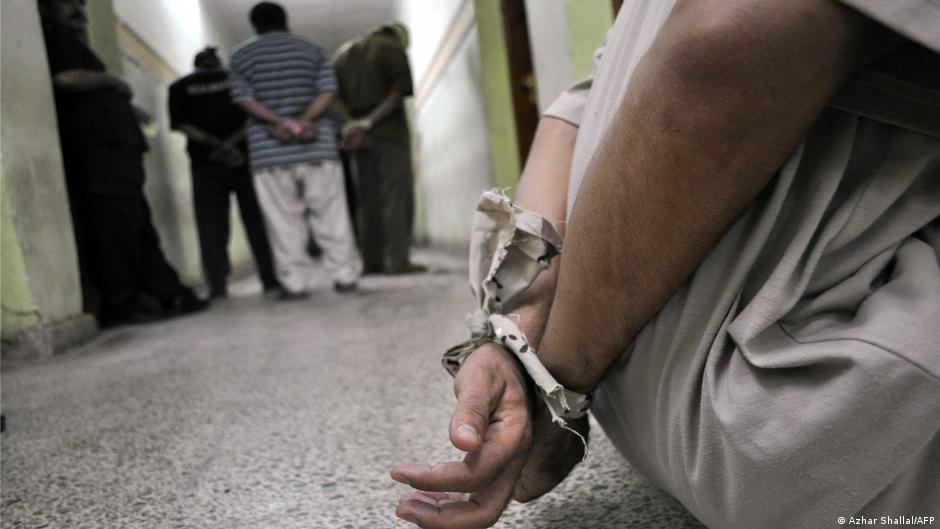
Discussions continue in Israel regarding a bill aimed at applying the death penalty to Palestinians convicted of terrorist crimes. Although the death penalty already exists in Israel, it has not been implemented to date. If this law is enacted, it will change the current situation and position Israel against the global trend towards abolishing the death penalty in many countries.
Reports from Amnesty International indicate that 113 countries have completely abolished the death penalty. Meanwhile, there are other countries that have abolished the penalty for ordinary crimes but can still impose it in the context of military justice. Additionally, some countries have imposed a moratorium on the execution of the death penalty.
Details of the Event
In 2024, courts in 46 countries issued more than 2000 death sentences. Significant regional disparities are evident in this context; in Europe and Central Asia, the death penalty was only executed in Belarus, while in North and South America, the United States was the only country to carry out 26 executions, with Trinidad and Tobago executing only one.
In sub-Saharan Africa, the death penalty was carried out several hundred times across 14 countries. In the Middle East and North Africa, the number of executions was around 800, spread across 9 countries. Nigeria and the Democratic Republic of the Congo are among the countries that issued the highest number of death sentences.
Context and Background
Historically, the death penalty has been a controversial topic in many countries. In recent years, many nations have moved towards abolishing this penalty, reflecting a shift in concepts related to human rights. However, some countries, such as Iran and Saudi Arabia, continue to retain and frequently implement the death penalty.
According to the Iranian Human Rights Organization, 1500 death sentences were executed in Iran in 2025, the highest number in 35 years. Saudi Arabia recorded 356 executions in the same year, reflecting the continued use of this penalty in these countries.
Impact and Consequences
The increasing trend towards implementing the death penalty in some countries, despite the decline in the number of countries applying it, indicates a global divide on this issue. While some nations strive to enhance human rights, others remain committed to harsh penalties, raising questions about justice and equality in treatment.
Data indicates that the number of death sentences has decreased from around 2400 the previous year to less than 2100 in 2024. However, the number of executions carried out has seen a significant increase, rising from 483 executions in 2020 to 1518 in 2024.
Impact on the Arab Region
In the Arab region, the death penalty remains a contentious issue. Opinions vary regarding its effectiveness and morality, with some viewing it as a deterrent, while others see it as a violation of human rights. As discussions about the bill in Israel continue, these developments may affect relations between Arab countries and Israel.
In conclusion, the future of the death penalty worldwide remains uncertain, as current trends indicate its continued implementation in some countries, while others seek to abolish it. Discussions on this topic will persist, with profound implications for human rights and international policies.