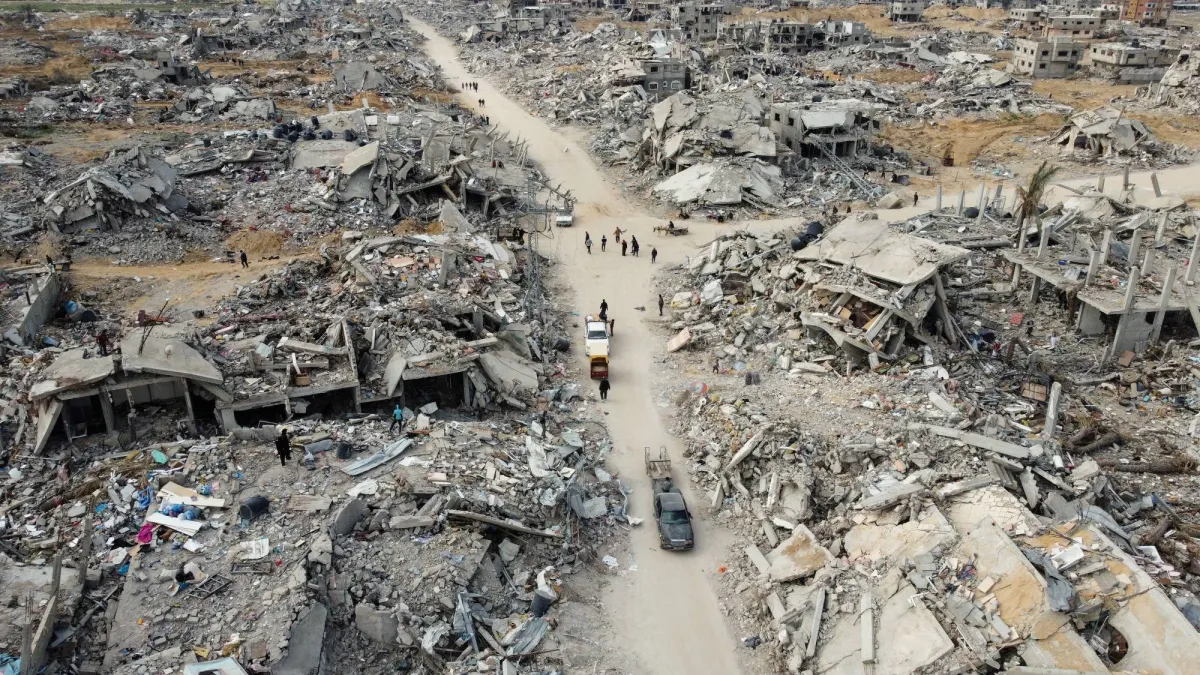
In alarming statements, Israeli Defense Minister Yoav Gallant confirmed that the Israeli army intends to establish a security zone in southern Lebanon, referring to the destruction of the cities of Rafah and Beit Hanoun in the Gaza Strip as a plan that could be replicated in the region. Gallant explained that hundreds of thousands of displaced Lebanese will be prevented from returning to their homes until the security of northern Israel is ensured.
Gallant also added that all homes in villages near the Lebanese border will be demolished, raising fears of a repeat of the scenario witnessed in Gaza during the recent war. This statement comes at a time when the region is experiencing increasing tensions, reflecting clear Israeli intentions to expand the scope of its military operations.
Details of the Event
During the war that broke out on October 7, 2023, the cities of Rafah and Beit Hanoun suffered extensive destruction, with entire neighborhoods reduced to rubble due to intensive shelling and systematic demolition of buildings. This destruction has erased the landmarks of civilian life, as the devastation included infrastructure, roads, and water and electricity networks, leading to widespread displacement of residents and preventing many from returning to their areas.
What happened in Rafah and Beit Hanoun is considered a realistic model of evacuation and comprehensive destruction, raising concerns about the possibility of this scenario being repeated in southern Lebanon. In his statements, Gallant did not hide his intentions, emphasizing that the Israeli army will remain in control of the area even after the current war ends.
Background & Context
Rafah is located in the far south of the Gaza Strip and is a strategic area on the border between Gaza and Egypt. Historically, Rafah has been of Israeli interest due to its sensitive location, having witnessed repeated military operations since the second intifada, including incursions and home demolitions under the pretext of establishing buffer zones.
Beit Hanoun, considered the northern gateway to the Gaza Strip, has also been subjected to air and artillery bombardment since the beginning of the war. These cities, which have suffered from dire humanitarian conditions, have now become symbols of the destruction that could be repeated in other areas, such as southern Lebanon.
Impact & Consequences
Gallant's statements raise fears of a new escalation in the conflict between Israel and Hezbollah, as this policy could exacerbate the humanitarian situation in Lebanon. The destruction of homes and infrastructure will increase civilian suffering and complicate future reconstruction efforts.
Concerns are growing that this Israeli strategy may lead to new waves of displacement, increasing pressure on neighboring countries and complicating regional situations. Additionally, this situation could strengthen the position of armed groups in the region, further complicating peace efforts.
Regional Significance
These statements serve as a warning to Arab countries about the potential for similar scenarios to occur in other areas, necessitating a collective Arab effort to address security and humanitarian challenges. The situation in Lebanon could also affect the stability of the entire region and escalate tensions between Arab countries and Israel.
In conclusion, the current situation in Lebanon and Gaza shows that the conflict is still far from resolution, and civilians are paying the highest price. An urgent response from the international community is required to ensure the protection of civilians and provide them with the necessary assistance.