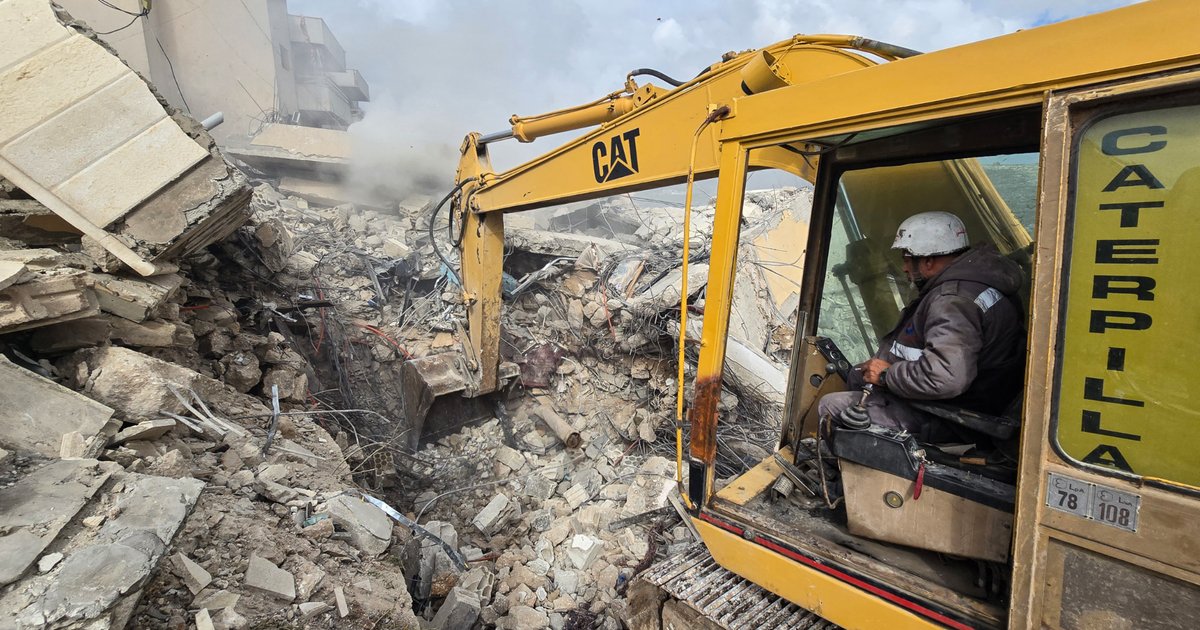
In a new escalation, the Israeli Army revealed plans to implement the 'Yellow Line' model used in Gaza by destroying villages in southern Lebanon to create a buffer zone. This move comes amid escalating conflict with Hezbollah, where military officials have stated that disarming the group is no longer a realistic goal, and the focus will instead be on establishing a 'deep defensive line' within Lebanese territory.
The plan includes the demolition of dozens of homes in villages close to the border with Israel, to establish an actual dividing line similar to that imposed in Gaza. Officials indicated that residents of these areas would not be allowed to return, even if future agreements were reached.
Details of the Event
In a media briefing, Israeli military officials acknowledged that the initial goals of disarming Hezbollah would require the occupation of all of Lebanon, which is deemed impossible. Instead, the army is focusing on destroying homes in border villages, with potential exceptions for Christian villages. These plans come at a time when discussions about a long-term Israeli presence in southern Lebanon are increasing.
Earlier, Israeli Prime Minister Benjamin Netanyahu stated that the army would seize additional land and expand what is known as the 'buffer zone'. Defense Minister Israel Katz also indicated the army's intention to 'control' southern Lebanon.
Background & Context
Historically, Israel has not officially defined its borders with Lebanon, relying instead on the armistice lines drawn after the wars of 1949 and 1967. The relationship between the two countries has seen ongoing tensions, especially with the escalation of military activities from both sides. In recent years, Israeli leaders have expressed support for the idea of a 'Greater Israel', which means expanding territory to include Palestine, Lebanon, and parts of neighboring countries.
It is noteworthy that the 'Yellow Line' in Gaza was initially a temporary withdrawal line, but Israeli forces expanded this line to include control over more than half of Gaza's territory, provoking widespread international criticism.
Impact & Consequences
If these plans are implemented, they will exacerbate the humanitarian situation in Lebanon, where many residents will face forced displacement. This step may also provoke strong reactions from the international community, especially from European countries that have warned that any new Israeli invasion of Lebanon could be worse than the invasion of 1982.
Additionally, these plans could escalate the conflict between Israel and Hezbollah, increasing the likelihood of a full-scale war in the region, which could affect stability in neighboring countries.
Regional Significance
These developments are particularly significant for the Arab world, as they reflect the ongoing tensions between Israel and its neighboring countries. Any escalation in Lebanon could impact regional security and intensify conflicts in the area. Furthermore, these plans could lead to a deterioration of relations between Arab countries and Israel, especially amid attempts at normalization that some countries are pursuing.
In conclusion, the situation in Lebanon remains under close watch, as any Israeli movements could lead to radical changes in the regional landscape.