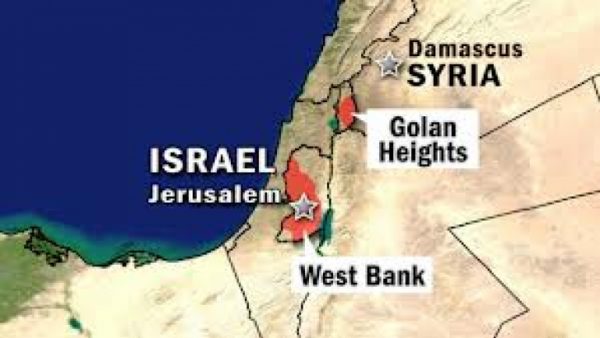
Human Rights Watch, the international human rights organization, warned in a statement on Wednesday that Israel is planning to commit a "war crime" in the occupied Syrian Golan Heights. This warning comes after the Israeli cabinet approved, on April 17, a plan worth $334 million aimed at relocating thousands of Israelis to the region occupied by Tel Aviv since 1967.
Heba Ziyadin, a researcher at the organization, noted that this step represents a blatant violation of international law, emphasizing that Israel seeks to alter the demographic composition of the Golan by encouraging Israeli settlement. This policy is considered part of a broader strategy aimed at consolidating Israeli control over the occupied territories.
Details of the Plan
The new Israeli plan involves significant investment in developing infrastructure in the Golan, including the construction of new settlements and the expansion of existing ones. This move comes at a time when international pressure on Israel regarding its settlement policies in the occupied territories is increasing.
In this context, Human Rights Watch confirmed that these plans contradict international laws that prohibit the transfer of civilian populations to occupied territories. The organization described these measures as aimed at reinforcing the Israeli occupation and altering the demographic reality in the region.
Background & Context
Historically, Israel occupied the Golan Heights during the 1967 war, and since then, it has sought to expand its influence in the area. Recent years have seen a rise in Israeli settlement activities, raising concerns among the international community and human rights advocates.
The Golan Heights is a strategic area, overlooking Syrian territories and containing important water resources. Therefore, Israeli control over it poses a significant challenge to security and stability in the region.
Impact & Consequences
The Israeli plans to relocate populations could exacerbate tensions in the region, likely provoking angry reactions from the Syrian government and the international community. Additionally, these policies may negatively impact Israel's relations with Arab countries, especially amid ongoing efforts to achieve peace in the region.
Moreover, these steps could bolster the position of groups opposing the Israeli occupation, increasing the likelihood of new confrontations in the Golan Heights.
Regional Significance
Events in the Golan are part of a larger picture concerning the Arab-Israeli conflict, where the Palestinian issue and the Israeli occupation of Arab lands remain sensitive topics. Any Israeli actions in the Golan could affect regional stability, prompting Arab nations to take clear stances against these policies.
In conclusion, the situation in the Golan remains under scrutiny, as the current conditions require effective international action to pressure Israel to halt its violations and ensure the rights of the Syrian people in their occupied territories.